









































































































































































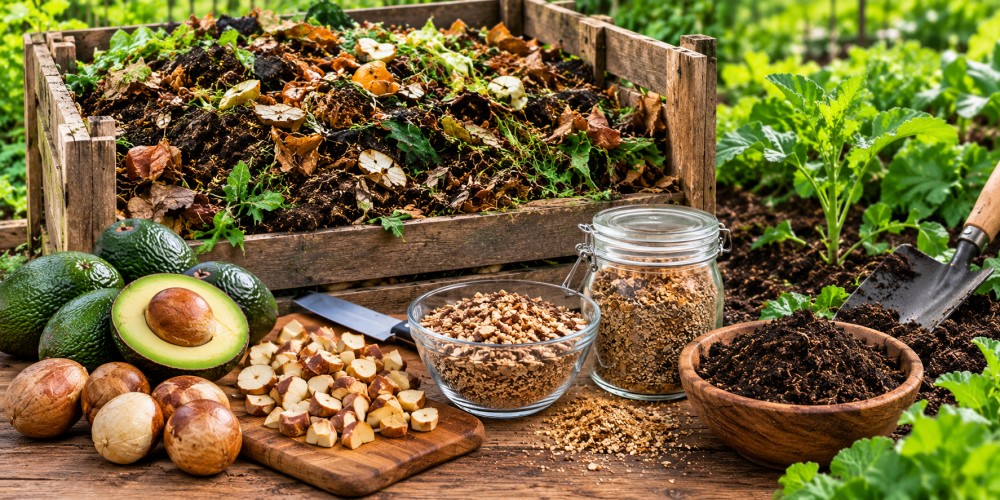
Avocado seeds are often discarded after the fruit has been eaten or processed, yet they can be repurposed as an organic gardening material. Instead of throwing them away, gardeners can collect, dry, grind, and compost the seeds to help recycle nutrients and organic matter back into the soil. This approach is particularly useful for households, small-scale farmers, and gardeners looking for affordable ways to reduce kitchen waste and improve soil management.
Making fertilizer from avocado seeds requires some preparation because the seeds are hard, dense, and slow to decompose. Unlike soft fruit scraps, they do not break down quickly when buried whole in the soil. Grinding, chopping, composting, and combining them with other organic materials can help accelerate decomposition and produce a more useful soil amendment.
However, it is important to understand that avocado seeds are not a complete fertilizer on their own. Their nutrient composition varies, and there is limited evidence to support claims that homemade avocado seed powder supplies plants with specific quantities of essential nutrients. The most reliable approach is to use avocado seeds as one component of a broader composting or organic soil-improvement system.
Understanding the value of avocado seeds in organic fertilizer
Avocado seeds offer a way to recycle organic waste, but their usefulness depends on how they are processed and incorporated into the soil. Understanding their composition and decomposition characteristics helps gardeners choose the most effective preparation method.
What avocado seeds contain
Avocado seeds contain organic compounds, including carbohydrates, dietary fibre, fats, and various plant-derived chemical compounds. They also contain minerals, although the concentrations available to plants depend on the seed, processing conditions, and subsequent decomposition.
As the seeds break down, microorganisms can convert some of their organic components into simpler substances that contribute to the soil’s organic matter. The resulting material may support soil structure and microbial activity when incorporated into a properly managed composting process.
Nevertheless, the presence of a mineral in a seed does not automatically mean that plants can absorb it in a useful quantity. Nutrient availability depends on how the material decomposes, the chemical conditions of the soil, and the activity of soil microorganisms. Avocado seeds should therefore be viewed primarily as a supplementary compost ingredient rather than a direct substitute for a balanced fertilizer.
Why avocado seeds should not be used whole
The outer covering and dense interior of an avocado seed make it relatively resistant to rapid decomposition. A whole seed buried in a garden may remain intact for a long time, particularly in dry soil or under conditions with limited microbial activity. Leaving whole seeds in planting holes can also make it difficult to predict when their organic matter will become available. The seed may eventually decompose, but the process can be too slow to provide meaningful nutrients during a crop’s immediate growth period.
Breaking the seeds into smaller pieces increases their exposed surface area, allowing microorganisms to access more of the material. Drying and grinding them into smaller particles can make subsequent composting easier, although fine powder is not a replacement for proper composting and does not guarantee immediate nutrient availability.
The difference between avocado seed powder and finished compost
Avocado seed powder is simply dried avocado seed that has been crushed or ground. It remains largely undecomposed organic material, even when it resembles a fine brown powder. Finished compost, on the other hand, is the product of a managed decomposition process involving microorganisms, moisture, oxygen, and a mixture of organic materials. Properly matured compost is generally more stable and suitable for improving garden soil than raw seed powder.
This distinction matters because raw avocado seed powder may decompose slowly when applied directly to soil. Adding excessive quantities of fresh organic material can also interfere with soil nutrient availability or create unfavourable conditions around plant roots. For the best results, avocado seeds should be incorporated into compost rather than relied upon as a standalone fertilizer.
Materials needed to make fertilizer from avocado seeds
Preparing avocado seed fertilizer at home does not require expensive equipment. The materials you need depend on whether you intend to produce seed powder for composting or incorporate the seeds into a larger compost pile.
- Avocado seeds: Collect clean seeds from ripe avocados. Remove the surrounding flesh thoroughly to prevent unnecessary odours and reduce the amount of easily fermentable material in your preparation.
- A knife, grater or suitable grinder: These tools help break the seeds into smaller pieces. Because avocado seeds are very hard, use a sturdy knife and stable cutting surface, and avoid forcing a household blender or grinder beyond its capabilities.
- Other compost materials: Dry leaves, untreated grass clippings, vegetable scraps and small amounts of suitable animal manure provide a mixture of carbon-rich and nitrogen-rich ingredients that supports decomposition.
- A compost bin, container or designated heap: Choose a well-drained location with access to air and water. A simple covered compost heap can work just as well as a purpose-built bin when properly managed.
You may also need a clean tray for drying, gloves for handling rough materials, and a garden fork or shovel for turning the compost. Avoid using contaminated containers or equipment that have been exposed to pesticides, oils or other chemicals.
Method 1: Making avocado seed powder for composting
The first method involves drying avocado seeds and grinding them into smaller particles. This preparation is useful when you want to store seeds until you have enough organic waste to make a compost batch.
Step 1: Collect and clean the avocado seeds
Begin by collecting several avocado seeds, depending on the quantity of compost you intend to produce. Remove all the flesh clinging to each seed and rinse it under clean water. Cleaning is important because leftover fruit pulp can become sticky and encourage unwanted fermentation during storage. Inspect the seeds and discard any that are visibly mouldy, rotten or contaminated.
Step 2: Cut the seeds into smaller pieces
Allow the cleaned seeds to drain before cutting them into manageable pieces. Avocado seeds are hard, so use a sharp, sturdy knife and take care to prevent the seed from slipping. If cutting fresh seeds is difficult, you can first dry them partially and then break them into smaller pieces using an appropriate tool. Do not attempt to force a standard kitchen blender to process hard seeds unless its manufacturer specifically permits this use. Smaller pieces are preferable to whole seeds because they expose more surface area to the microorganisms responsible for decomposition.
Step 3: Dry the seed pieces thoroughly
Spread the pieces in a single layer on a clean tray and place them in a dry, well-ventilated location. Sun-drying can work in suitable weather, provided the material is protected from rain, soil contamination, insects and animals. Turn the pieces occasionally to encourage even drying. The duration depends on the size of the pieces, humidity and temperature; there is no universal drying time that guarantees complete dryness. The purpose of drying is to reduce moisture so that the pieces can be ground more easily and stored without becoming mouldy. Drying alone does not turn the seeds into fertilizer, nor does it establish that the material is safe for every plant.
Step 4: Grind the dried seeds
Once the pieces are thoroughly dry, grind or crush them into small particles. A coarse powder is generally adequate for incorporation into compost; grinding the seeds into an extremely fine powder is not necessary. Avoid inhaling dust during grinding, and clean the equipment afterwards. Store the powder in a dry, labelled container until it is ready to be composted.
Step 5: Add the powder to a compost mixture
Mix the avocado seed powder into an existing compost pile containing a variety of organic materials. Dry leaves, shredded untreated cardboard, vegetable scraps and suitable grass clippings help create a more balanced mixture. Do not make the compost pile entirely from avocado seed powder.
Seeds are only one ingredient, and their composition alone does not guarantee the correct balance of carbon, nitrogen, moisture and oxygen for rapid decomposition. Keep the mixture slightly moist, turn it periodically and allow the microorganisms to break down the material. The finished compost can then be used as a soil amendment once it has matured.
Method 2: Making avocado seed compost using a compost heap
Composting is generally the most practical method for converting avocado seeds into a useful soil amendment. It allows the seeds to decompose alongside other organic materials, producing a more balanced final product than seed powder used alone.
Step 1: Choose a suitable location
Select a shaded or partially shaded location with good drainage and convenient access to water. The site should allow air to circulate while protecting the compost from excessive rainfall and drying winds. In warm climates, including many parts of Kenya, decomposition can proceed relatively quickly when the pile has sufficient moisture, oxygen and a suitable mixture of materials. However, heavy rain can waterlog a compost heap, while prolonged dry weather can slow microbial activity.
Step 2: Prepare the avocado seeds
Clean the seeds and chop or grind them as described in the first method. Smaller pieces generally decompose faster than whole seeds, although the actual rate depends on the composting conditions. If you have only a few seeds, collect and dry them until you have enough to add to a larger compost batch. There is no need to produce a separate compost heap exclusively for avocado seeds.
Step 3: Combine carbon-rich and nitrogen-rich materials
Successful composting depends on a balance of carbon, nitrogen, moisture and oxygen. Microorganisms use carbon as an energy source and nitrogen to build the proteins and other compounds needed for growth. Carbon-rich or brown materials include dry leaves, straw, shredded untreated cardboard and small woody garden trimmings. Nitrogen-rich or green materials include fresh grass clippings, vegetable scraps and suitable fresh plant residues.
Mix the avocado seed pieces with these materials rather than adding them in one thick layer. A practical starting point is to combine roughly two to three volumes of dry brown material with one volume of fresh green material, then adjust according to the moisture and behaviour of the pile. This is a starting guide, not a precise carbon-to-nitrogen calculation. Avoid adding excessive quantities of oily food waste, cooked food, meat or dairy products to a basic home compost heap, because they can attract pests and create odour problems.
Step 4: Build the compost heap in layers
Place a layer of coarse, dry plant material at the bottom to encourage drainage and airflow. Add a mixture of chopped avocado seeds, vegetable scraps and other suitable organic waste, followed by a layer of dry leaves or similar brown material. Continue alternating and mixing the materials until you have a manageable heap.
Mixing the ingredients is often more effective than maintaining distinct layers because it distributes moisture and nutrients more evenly. A reasonably sized heap retains heat better than a very small collection of scraps. If you are composting only a few seeds, add them to an established pile instead of trying to generate heat from a tiny quantity of material.
Step 5: Maintain the right moisture level
Moisture is essential because composting microorganisms need water to remain active. The material should feel like a wrung-out sponge: moist throughout, but not dripping wet. If the heap is too dry, sprinkle water over it while mixing. If it is waterlogged, add dry leaves or shredded cardboard and improve drainage and airflow. A persistently wet compost pile may develop unpleasant smells because oxygen becomes limited. Conversely, a pile that dries out may stop decomposing effectively until sufficient moisture is restored.
Step 6: Turn the compost regularly
Turn the heap with a garden fork or shovel to introduce oxygen and redistribute materials. This also moves outer material towards the centre, where microbial activity may be stronger. For a home compost heap, turning every one to two weeks is a reasonable starting routine, although the ideal frequency depends on temperature, moisture and the materials being composted. If the pile smells rotten, add dry, coarse material and turn it to improve airflow. If it remains cool and decomposition is slow, check whether it is too dry, too small or dominated by materials that decompose slowly.
Step 7: Allow the compost to mature
The time required to produce usable compost varies with the size of the seed pieces, the proportions of ingredients, the temperature, moisture and turning frequency. A well-managed pile may mature within a few months, while a pile containing hard seed fragments can take longer. Do not rely on a fixed number of weeks as proof that the compost is ready. Instead, look for dark, crumbly material with an earthy smell and few recognisable original ingredients.
The compost should no longer heat up significantly after turning and resting. Large, intact avocado seed pieces indicate that decomposition is incomplete. Remove them and return them to the active pile, or allow the entire batch to mature for longer. Proper compost maturity matters because incompletely decomposed materials may affect plant growth.
Method 3: Making avocado seed fertilizer in a buried compost trench
A compost trench is another option for gardeners who do not have a dedicated compost bin. This method allows avocado seed pieces to decompose directly in the soil, although it is slower and less controllable than composting in a heap.
Step 1: Prepare a suitable garden trench
Dig a trench or hole in an unused section of the garden, away from the immediate root zone of young plants. The hole should be deep enough to cover the organic material with soil and reduce the likelihood of animals digging it up. Avoid digging near underground water pipes, drainage systems or shallow plant roots.
Step 2: Add chopped avocado seeds and other organic waste
Place chopped or ground avocado seeds in the trench and mix them with vegetable scraps and other suitable biodegradable plant materials. Do not fill the hole exclusively with avocado seeds, as they may take a long time to decompose.
Step 3: Cover the materials with soil
Cover the organic materials completely with soil. Keep the area moderately moist, but avoid waterlogging. Allow the material to decompose before planting directly above the trench. Because the process occurs underground, it is difficult to determine the precise stage of decomposition. For this reason, trench composting is better suited to preparing garden beds in advance than providing immediate nutrition to an actively growing crop.
How to use avocado seed compost on plants
Once the compost has matured, it can be used to improve garden soil, provided it is suitable for the intended plants. The quantity required depends on the crop, soil condition, compost quality and nutrient requirements.
a. For vegetables and leafy greens
Vegetables such as spinach, kale, sukuma wiki and traditional African leafy greens can benefit from soil enriched with mature compost. Mix a modest quantity into the soil before planting, distributing it evenly rather than concentrating it around individual roots. Compost can improve soil structure and water retention while contributing nutrients gradually. However, it should not be assumed to supply all the nitrogen or other nutrients required for vigorous vegetable growth.
b. For fruit trees and avocado trees
Mature compost can be spread over the soil beneath the canopy of established fruit trees. Keep the material away from the trunk and avoid piling it against the bark. Avocado trees require careful nutrient management, particularly with respect to nitrogen. Avocado seed compost may contribute organic matter, but it is not a proven replacement for a balanced fertilization programme or soil-test-based nutrient recommendations.
c. For potted plants
For container plants, use mature, well-processed compost sparingly as part of an appropriate growing medium. Do not fill a pot with avocado seed powder or use unfinished compost as the main growing substrate. Container plants have limited root space, and excessive salts or unsuitable compost properties can damage roots. Where possible, use a tested compost and a growing medium formulated for the plant species.
d. For lawns and ornamental gardens
Mature compost can be spread in a thin, even layer over lawns or mixed into garden beds before planting ornamental flowers and shrubs. Avoid covering grass blades with thick layers that prevent light and air from reaching them. The main benefit is improved soil quality over time, rather than an immediate, predictable increase in plant growth.
Benefits of making fertilizer from avocado seeds
Using avocado seeds in composting offers several environmental and gardening benefits. The results depend on how the seeds are processed and the quality of the finished compost.
a. Reduces household organic waste
Avocado seeds are commonly discarded with kitchen waste. Collecting and composting them helps divert some organic material from general rubbish disposal and makes better use of available resources. This is particularly useful for households, restaurants, fruit vendors and small food-processing businesses that handle substantial quantities of avocados.
b. Helps improve soil structure
When incorporated into mature compost, avocado seed material contributes to the overall organic matter content of the mixture. Organic matter can improve soil aggregation, water retention, aeration and the conditions needed for healthy root growth. These benefits are especially relevant in sandy soils that lose moisture rapidly and compacted soils that require better structure. The magnitude of improvement depends on the compost quantity, soil type and continued organic matter management.
c. Supports nutrient recycling
Composting returns some of the nutrients contained in organic waste to the soil. As microorganisms decompose organic materials, they gradually release nutrients into forms that plants may absorb. However, nutrient availability varies considerably between compost batches. The seed material’s nutrient content should not be confused with the amount of nutrients immediately available to crops.
d. Can reduce expenditure on soil amendments
Gardeners who already produce compost can use avocado seeds without purchasing a separate raw material. This can reduce waste-handling costs and make better use of other materials available on the farm or around the home. The financial benefit is greatest when avocado seeds are incorporated into an existing composting routine. Drying and grinding them with specialised equipment solely to produce seed powder may require more effort than the material is worth.
e. Encourages sustainable gardening
Reusing avocado seeds encourages a circular approach to gardening in which organic waste becomes an input for soil management. When combined with composting of suitable vegetable scraps, leaves and other plant residues, this practice can reduce reliance on disposal and improve resource efficiency.
Common mistakes to avoid when making avocado seed fertilizer
Understanding common mistakes helps prevent wasted effort and reduces the risk of damaging plants.
a. Applying raw avocado seed powder directly to plants
Although dried seed powder may appear ready for use, it has not necessarily decomposed sufficiently to function as a useful fertilizer. Applying large amounts directly to roots or planting holes may produce unpredictable results. Composting the powder first is the more reliable approach.
b. Using only avocado seeds
A compost heap made entirely from avocado seeds is unlikely to decompose as efficiently as a properly balanced mixture. The seeds are relatively hard and may not provide the right proportions of nutrients, moisture and air for rapid microbial activity. Mix them with suitable brown and green compost ingredients.
c. Allowing the compost to become waterlogged
Excess water fills the spaces needed for air circulation, encouraging oxygen-poor decomposition and unpleasant smells. Improve drainage, add dry leaves and turn the pile when necessary.
d. Using immature compost
Compost that remains hot, smells unpleasant or contains substantial recognisable raw material may not be ready for use. Immature compost can contain compounds or nutrient conditions that interfere with plant growth. Allow sufficient time for decomposition and curing before applying it to sensitive plants.
e. Assuming avocado seed fertilizer contains a fixed NPK ratio
Commercial fertilizers display their nitrogen, phosphorus and potassium concentrations through an NPK analysis. Homemade avocado seed compost has no universal NPK ratio, because its composition depends on the seeds and all the other ingredients used. If you need precise nutrient management for commercial farming, laboratory testing of the finished compost is more dependable than estimating its nutrient content from the raw seeds.
Conclusion
Making fertilizer from avocado seeds is a practical way to recycle kitchen waste and contribute to more sustainable gardening. The most effective approach is to clean the seeds, break them into small pieces, and incorporate them into a compost heap containing a suitable mixture of dry leaves, vegetable scraps and other organic materials.
Although avocado seed powder is easy to produce, it should not be confused with finished fertilizer. The seeds decompose relatively slowly, and their nutrient content does not guarantee that plants will receive all the nutrients they need. Proper composting, adequate moisture, oxygen and sufficient curing time are essential for producing a useful soil amendment.
For home gardeners and small-scale farmers, the greatest value lies in treating avocado seeds as one part of a broader organic waste recycling system. Combined with mature compost, sound soil management and appropriate crop nutrition, this simple practice can help improve soil quality while making better use of materials that would otherwise be discarded.