










































































































































































Throughout history, the rise of powerful nations has often disrupted the international order and triggered fear, insecurity, and conflict among existing dominant states. One of the most influential concepts used to explain this phenomenon is the “Thucydides Trap”. The term has become increasingly popular in discussions of international relations, especially in debates surrounding the rivalry between the United States and China. It describes a dangerous structural stress that occurs when a rising power threatens to displace an established one, increasing the likelihood of war.
The idea draws its name from the ancient Greek historian Thucydides, who chronicled the Peloponnesian War between Athens and Sparta in the fifth century BCE. In his account, Thucydides famously wrote: “It was the rise of Athens and the fear that this instilled in Sparta that made war inevitable.” This observation has resonated across centuries because it captures a recurring pattern in world politics: the fear generated by shifting power balances can push nations into confrontation even when neither side initially desires war.
The Thucydides Trap is not merely about military rivalry. It encompasses economic competition, ideological conflict, political mistrust, strategic insecurity, nationalism, and the psychology of power transitions. It is a framework for understanding how global systems become unstable when emerging powers challenge established hegemonies.
Origins of the Thucydides Trap
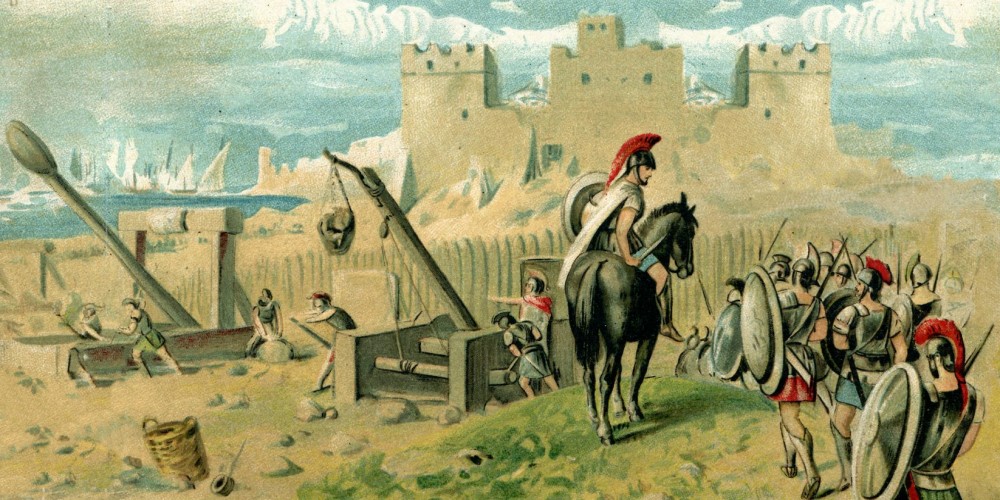
The concept originates from the work of Thucydides, an ancient Athenian historian and general who documented the Peloponnesian War fought between Athens and Sparta from 431 to 404 BCE. His historical account is widely regarded as one of the earliest and most sophisticated analyses of power politics. Athens had grown wealthy and powerful through trade, naval strength, and alliances following the Persian Wars. Sparta, the dominant military power in Greece, viewed Athens’ rapid ascent as a threat to its own security and influence.
Tensions escalated as both city-states competed for allies, resources, and regional dominance. Thucydides argued that the deeper cause of the war was not any single incident but rather the structural tension produced by Athens’ rise and Sparta’s fear. His insight became a foundational principle in realist theories of international relations. The modern phrase “Thucydides Trap” was popularized by political scientist Graham Allison, particularly through his 2017 book Destined for War: Can America and China Escape Thucydides’s Trap?
Allison examined sixteen historical cases over the past five hundred years where a rising power challenged an established power. In twelve of those cases, the rivalry ended in war. According to Allison, the danger lies not only in aggressive actions by the rising power but also in overreaction, paranoia, and miscalculation by the dominant state. The trap emerges from mutual fear, pride, insecurity, and strategic competition.
Understanding the core idea
The Thucydides Trap is fundamentally about power transition. International systems tend to be more stable when one state clearly dominates. Problems arise when another state grows rapidly and begins to challenge the status quo. The process generally unfolds through several stages:
- Rise of a new power: A nation experiences rapid economic growth, military modernization, technological advancement, or political consolidation. Its influence expands regionally or globally.
- Fear and anxiety among established powers: The dominant power begins to perceive the rising state as a threat to its security, prestige, alliances, and economic interests. Suspicion deepens.
- Strategic competition: Both states engage in military buildups, alliance formation, trade disputes, ideological competition, and geopolitical maneuvering.
- Escalation through crises: Small disputes or regional conflicts can trigger larger confrontations because tensions are already high. Misunderstandings become dangerous.
- Potential war: War may erupt intentionally or accidentally as mistrust overwhelms diplomacy.
Importantly, the Thucydides Trap does not claim that war is guaranteed. Rather, it argues that the structural stress created by shifting power balances significantly increases the risk of conflict.
Historical examples of the Thucydides Trap
Throughout history, several major conflicts have reflected the dynamics of the Thucydides Trap, illustrating how the rise of emerging powers has often created fear and tension among established powers, sometimes leading to war.
1. Athens and Sparta
The original example remains the most famous. Athens’ expanding naval empire and democratic influence alarmed Sparta, which relied on military discipline and regional dominance. Rival alliances divided the Greek world, and tensions eventually exploded into the Peloponnesian War. The conflict devastated Greece, weakened both powers, and contributed to long-term instability. It demonstrated how fear and competition can destroy even highly advanced civilizations.
2. Germany and Britain Before World War I
One of the most cited modern examples involves the rise of Germany in the late nineteenth and early twentieth centuries. After unification in 1871, Germany rapidly industrialized and became a major economic and military power. Britain, which had dominated global trade and naval supremacy for decades, increasingly viewed Germany as a strategic threat.
Germany’s naval expansion intensified British fears. Alliance systems hardened across Europe, nationalism surged, and diplomatic crises multiplied. The assassination of Archduke Franz Ferdinand in 1914 served as the spark that ignited World War I. Although many factors contributed to the war, the structural rivalry between rising Germany and established Britain formed an important backdrop.
3. Imperial Japan and the United States
In the early twentieth century, Japan emerged as a powerful industrial and military state in Asia. Its expansion into China and the Pacific threatened American interests in the region. The United States responded with economic sanctions and military pressure. Japan perceived these measures as attempts to contain its rise and secure Western dominance in Asia. Tensions culminated in the Japanese attack on Pearl Harbor in 1941, bringing the United States into World War II.
4. The Cold War: A partial exception
The Cold War between the United States and the Soviet Union is often viewed as an example of the Thucydides Trap that did not lead to direct great-power war. After World War II, the Soviet Union emerged as a superpower challenging American global leadership. The two states competed ideologically, militarily, technologically, and geopolitically for decades.
However, nuclear deterrence, diplomacy, and mutual fear of total destruction prevented direct military confrontation between them. Proxy wars occurred in Korea, Vietnam, Afghanistan, and elsewhere, but the superpowers avoided direct war. This case suggests that catastrophic weapons and international institutions can sometimes restrain escalation.
The United States and China: The modern debate
The most prominent contemporary discussion of the Thucydides Trap centers on the relationship between the United States and China.
China’s rise
Over the past four decades, China has transformed from a relatively poor country into the world’s second-largest economy. It has expanded its technological capabilities, modernized its military, increased global investments, and strengthened its diplomatic influence. China’s initiatives, such as the Belt and Road Initiative, demonstrate its ambition to reshape global trade and infrastructure networks. Its growing influence in Africa, Asia, Latin America, and Europe reflects its expanding global reach.
American concerns
The United States has long been the dominant global power economically, militarily, and politically. China’s rapid ascent has generated concern among American policymakers and strategists. Areas of tension include:
- Trade and tariffs.
- Technology competition.
- Military activity in the South China Sea.
- Taiwan.
- Cybersecurity.
- Human rights issues.
- Semiconductor supply chains.
- Artificial intelligence.
- Global influence.
Many American analysts fear that China seeks to challenge the liberal international order led by the United States.
Chinese perspectives
China often portrays its rise as peaceful and mutually beneficial. Chinese leaders argue that Western powers are attempting to contain China’s legitimate development and deny it a rightful place in global affairs. From Beijing’s perspective, American military alliances and strategic initiatives in Asia may appear threatening.
Why the rivalry matters
The United States and China are deeply interconnected economically, unlike many past rival powers. However, this interdependence can both reduce and intensify tensions. On one hand, economic ties create incentives for stability. On the other hand, competition over technology, manufacturing, and strategic industries increases friction. The stakes are enormous because both nations possess nuclear weapons, vast economies, and global influence. A conflict between them would have catastrophic global consequences.
Key drivers of the Thucydides Trap
The Thucydides Trap is driven by a combination of political, economic, military, and psychological factors that intensify rivalry and increase the risk of confrontation between competing powers.
- Fear: Fear is central to the concept. Established powers fear losing dominance, security, and prestige. Rising powers fear encirclement, suppression, or humiliation. Fear can distort decision-making and lead to worst-case assumptions.
- Nationalism: National pride often intensifies rivalries. Political leaders may exploit nationalist sentiments to strengthen domestic support, making compromise more difficult.
- Miscalculation: Wars frequently result from misunderstanding intentions or underestimating risks. Small incidents can spiral out of control during periods of high tension.
- Alliance systems: Alliances can deter aggression, but they can also widen conflicts. States may become trapped by commitments to allies.
- Economic competition: Competition over trade, markets, resources, and technology can deepen geopolitical tensions.
- Arms races: Military buildups increase suspicion and create pressure to act before the balance of power shifts further.
Criticisms of the Thucydides Trap
Although influential, the Thucydides Trap has attracted criticism from scholars and policymakers.
- Oversimplification: Critics argue that international conflicts are caused by many factors, not just power transitions. Domestic politics, ideology, personalities, and economic conditions also matter.
- Deterministic thinking: Some scholars worry that the theory can become a self-fulfilling prophecy. If leaders believe war is inevitable, they may behave more aggressively.
- Selective historical analysis: Historians note that not all power transitions lead to war. For example, the United States surpassed Britain economically without direct conflict between them.
- Differences between past and present: Modern globalization, nuclear weapons, international organizations, and economic interdependence make the contemporary world very different from ancient Greece or early twentieth-century Europe.
- Ambiguity in defining power: Power is difficult to measure. Economic size, military capability, technological leadership, cultural influence, and political alliances all contribute differently.
Can the Thucydides Trap be avoided?
One of the most important questions in international relations today is whether great powers can escape the trap. History suggests that avoidance is difficult but possible.
- Diplomacy and communication: Open communication reduces misunderstandings and helps manage crises. Diplomatic engagement is essential during periods of tension.
- Economic interdependence: Strong economic ties can create incentives for peace. Nations that depend heavily on trade may hesitate before entering conflict.
- International institutions: Organizations such as the United Nations, the World Trade Organization, and regional alliances provide forums for negotiation and conflict management.
- Nuclear deterrence: The destructive power of nuclear weapons has made direct war between major powers extremely dangerous.
- Strategic restraint: Leaders must avoid inflammatory rhetoric, unnecessary provocation, and reckless military actions.
- Mutual recognition of interests: Peaceful coexistence may require established powers to accommodate some changes in global influence while rising powers avoid aggressive expansionism.
The role of technology in modern power rivalries
Technology has become a major arena of geopolitical competition.
- Artificial Intelligence: AI is increasingly linked to military capabilities, surveillance, cybersecurity, and economic productivity.
- Cyber warfare: States can attack infrastructure, financial systems, and communications networks without traditional military confrontation.
- Space competition: Space has become strategically important for satellites, communications, intelligence, and defense systems.
- Semiconductor rivalries: Advanced microchips are essential for modern economies and military systems. Control over semiconductor supply chains has become a major strategic concern.
Technological competition intensifies the Thucydides Trap because leadership in innovation often translates into geopolitical power.
The psychological dimension
The Thucydides Trap is not purely structural; it is also psychological. Human emotions such as pride, fear, humiliation, ambition, and mistrust influence national behavior. Leaders may interpret defensive actions as offensive threats. Historical memory also matters. Nations often carry deep memories of past invasions, colonialism, wars, or humiliations that shape their strategic outlook. For example:
- China remembers the “Century of Humiliation”.
- Russia recalls invasions from Europe.
- The United States values its post-World War II global leadership role.
These psychological factors can complicate diplomacy.
Lessons from history
Several important lessons emerge from studying the Thucydides Trap.
- War is often unintended: Many major wars began without leaders fully anticipating the scale of destruction that would follow.
- Fear can be more dangerous Than Aggression: Even defensive measures may appear threatening to rivals.
- Economic prosperity does not guarantee peace: Europe before World War I was highly interconnected economically, yet war still occurred.
- Strong leadership matters: Wise leadership can prevent escalation during crises.
- Institutions alone are insufficient: International organizations help manage tensions but cannot eliminate geopolitical rivalry entirely.
The future of global order
The twenty-first century may witness one of the most consequential power transitions in modern history. Several scenarios are possible:
- Peaceful competition: The United States and China may compete economically and strategically while avoiding military conflict.
- Cold war-style rivalry: The relationship could evolve into long-term geopolitical confrontation without direct war.
- Regional conflict: Disputes over Taiwan or the South China Sea could trigger military escalation.
- Multipolar world: Other powers such as India, the European Union, and emerging economies may reduce the likelihood of a simple bipolar rivalry.
The outcome will depend on diplomacy, leadership, economic conditions, technological change, and global cooperation.
Conclusion
The Thucydides Trap remains one of the most powerful frameworks for understanding international conflict and the dangers of shifting global power. Rooted in the ancient rivalry between Athens and Sparta, the concept highlights how fear, insecurity, and competition can push nations toward war when a rising power challenges an established one. History provides numerous examples of such dangerous transitions, from Germany and Britain before World War I to the strategic tensions between the United States and China today.
Yet history also shows that war is not inevitable. Through diplomacy, restraint, communication, and international cooperation, states can manage rivalry without descending into catastrophe. The importance of the Thucydides Trap lies not in predicting unavoidable conflict but in warning leaders about the structural pressures that accompany major shifts in power. Understanding these pressures is essential for preventing miscalculation and maintaining global stability.
As the world navigates an era of technological transformation, economic competition, and geopolitical uncertainty, the lessons of the Thucydides Trap are more relevant than ever. Whether humanity repeats the tragedies of history or forges a more peaceful path will depend on the wisdom, restraint, and foresight of nations and their leaders.