






















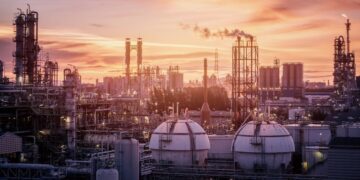





















































































































































Oil is one of the most important natural resources in the modern world. It fuels transportation systems, powers industries, supports agriculture, and forms the raw material for countless everyday products – from plastics and synthetic fibers to pharmaceuticals and cosmetics. Though often discussed as a single substance, “oil” is actually a broad category that includes several distinct types, each formed through different geological processes and found in different locations around the globe.
Understanding oil
Before examining specific types, it is important to understand how oil forms. Most oils originate from the remains of ancient microorganisms – primarily plankton and algae – that lived in oceans and lakes millions of years ago. When these organisms died, their remains settled on the seabed and mixed with sediment. Over time, layers of sediment buried this organic material.
As pressure and temperature increased over millions of years, the organic matter transformed into hydrocarbons through a process known as diagenesis and catagenesis. These hydrocarbons eventually migrated through porous rock formations until they became trapped beneath impermeable layers, forming oil reservoirs. Different environmental conditions – such as temperature, pressure, and rock composition – produce different types of oil. These variations influence the oil’s density, viscosity, sulfur content, and overall quality.
Types of oil
Understanding the different types of oil and their geographic distribution is essential for appreciating how global energy systems function and how nations shape their economic and political strategies around this valuable resource.
1. Conventional crude oil
Conventional crude oil is the most widely recognized and historically dominant form of petroleum. It is a liquid hydrocarbon mixture that flows relatively easily from underground reservoirs once drilled. Crude oil varies significantly in composition, but it generally contains a combination of hydrocarbons such as:
- Alkanes (paraffins)
- Cycloalkanes (naphthenes)
- Aromatic hydrocarbons
Crude oil is often classified based on two key properties:
- Density (API gravity): Determines whether the oil is light or heavy.
- Sulfur content: Determines whether it is sweet (low sulfur) or sour (high sulfur).
Light, sweet crude oil is generally more valuable because it is easier and cheaper to refine into fuels such as gasoline and diesel.
Where conventional crude oil is found
Large conventional oil reserves are found in sedimentary basins around the world. Some of the most significant regions include:
- The Middle East, particularly in Saudi Arabia, Iraq, Iran, Kuwait, and United Arab Emirates.
- Russia, especially in the West Siberian Basin.
- United States, notably in Texas, Alaska, and the Gulf Coast.
- Nigeria and Angola in West Africa.
- Venezuela in South America.
These regions contain large sedimentary rock formations that have trapped oil over geological timescales.
2. Light crude oil
Light crude oil refers to oil with a relatively low density and high API gravity. Because of its lighter molecular structure, it flows easily and requires less complex refining. It produces higher yields of valuable products such as:
- Gasoline
- Jet fuel
- Diesel
- Light crude oil is typically low in sulfur, making it environmentally and economically attractive.
Where light crude oil is found
Some of the most prominent sources of light crude oil include:
- United States (particularly shale basins in Texas and North Dakota).
- Libya, known for its high-quality sweet crude.
- Nigeria, which exports Bonny Light crude.
- Norway in the North Sea.
These locations are well known for producing oil that is relatively easy to refine and highly valued on international markets.
3. Heavy crude oil
Heavy crude oil is denser and more viscous than light crude oil. It contains larger hydrocarbon molecules and often higher concentrations of sulfur and metals. Because of these properties, heavy oil:
- Flows slowly or may not flow naturally.
- Requires heating or enhanced extraction techniques.
- Needs more complex refining processes.
Despite these challenges, heavy oil remains an important global resource due to its abundance.
Where heavy crude oil is found
Major heavy oil deposits are located in:
- Venezuela, particularly in the Orinoco Belt
- Canada
- Mexico
- Russia
The Orinoco Belt in Venezuela contains one of the largest accumulations of heavy oil in the world.
4. Oil sands (Bitumen)
Oil sands – also known as tar sands – contain bitumen, an extremely thick, sticky form of petroleum that resembles asphalt. Unlike conventional crude oil, bitumen does not flow easily and must be extracted using specialized methods such as:
- Surface mining
- Steam-assisted gravity drainage (SAGD)
After extraction, the bitumen is upgraded and refined into synthetic crude oil.
Where oil sands are found
The largest oil sands deposits occur in:
- Canada, particularly in the Athabasca region of Alberta
- Venezuela
- Russia
Canada’s Athabasca oil sands represent one of the largest petroleum reserves in the world.
5. Shale oil (Tight oil)
Shale oil refers to oil trapped within fine-grained sedimentary rock formations known as shale. The oil is stored in extremely small pores, making it difficult to extract through conventional drilling. Modern extraction relies on technologies such as:
- Hydraulic fracturing (fracking)
- Horizontal drilling
These methods break the rock formations and allow oil to flow to the surface.
Where shale oil is found
Significant shale oil formations exist in:
- United States (Permian Basin, Bakken Formation, Eagle Ford)
- China
- Argentina (Vaca Muerta formation)
- Russia
The development of shale oil in the United States dramatically reshaped global energy markets during the early twenty-first century.
6. Offshore oil
Offshore oil refers to petroleum reserves located beneath the seabed. These deposits formed in ancient marine environments and are accessed through drilling platforms placed in oceans or seas. Offshore drilling can occur in:
- Shallow water
- Deepwater
- Ultra-deepwater
Advances in engineering and subsea technology have enabled companies to drill at depths exceeding several kilometers below the ocean surface.
Where offshore oil is found
Major offshore oil-producing regions include:
- The North Sea, shared by United Kingdom and Norway.
- The Gulf of Mexico near United States and Mexico.
- Offshore fields in Brazil.
- Offshore production near Nigeria and Angola.
Brazil’s deepwater “pre-salt” reserves have become some of the most important offshore discoveries in recent decades.
7. Synthetic oil (From oil shale and other sources)
Synthetic oil refers to petroleum-like liquids produced artificially rather than extracted directly from underground reservoirs. One important source is oil shale, a rock containing kerogen – an organic material that can be converted into oil through heating. Other synthetic oils are produced through processes such as:
- Coal-to-liquid (CTL) conversion
- Gas-to-liquid (GTL) technology
These methods transform coal or natural gas into liquid fuels.
Where synthetic oil sources are found
Large oil shale deposits exist in:
- United States (Green River Formation)
- Estonia
- China
- Jordan
Estonia is notable for being one of the few countries that has historically relied heavily on oil shale for energy production.
The global distribution of oil resources
Oil resources are unevenly distributed around the world due to the geological conditions required for their formation. Regions that once contained ancient seas or large sedimentary basins tend to have the largest reserves.
- The Middle East: The Middle East holds a significant portion of the world’s proven oil reserves. Countries such as Saudi Arabia, Iran, Iraq, and Kuwait sit atop massive petroleum basins formed millions of years ago.
- North America: North America contains diverse oil resources, including conventional crude, shale oil, and oil sands. Major production occurs in United States and Canada.
- South America: South America’s oil production is dominated by Venezuela and Brazil, both of which possess large reserves of heavy oil and offshore petroleum.
- Africa: Africa has substantial oil deposits, particularly in West and North Africa. Countries such as Nigeria, Angola, and Libya are major exporters.
- Eurasia: Russia and the surrounding regions form one of the largest petroleum-producing areas in the world. Russia possesses vast reserves across Siberia and the Arctic.
Conclusion
Oil exists in several different forms, each shaped by unique geological processes and environmental conditions. From conventional crude oil flowing freely from underground reservoirs to thick bitumen locked within oil sands and tightly trapped hydrocarbons in shale formations, the diversity of oil types reflects the complexity of Earth’s geological history.
These resources are distributed unevenly across the globe, with major concentrations in the Middle East, North America, South America, Africa, and Eurasia. Advances in extraction technologies – particularly hydraulic fracturing and deepwater drilling – have expanded access to previously unreachable reserves, transforming global energy markets.
Despite the growing transition toward renewable energy sources, oil continues to play a central role in the global economy. Understanding its different types and where they are found provides valuable insight into the geopolitics, economics, and environmental challenges associated with one of the world’s most influential natural resources.