







































































































































































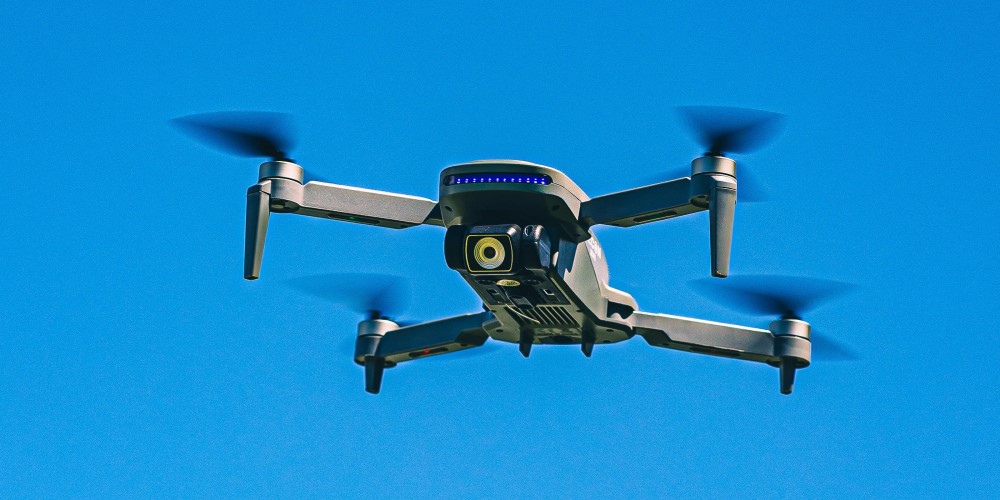
The introduction and rapid proliferation of unmanned aerial vehicles (UAVs), commonly known as drones, has fundamentally reshaped the character of warfare in the 21st century. What began as limited reconnaissance tools has evolved into highly capable systems employed for surveillance, precision strikes, intelligence collection, electronic warfare, and even autonomous operations. This evolution carries profound implications for military strategy, battlefield dynamics, international law, ethical norms, and the future of global conflict.
Evolution of drones in military conflict
Unmanned aerial vehicles first emerged in the latter half of the 20th century, initially as rudimentary systems for reconnaissance and target practice. However, it was the early 2000s that marked a pivotal turning point. The United States Central Intelligence Agency’s use of the MQ-1 Predator UAV for a targeted killing during the conflict in Yemen in 2002 – killing al-Qaeda leader Abu Ali al-Harithi – underscored the military potential of drones beyond simple observation. Since then, UAVs have transitioned from niche assets to central elements of national defense arsenals worldwide. With advancing sensor technologies, improved autonomy, and expanded payload options, drones now perform roles once reserved for manned aircraft and ground forces.
Strategic advantages of drone warfare
Drones have redefined strategic military capabilities in several key ways.
Enhanced intelligence, iurveillance, and reconnaissance (ISR)
One of the most significant strategic contributions of drones lies in their ability to conduct persistent surveillance over contested territory without risking human pilots. Equipped with high-resolution optical sensors, thermal imaging, radar, and signals intelligence tools, UAVs significantly enhance situational awareness on the battlefield.
This real-time intelligence flow allows commanders to track enemy movements, monitor logistics routes, and gain insights into adversary intent with unprecedented fidelity. The continuous presence of ISR drones has shortened the decision-cycle in combat and enabled rapid operational responses, which is indispensable in dynamic war zones.
Precision targeting and reduced collateral damage
Modern combat drones can deliver precision strikes using guided munitions, enabling highly targeted engagements with reduced collateral harm. These capabilities are built upon sophisticated targeting systems that integrate real-time video feeds, laser designation, and GPS guidance. While no technology is immune to errors, the precision inherent in many UAV-guided missions often results in more focused outcomes than traditional bombardment strategies, particularly when used following stringent rules of engagement.
Force protection and risk mitigation
One of the core strategic advantages of drones is the mitigation of risk to human operators. UAVs can operate in highly contested or politically sensitive environments without exposing pilots to direct harm. This not only preserves human life but also reduces the psychological burden associated with combat operations. In conflicts where sustained air patrols are required – such as long-range surveillance over hostile territory – drones can serve for extended periods, far exceeding the endurance of manned platforms.
Cost-effectiveness
Compared to manned aircraft, drones are cost-efficient in production, deployment, and maintenance. They require fewer personnel, lower logistical support, and shorter training timelines. For many nations with constrained defense budgets, this cost advantage enables broader deployment of airborne assets.
MilitaryConflict –
Operational and tactical transformation
The impact of drones is perhaps most visible in the operational conduct of warfare.
Ubiquitous battlefield presence
Drones have permeated every level of modern military operations – from strategic ISR missions to tactical support for ground units. Small quadcopters and fixed-wing UAVs can operate at low altitudes, offering infantry units immediate aerial perspectives that were once exclusive to air forces. In theaters such as Ukraine, inexpensive drones have been used to great effect by both state and non-state forces. These systems have been adapted for reconnaissance, artillery correction, kamikaze strikes, and real-time battlefield mapping.
Kamikaze and loitering munitions
The rise of loitering munitions, also known as “kamikaze drones”, exemplifies a new operational category. These drones hover in a target area until an optimal moment to strike, blending ISR and direct attack roles in a single platform. They enable attacks against fleeting targets without requiring large platforms to enter contested airspace. Their low cost and tactical flexibility have made them especially prevalent in asymmetrical conflicts, where smaller forces leverage inexpensive UAVs to offset conventional advantages held by larger militaries.
Drone swarms and autonomous systems
Advances in artificial intelligence and distributed control have led to the development of coordinated drone swarms – groups of UAVs capable of executing complex missions in tandem. Early implementations have been observed in conflicts where small autonomous groups communicate and adapt without continuous human input.
The Wall Street Journal Swarm tactics pose serious challenges for traditional air defense systems due to the difficulty of simultaneously engaging multiple small, agile targets.
Tactical and battlefield limitations
Despite their advantages, drones face significant constraints.
Electronic warfare vulnerabilities
Drones are heavily reliant on stable communication links and GPS signals. Adversaries can deploy electronic warfare (EW) tools – such as jamming, GPS spoofing, and signal interception – to disrupt or misdirect UAVs. This vulnerability can significantly degrade their performance in contested environments. Mitigation approaches include encrypted communication and anti-jamming technologies, but fundamental weaknesses remain, particularly in complex battlefield conditions.
Limited endurance and payload capacities
While strategic drones can remain airborne for extended periods, many tactical UAVs have limited flight endurance due to battery constraints. Additionally, payload capacities restrict the types and sizes of munitions drones can carry, which limits their effectiveness against heavily fortified or armored targets without support from heavier systems.
Dependence on infrastructure
Drone operations require robust logistical frameworks: reliable satellite communications, ground control stations, and secure data networks. In scenarios where such infrastructure is degraded – either by adversary action or environmental conditions – drone effectiveness can be severely compromised.
Ethical, legal, and humanitarian considerations
The use of unmanned systems raises complex ethical and legal questions.
Civilian casualties and accountability
Despite precision targeting, drones have been implicated in operations that resulted in civilian deaths. Historical examples include strikes in Yemen and Pakistan where errors in intelligence or targeting led to loss of innocent life. These incidents underscore the inherent risk of remote warfare and the challenge of distinguishing combatants from non-combatants in dynamic environments.
Moreover, in ongoing conflicts such as Ukraine, reports indicate that drones have been used in ways that may violate international humanitarian law. Investigations by international bodies have documented cases where drone attacks deliberately targeted civilian infrastructure and populations – raising war crimes concerns.
Sovereignty and extraterritorial use
Drone strikes beyond sovereign borders – particularly in undeclared conflict zones – have generated controversy over violations of international law. The extraterritorial use of force without clear authorization raises questions about state responsibility, accountability, and respect for territorial integrity.
Psychological distance and moral burden
There is ongoing debate within military and ethical circles about the psychological distance created by remote combat. Some experts argue that removing combatants physically from the battlefield may lessen the perceived severity of lethal force, potentially lowering barriers to its use. Conversely, operators may experience psychological stress related to the intimate observation of targets coupled with the act of remote engagement.
Geopolitical and strategic implications
Drones have profound implications for global military balance and defense policy.
Proliferation beyond great powers
The democratization of drone technology means that even less-affluent states and non-state actors can leverage UAVs. Commercial drones adapted for military use demonstrate that inexpensive systems can exert disproportionate influence in combat – a trend visible in contemporary conflicts across multiple regions. This proliferation complicates power projection and increases the risk of regional instability, as state actors contend with adversaries equipped with low-cost but effective UAV arsenals.
Arms race and counter-drone technologies
As drones become ubiquitous, counter-drone measures – such as EW systems, directed energy weapons, and radar systems – are being developed at scale. Nations are increasingly investing in layered defense architectures to detect, disrupt, and neutralize hostile UAVs.
Shifts in military doctrine
The rise of drones has prompted reevaluations of military doctrine, with integrated air and ground operations now incorporating UAV-centric tactics. This shift is illustrated in ongoing conflicts where drones are central to artillery support, force movement analysis, and battlefield attrition strategies.
Case studies: Drones in contemporary conflicts
Modern conflicts demonstrate the practical application and impact of drones on today’s battlefields.
Russia-Ukraine war
The conflict in Ukraine is frequently cited as a defining example of drone-centred modern warfare. Both sides deploy a spectrum of UAVs – from strategic long-endurance systems to low-cost tactical drones used for reconnaissance, artillery spotting, and precision strikes. Some reports suggest that a substantial proportion of casualties in this conflict are attributable to drone actions, highlighting their lethal impact on contemporary battlefields.
Non-state actors and criminal use
Beyond state militaries, non-state actors – including criminal organizations – have adopted UAVs for violent purposes. In Colombia, drug-trafficking groups have modified commercially available drones to carry explosives and conduct attacks against security forces, illustrating the diffusion of drone technology into irregular warfare contexts.
Future trajectories of drone warfare
Technological advancements and strategic trends will shape the future of drone warfare.
AI and autonomous operations
Artificial intelligence is poised to further enhance UAV capabilities, enabling autonomous navigation, target recognition, and swarm coordination. While human oversight remains a critical safeguard, these innovations will likely improve operational autonomy and reduce dependence on direct control links.
Ethical and regulatory frameworks
The growing prominence of drones underscores the urgency of establishing robust international norms governing their use. Clearer protocols are needed to ensure accountability, minimize civilian harm, and align autonomous operations with established humanitarian principles.
Integration across domains
Future warfare will see drones integrated across land, air, sea, and space domains. Underwater and ground drones are already complementing aerial systems, broadening the scope of unmanned operations.
Conclusion
The advent of drones represents one of the most significant technological shifts in modern warfare. Their influence extends far beyond battlefield tactics to touch upon ethics, international law, military doctrine, and global power dynamics. As technologies mature – particularly in areas such as AI and autonomous operations – the challenges and opportunities posed by drones will only become more complex and consequential. Understanding this evolution is essential not only for military strategists and policymakers but for international institutions and civil society, as the decisions made today will shape the character of warfare for generations to come.