








































































































































































The United States military occupies a singular position in global affairs. It is not only the most technologically advanced fighting force in the world, but also the most globally deployed, best-funded, and institutionally complex military establishment ever assembled. Its power extends far beyond raw battlefield capability, encompassing logistics, intelligence, diplomacy, alliances, and deterrence. To understand how powerful the U.S. military truly is, one must examine its scale, spending, technological edge, global reach, command structure, strategic doctrine, and its role within the broader international system.
1. Scale and size of the U.S. military
At the most basic level, military power is often measured by manpower. In this respect, the United States maintains one of the largest and most professional armed forces in the world.
Active and reserve forces
The U.S. military consists of approximately:
- 1.3 million active-duty personnel.
- Around 800,000 reserve and National Guard members.
These forces are distributed across six branches:
- Army
- Navy
- Air Force
- Marine Corps
- Space Force
- Coast Guard (under the Department of Homeland Security during peacetime)
Unlike many large militaries that rely heavily on conscription, the U.S. armed forces are entirely volunteer-based. This allows for higher levels of training, specialization, professionalism, and cohesion.
Quality over quantity
While countries like China and India possess larger standing armies in numerical terms, the U.S. military emphasizes force quality rather than sheer numbers. American soldiers, sailors, airmen, marines, and guardians receive extensive training, operate advanced equipment, and benefit from superior logistics and medical support.
2. Military spending and economic power
Perhaps the clearest indicator of U.S. military power is its budget.
Unmatched defense expenditure
The United States spends more on defense than the next several countries combined. Annual military expenditure exceeds $1 trillion, accounting for roughly 40% of global military spending. This vast budget supports:
- Research and development of advanced weapons systems.
- Global military bases and deployments.
- Competitive salaries and benefits.
- Veterans’ healthcare and pensions.
- Training, simulations, and readiness programs.
Economic backbone
Military power is inseparable from economic strength. The U.S. economy, the largest in the world by nominal GDP, provides a sustainable foundation for long-term military investment. Unlike many states that struggle to balance defense spending with domestic needs, the United States can project military power without immediate economic collapse.
3. Technological superiority and innovation
The defining feature of U.S. military power is its technological dominance.
Advanced weapon systems
The United States leads the world in:
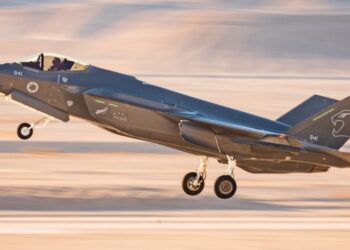
- Fifth-generation fighter aircraft (F-22 Raptor, F-35 Lightning II).
- Stealth bombers (B-2 Spirit, upcoming B-21 Raider).
- Precision-guided munitions.
- Unmanned aerial vehicles (drones).
- Aircraft carriers with nuclear propulsion.
No other military possesses the same combination of stealth, precision, range, and integration across domains.
Research and development
The U.S. Department of Defense invests tens of billions of dollars annually in R&D. Institutions such as:
- DARPA (Defense Advanced Research Projects Agency).
- National laboratories.
- Defense contractors (Lockheed Martin, Raytheon, Boeing, Northrop Grumman).
They have driven breakthroughs in artificial intelligence, cyber warfare, hypersonic weapons, autonomous systems, and space-based capabilities.
Network-centric warfare
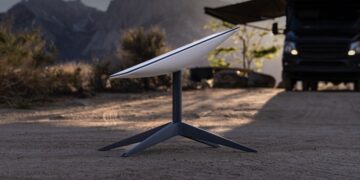
American military doctrine emphasizes information dominance. Satellites, sensors, cyber systems, and intelligence networks allow U.S. forces to see, communicate, and strike faster than any adversary. This integration across land, sea, air, space, and cyberspace is unmatched.
4. Global reach and force projection
Military power is not merely about defending borders; it is about the ability to act anywhere in the world.
Worldwide presence
The United States maintains:
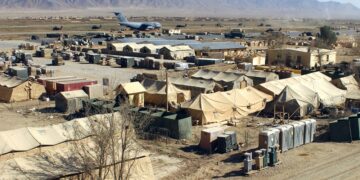
- Hundreds of military bases across Europe, Asia, the Middle East, Africa, and the Pacific.
- Forward-deployed forces in key strategic regions.
- Naval fleets operating continuously across all major oceans.
No other country has a comparable global footprint.
Power projection capabilities
The U.S. military can:
- Deploy tens of thousands of troops overseas within days.
- Conduct sustained air and naval operations far from home.
- Support humanitarian missions, evacuations, and disaster relief.
Aircraft carriers function as floating airbases, allowing the U.S. to project air power without relying on foreign territory.
5. Naval dominance
The United States Navy is the most powerful naval force in history. Control of the seas enables the United States to protect trade routes, deter adversaries, and support operations on land.
Aircraft carrier supremacy
The U.S. operates 11 nuclear-powered aircraft carriers, each capable of carrying dozens of advanced aircraft. By comparison, most countries possess none or only one, often conventionally powered. These carriers are supported by:
- Guided-missile cruisers.
- Destroyers.
- Submarines.
- Logistics and supply ships.
Submarine fleet
American nuclear submarines, particularly ballistic missile submarines (SSBNs), form a critical component of U.S. strategic deterrence. They are stealthy, long-endurance platforms capable of delivering nuclear strikes if necessary.
6. Air power and strategic bombing
Air superiority has been a cornerstone of U.S. military doctrine since World War II.
The world’s strongest air force
The U.S. Air Force is the largest and most capable air force globally, complemented by naval and marine aviation units. Combined, they field:
- Thousands of combat aircraft.
- Strategic bombers with intercontinental range.
- Airlift fleets capable of moving troops and equipment worldwide.
Strategic deterrence
Long-range bombers, supported by aerial refueling, allow the United States to strike targets anywhere on Earth within hours. This capability underpins both conventional warfare and nuclear deterrence.
7. Nuclear arsenal and deterrence
At the highest level of military power lies nuclear capability.
The nuclear triad
The United States maintains a nuclear triad consisting of:
- Land-based intercontinental ballistic missiles (ICBMs).
- Submarine-launched ballistic missiles (SLBMs).
- Strategic bombers.
This structure ensures survivability and second-strike capability, making a successful nuclear attack against the U.S. virtually impossible.
Deterrence, not use
While nuclear weapons are rarely discussed in operational terms, their existence underpins U.S. military power. They deter existential threats and shape global strategic stability.
8. Space and cyber warfare capabilities
Modern warfare extends beyond traditional domains.
Space force
The creation of the U.S. Space Force reflects the growing importance of space in military operations. Satellites support:
- Communications.
- Navigation (GPS).
- Missile warning.
- Intelligence and surveillance.
Disruption of space assets could cripple modern militaries, making dominance in this domain strategically vital.
Cyber power
The United States possesses advanced offensive and defensive cyber capabilities. Cyber Command can:
- Defend military networks.
- Conduct cyber operations against adversaries.
- Integrate cyber tools into broader military campaigns.
Cyber power allows influence without conventional force, often below the threshold of open war.
9. Alliances and force multipliers
U.S. military power is amplified by alliances.
NATO and global partnerships
The United States leads NATO, the most powerful military alliance in history. It also maintains defense partnerships with:
- Japan
- South Korea
- Australia
- Philippines
- Numerous European and Middle Eastern states
These alliances provide:
- Shared intelligence.
- Forward bases.
- Combined forces.
- Political legitimacy.
In practice, U.S. military action often involves coalition support, multiplying its effectiveness.
10. Command, doctrine, and experience
Power is not only hardware; it is also organization and experience.
Unified command structure
The U.S. military operates under a sophisticated command system, with geographic and functional combatant commands coordinating operations across the globe.
Combat experience
Over the past century, the United States has participated in:
- World Wars.
- Cold War conflicts.
- Counterinsurgency operations.
- Conventional and asymmetric wars.
This extensive operational experience has shaped doctrine, leadership, and institutional learning, even as it has exposed limitations and challenges.
11. Limitations and constraints
Despite its immense power, the U.S. military is not invincible.
Political and legal constraints
Democratic oversight, international law, public opinion, and alliance politics all constrain how military power can be used.
Asymmetric warfare
Recent conflicts have shown that technological superiority does not guarantee quick or decisive victory against insurgencies or non-state actors.
Cost and sustainability
Maintaining global dominance is expensive. Long-term sustainability depends on economic health, political consensus, and strategic discipline.
Conclusion
The United States military is the most powerful military force in the world by virtually every measurable standard: budget, technology, global reach, naval and air dominance, nuclear deterrence, and alliance networks. Its power lies not only in its ability to fight wars, but in its capacity to deter them, shape global security, and influence international politics. However, military power is not absolute. It operates within political, economic, and moral frameworks.
The true measure of U.S. military strength is not simply its ability to destroy, but its capacity to sustain peace, uphold alliances, deter aggression, and adapt to an evolving global security environment. In this sense, the power of the United States military is both immense and complex – unmatched in capability, yet continually tested by the changing nature of war and the responsibilities that come with global leadership.