










































































































































































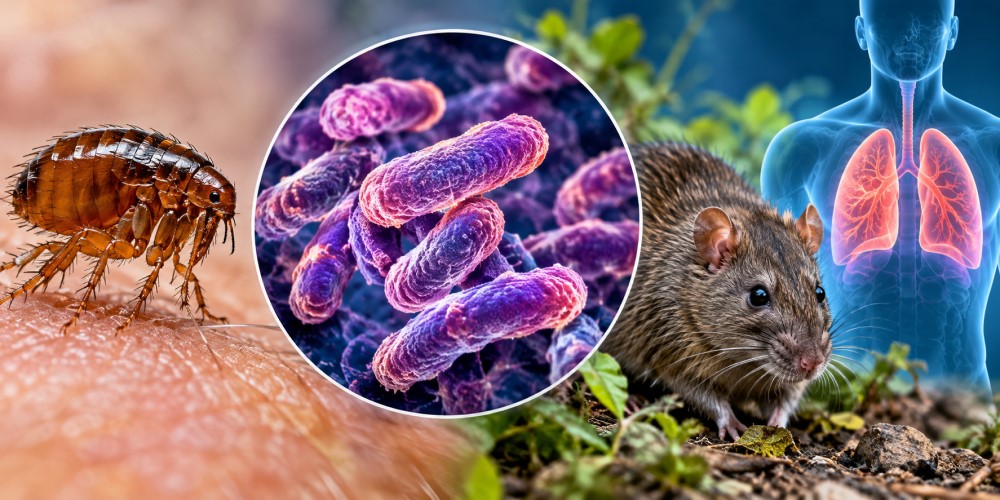
Plague is one of history’s most notorious infectious diseases, responsible for devastating epidemics such as the Black Death, yet it remains a treatable disease when recognized and managed promptly. It is caused by the bacterium Yersinia pestis, a zoonotic pathogen that primarily circulates among small mammals and their fleas. Although plague is now uncommon in most parts of the world, it continues to occur naturally in certain regions of Africa, Asia and the Americas, making awareness important for communities living in or travelling to affected areas. The disease can occur in several forms, with bubonic plague being the most common and pneumonic plague being particularly dangerous because it can spread directly between people.
What is plague?
Plague is an acute bacterial infectious disease caused by Yersinia pestis. It primarily affects rodents and other small mammals, but humans can become infected through contact with infected animals, bites from infected fleas, contaminated tissues or, in the case of pneumonic plague, infectious respiratory droplets. The disease is considered a serious public-health concern because it can progress rapidly and become fatal without timely antibiotic treatment.
Despite its historical reputation, plague is not an incurable disease. Modern antibiotics can effectively treat the infection, particularly when therapy begins early. The critical issue is recognizing the disease quickly because some forms can deteriorate dramatically within a short period. The World Health Organization (WHO) reports that untreated plague can have a case-fatality rate ranging from 30% to 100%, depending on the form and circumstances of infection.
Plague is also a zoonotic disease, meaning it naturally circulates among animals and can cross from animals to humans. Its persistence in animal populations means that eliminating plague from the world entirely is considerably more difficult than eliminating an infection that exists only in humans.
The history of plague
The historical significance of plague is closely associated with several devastating pandemics that profoundly affected human populations, economies and societies. Although people often use the term “plague” when referring specifically to the Black Death, plague has existed for much longer and has caused multiple major outbreaks throughout recorded history.
The First Plague Pandemic, commonly associated with the Justinianic Plague beginning in the sixth century, affected large areas of the Byzantine Empire and surrounding regions. Centuries later, the Second Plague Pandemic produced the Black Death in the 14th century, which caused enormous mortality across Europe and other parts of the world.
The Third Plague Pandemic began in the late 19th century and contributed significantly to the modern scientific understanding of the disease. During this period, researchers identified the bacterium responsible for plague and established important links between rodents, fleas and human infection.
The Black Death is particularly remembered because of its enormous demographic impact. WHO notes that the pandemic caused more than 50 million deaths in Europe during the 14th century. Modern plague, however, differs considerably from medieval plague in terms of diagnosis, surveillance, infection control and treatment.
What causes plague?
The direct cause of plague is infection with Yersinia pestis, a Gram-negative bacterium belonging to the genus Yersinia. The bacterium can survive and circulate in animal populations, particularly among rodents and other small mammals, with fleas serving as important vectors. A person does not ordinarily develop plague simply by being near rodents. Infection generally requires a particular route of exposure. The most common route is the bite of an infected flea.
A flea can acquire Y. pestis while feeding on an infected animal and subsequently transmit the bacterium when it bites another host. People can also become infected through direct contact with tissues or bodily fluids from an infected animal. This can occur when handling sick or dead animals without appropriate protection. Hunters, veterinarians, wildlife workers and people who handle potentially infected animals may therefore face increased exposure in endemic areas.
Pneumonic plague introduces another route of transmission. When the bacteria infect the lungs, an infected person may produce respiratory droplets containing Y. pestis. Close contact with someone suffering from pneumonic plague can therefore result in transmission, making this form particularly important from an outbreak-control perspective.
How is plague transmitted?
Transmission of plague depends largely on the form of infection and the circumstances surrounding exposure. Understanding these routes is essential because preventive measures are primarily designed to interrupt transmission between animals, fleas and humans.
a. Flea-borne transmission
Flea bites are the classic route through which humans acquire bubonic plague. Infected fleas generally become infected after feeding on bacterium-containing blood from an infected animal. When the flea subsequently feeds on another host, Y. pestis can enter the host’s tissues. The bacterium then travels through the lymphatic system and may multiply within nearby lymph nodes. The affected lymph node can become markedly swollen and painful, producing the characteristic swelling known as a bubo.
b. Animal-to-human transmission
Direct contact with infected animals can also transmit plague. Handling infected animal tissues or bodily fluids can allow the bacteria to enter through cuts, abrasions or other breaks in the skin. This route is particularly relevant in areas where plague occurs naturally among wildlife. People should avoid touching sick or dead wild animals and should follow local public-health advice if unexplained animal deaths occur.
c. Person-to-person transmission
Person-to-person transmission is primarily associated with pneumonic plague. When a person has bacteria multiplying in the lungs, coughing can release infectious respiratory particles into the surrounding environment. Bubonic plague itself is not normally transmitted directly from one person to another. However, untreated bubonic infection can spread through the bloodstream and potentially reach the lungs, producing secondary pneumonic plague.
Types of plague
Plague is classified principally according to the part of the body where the infection becomes established. The three major clinical forms are bubonic plague, septicemic plague and pneumonic plague.
a. Bubonic plague
Bubonic plague is the most common form of plague. It usually develops after an infected flea introduces Y. pestis into the body. The bacteria travel through lymphatic vessels to a nearby lymph node, where they multiply and cause severe inflammation. The defining feature is the bubo, a swollen and extremely painful lymph node. Buboes commonly occur in the groin, armpit or neck, depending on where the bacteria entered the body.
Fever, chills, headache, weakness, muscle aches, nausea and vomiting can accompany the lymph-node swelling. Without treatment, bubonic plague can progress. The bacteria may enter the bloodstream, producing septicemic plague, or reach the lungs, producing pneumonic plague. Prompt antibiotic treatment substantially improves the likelihood of recovery.
b. Septicemic plague
Septicemic plague occurs when Y. pestis infects the bloodstream. It can develop as a complication of bubonic plague or occur as the initial form of infection. Because bacteria are circulating throughout the body, septicemic plague can cause severe systemic illness. Symptoms can include fever, chills, extreme weakness, abdominal pain, shock and bleeding into the skin or other organs.
Severe disease can result in tissue damage and organ failure. The fingers, toes, nose and other extremities may develop areas of tissue death because of impaired circulation and severe infection. The historical association between plague and blackened extremities is partly related to this severe form of disease.
c. Pneumonic plague
Pneumonic plague is plague involving the lungs and is considered the most dangerous form because it can cause rapidly progressive pneumonia and can spread from person to person. It can develop when untreated bubonic or septicemic plague spreads to the lungs. It can also occur after a person inhales infectious respiratory particles from another individual or, in some circumstances, an infected animal. Symptoms can include fever, headache, weakness, shortness of breath, chest pain and rapidly developing cough. The cough may produce watery or bloody sputum. The disease can deteriorate extremely quickly if treatment is not started promptly.
Incubation period of plague
The incubation period is the interval between exposure to the bacterium and the development of symptoms. It varies according to the route of infection and the clinical form of disease. WHO states that people infected with Y. pestis commonly develop symptoms within one to seven days. Bubonic plague may have an incubation period of several days, while pneumonic plague acquired through inhalation can develop considerably faster, sometimes within approximately 24 hours. The short incubation period of pneumonic plague is one reason why rapid identification and public-health intervention are so important during suspected outbreaks.
Symptoms of plague
The symptoms of plague vary according to whether the infection primarily affects the lymphatic system, bloodstream or lungs. Some early symptoms can resemble other serious infections, which means diagnosis cannot reliably be based on symptoms alone.
Early symptoms
Early plague may cause sudden fever, chills, headache, weakness and body aches. Nausea and vomiting may also occur. The illness can initially resemble influenza or another acute infection. In bubonic plague, the development of a painful swollen lymph node is an important clue. In septicemic plague, severe weakness, abdominal symptoms, bleeding and signs of shock may become prominent. In pneumonic plague, respiratory symptoms can develop rapidly.
Symptoms of bubonic plague
The characteristic symptoms include sudden fever, chills, headache, weakness and one or more painful swollen lymph nodes. The lymph node swelling is called a bubo. Buboes can become extremely tender and may restrict movement because of their location and severity. Common locations include the groin, armpit and neck.
Symptoms of septicemic plague
Septicemic plague can cause high fever, chills and profound weakness. Abdominal pain, shock and bleeding may occur. The infection can cause severe damage to tissues and organs. In advanced disease, areas of skin and tissue may become dark or black as tissue dies. This feature contributed to some of the historical descriptions associated with plague.
Symptoms of pneumonic plague
Pneumonic plague can cause fever, headache, weakness, shortness of breath, chest pain and rapidly worsening cough. Sputum may be watery or blood-stained. Because respiratory deterioration can occur quickly, suspected pneumonic plague should be treated as a medical emergency.
Stages of plague
Plague does not necessarily progress through identical stages in every patient. The course depends on the route of infection, the patient’s health and immune response, the bacterial burden and how quickly treatment begins. Nevertheless, the disease can be understood as progressing from exposure and incubation to early systemic illness, localized or systemic infection, complications and either recovery or severe disease.
Stage 1: Exposure and incubation
The process begins when Y. pestis enters the body, commonly through an infected flea bite, direct contact with infected material or inhalation of infectious respiratory particles. During the incubation period, the individual may have no obvious symptoms. The duration depends on the form of plague, with pneumonic infection potentially producing symptoms much sooner than many cases of bubonic disease.
Stage 2: Initial illness
Once the bacteria begin multiplying, systemic symptoms such as fever, chills, headache, weakness and body aches may appear. At this point, the disease may still be difficult to distinguish from other acute infections without considering exposure history and clinical findings. In bubonic plague, inflammation of nearby lymph nodes produces the characteristic bubo. In pneumonic disease, respiratory symptoms become increasingly prominent.
Stage 3: Dissemination
If the infection is not treated effectively, Y. pestis can spread beyond its initial site. Bubonic plague can progress into the bloodstream, causing septicemic plague, or spread to the lungs. Once the bacteria enter the bloodstream, the illness can become systemic and potentially life-threatening. Similarly, lung involvement creates the possibility of respiratory transmission in pneumonic plague.
Stage 4: Severe disease and complications
Advanced plague can cause serious complications, including septic shock, respiratory failure, organ dysfunction, tissue death and extensive infection. Pneumonic plague can progress particularly rapidly. The risk of severe outcomes increases when appropriate antimicrobial treatment is delayed. WHO emphasizes that early identification and treatment are essential because untreated pneumonic and septicemic plague can be fatal.
Stage 5: Recovery or fatal disease
With timely, appropriate antibiotic treatment and supportive medical care, many patients can recover from plague. Without treatment, however, the disease can become fatal, particularly when it has progressed to pneumonic or septicemic infection. For this reason, suspected plague should not be managed by waiting for symptoms to become severe or for laboratory confirmation before treatment begins.
Risk factors for plague
The risk of plague is closely connected to exposure to infected animals, fleas and environments where Y. pestis naturally circulates. Living or travelling in a plague-endemic area can increase exposure risk, especially when environmental conditions promote transmission among animal populations. People who handle wildlife, hunt, work with animals or come into contact with potentially infected animal carcasses may face increased risk.
Flea exposure is another important risk factor. Close contact with a person who has pneumonic plague can create an additional risk because this form can be transmitted through respiratory particles. Healthcare workers and caregivers require appropriate infection-control precautions when managing suspected cases.
Diagnosis of plague
Diagnosing plague requires a combination of clinical assessment, exposure history and laboratory testing. Because its early symptoms can resemble other infections, healthcare professionals must consider the possibility of plague when compatible symptoms occur in someone with an appropriate exposure history.
Medical history and physical examination
A healthcare professional will typically ask about recent travel, residence in plague-endemic areas, flea bites, contact with rodents or other wild animals, handling of animal carcasses and contact with a person suffering from severe respiratory illness. Physical examination may reveal characteristic findings such as a painful bubo, signs of bloodstream infection or rapidly developing pneumonia.
Laboratory testing
Laboratory confirmation involves testing clinical specimens for Y. pestis. Depending on the clinical presentation, samples may include blood, material from a bubo or respiratory specimens such as sputum. Blood cultures can be useful for detecting the bacterium, while specialized laboratory methods can identify Y. pestis or evidence of infection. WHO also recognizes validated rapid diagnostic tests that can detect plague-related antigens in appropriate settings, particularly in endemic areas where rapid laboratory capacity may be limited.
Why treatment should not wait for confirmation
One of the most important principles in plague management is that treatment should begin when plague is strongly suspected rather than waiting for final laboratory confirmation. CDC guidance specifically recommends beginning appropriate antimicrobial therapy as soon as plague is suspected. Diagnostic specimens should be collected promptly, but treatment should not be unnecessarily delayed while laboratory testing is underway.
Treatment of plague
Plague is treated with antibiotics that are active against Y. pestis. Modern treatment has transformed plague from a disease associated with extremely high mortality into an infection that can often be successfully treated when recognized early. The specific antibiotic, route of administration and duration depend on the patient’s clinical condition, the form of plague, age, pregnancy status, allergies, drug interactions and local treatment guidelines.
CDC guidance lists gentamicin and fluoroquinolones among first-line treatment options in the United States, while WHO guidelines recognize several appropriate antimicrobial options. Severely ill patients may require intravenous antibiotics and intensive supportive care. Treatment may also involve management of respiratory failure, shock, dehydration, organ dysfunction and other complications.
Antibiotic therapy commonly lasts around 10 to 14 days, although the precise duration can vary depending on clinical circumstances. CDC advises that treatment can be extended when fever or other concerning signs persist. People should never attempt to treat suspected plague with leftover antibiotics or self-prescribe medication. Because plague can progress rapidly, medical evaluation and appropriate antimicrobial selection are essential.
Treatment of different forms of plague
The treatment principles are broadly similar across plague forms, but clinical management differs according to the affected organs and risk of transmission. Bubonic plague generally requires systemic antibiotic therapy and monitoring for progression to septicemic or pneumonic disease. A bubo may require medical assessment for complications, but treatment focuses primarily on eliminating the underlying infection. Septicemic plague requires urgent systemic antimicrobial treatment and intensive monitoring because bloodstream infection can cause shock, tissue damage and organ failure.
Pneumonic plague requires especially urgent treatment because of its rapid progression and potential for person-to-person transmission. Appropriate infection-control measures are also essential to protect healthcare workers, caregivers and close contacts. WHO identifies pneumonic plague as a particular public-health concern because it can trigger outbreaks through respiratory transmission.
Prevention of plague
Preventing plague depends heavily on reducing exposure to infected fleas, rodents, animal tissues and infectious respiratory secretions. Prevention is especially important in areas where plague is naturally maintained among animal populations.
a. Prevent flea bites
Reducing flea exposure is one of the most important preventive measures. People in areas where plague occurs should follow local public-health recommendations concerning flea control and should take measures to reduce exposure to fleas around homes, animals and potentially infested environments. Pets that roam outdoors can also encounter infected fleas or wildlife. Veterinary advice regarding appropriate flea control can therefore form part of a broader household prevention strategy.
b. Avoid contact with sick or dead animals
People should not handle sick or dead wild animals, particularly rodents and other small mammals, in areas where plague is known to occur. If contact with an animal carcass is unavoidable for occupational or public-health reasons, appropriate protective procedures should be followed. WHO specifically advises people in affected areas not to handle animal carcasses and to avoid direct contact with potentially infected tissues.
c. Reduce rodent exposure
Good environmental sanitation can reduce conditions that attract rodents. Food should be stored securely, rubbish should be managed properly and places where rodents can shelter should be addressed. Rodent control should also be approached carefully because disturbing infected rodents or fleas without appropriate precautions can potentially increase exposure.
d. Use protective measures around suspected cases
Healthcare professionals and caregivers dealing with suspected pneumonic plague require appropriate infection-control measures. Avoiding direct contact with infectious respiratory secretions and following recommended personal protective equipment procedures can reduce transmission. WHO has specific recommendations for infection prevention, including protective measures when dealing with potentially infectious human remains.
Can plague spread from person to person?
Person-to-person transmission is possible, but it is mainly associated with pneumonic plague rather than ordinary bubonic plague. A person with pneumonic plague can release infectious particles when coughing, allowing close contacts to become exposed. This distinction is important because someone with bubonic plague is not ordinarily considered a source of direct respiratory transmission.
However, bubonic or septicemic disease can progress to lung involvement, creating secondary pneumonic plague. When pneumonic plague is suspected, public-health authorities may identify and evaluate close contacts. Depending on the circumstances, exposed people may be monitored and may receive preventive antibiotic treatment.
Complications of plague
Plague can cause serious complications when treatment is delayed. The nature of the complications depends on the form of infection and the extent to which the bacteria have spread. Possible complications include septic shock, respiratory failure, organ dysfunction, tissue necrosis and severe systemic infection.
Septicemic disease can damage small blood vessels and tissues, while pneumonic disease can severely compromise breathing. Untreated infection can progress rapidly to death. This is why the most important determinant of outcome is often the speed with which the disease is recognized and appropriate antibiotics are administered.
Plague and the Black Death
The Black Death remains the best-known historical example of plague, but it is important to distinguish historical pandemics from the disease as it is understood and treated today. Medieval populations lacked modern microbiology, antibiotics, advanced infection control, effective surveillance and many of the public-health measures now used to contain infectious diseases. Consequently, outbreaks could spread extensively and cause extraordinary mortality.
Today, plague continues to exist naturally in some parts of the world, but it is considerably more manageable when detected promptly. WHO reports that most human cases during 2019-2025 occurred in the Democratic Republic of the Congo and Madagascar, illustrating that plague remains a contemporary public-health issue rather than merely a historical disease.
Is there a vaccine for plague?
Vaccination against plague is not part of routine vaccination programmes for the general population. WHO does not generally recommend plague vaccination except for certain people at particularly high occupational risk, such as some laboratory personnel and healthcare workers. For most people, prevention focuses instead on reducing exposure to infected fleas and animals, recognizing disease early and implementing appropriate infection-control measures when cases occur.
When should you seek medical attention?
Anyone who develops sudden fever, severe weakness, painful swollen lymph nodes, or rapidly developing respiratory symptoms after possible exposure to infected fleas, rodents, wild animals or a person with suspected pneumonic plague should seek urgent medical attention. Pneumonic symptoms are particularly concerning because the disease can progress rapidly and may be transmissible to close contacts.
A history of travel or residence in an area where plague occurs naturally should be communicated to healthcare professionals. Plague is not an illness that should be watched at home while waiting for symptoms to become more obvious. Early treatment is central to survival, and CDC guidance recommends beginning appropriate therapy when plague is suspected rather than waiting for confirmatory test results.
Plague in the modern world
Although plague is often portrayed as a disease of the Middle Ages, Yersinia pestis remains present in natural animal reservoirs today. Human cases continue to occur, particularly in parts of Africa, Asia and the Americas. Modern surveillance systems, laboratory testing, antibiotics, environmental control and public-health interventions have greatly reduced the threat posed by plague compared with historical pandemics.
Nevertheless, outbreaks can still present substantial challenges, especially in remote areas where diagnostic facilities and timely treatment may be difficult to access. WHO’s current plague guidance emphasizes surveillance, rapid diagnosis, appropriate antimicrobial therapy, infection prevention and control, and effective outbreak response.
Final thoughts
Plague is a serious bacterial disease caused by Yersinia pestis, but its modern significance is very different from its historical reputation. The disease continues to circulate naturally among animals and fleas and can occasionally infect humans through flea bites, direct contact with infected animal tissues or respiratory exposure in pneumonic cases. The three major forms – bubonic, septicemic and pneumonic plague – differ in their principal sites of infection, symptoms, routes of transmission and potential complications.
The most important lesson about plague is that it is a medical emergency that can nevertheless be treated effectively. Painful swollen lymph nodes, sudden fever and systemic illness following possible exposure to infected fleas or animals should prompt urgent medical evaluation, while rapidly developing pneumonia after a relevant exposure requires immediate attention because pneumonic plague can spread between people. Laboratory testing is essential for confirmation, but treatment should not be unnecessarily delayed when clinical and epidemiological evidence strongly suggests plague.
Modern antibiotics, public-health surveillance, environmental controls and infection-prevention measures have transformed plague from one of history’s most feared diseases into an uncommon but still important infectious disease. Continued awareness is particularly important in areas where Y. pestis remains established in animal populations. Early recognition, rapid treatment and prevention of exposure remain the most effective tools for reducing illness, complications, transmission and death from plague.