












































































































































































Sleep is one of the most fundamental pillars of good health, yet millions of people struggle to fall asleep quickly each night. Lying awake for long periods can be frustrating, especially when you know you need to wake up early the next morning. While there is no guaranteed method that works for everyone every single time, certain scientifically backed techniques can dramatically reduce the time it takes to fall asleep.
One of the most well-known approaches is the “two-minute sleep method”, a relaxation technique originally developed to help military personnel fall asleep under stressful and less-than-ideal conditions. Combined with proper sleep hygiene, breathing exercises, muscle relaxation, and mental visualization, it can significantly improve your chances of drifting off within a couple of minutes.
Understanding how sleep begins
Falling asleep isn’t simply a matter of closing your eyes. It is a complex biological process involving your brain, nervous system, hormones, and body temperature. Understanding how sleep works helps explain why certain relaxation techniques are so effective. Your body naturally prepares for sleep through its circadian rhythm.
As evening approaches, the brain releases melatonin, body temperature gradually decreases, heart rate slows, and muscles begin to relax. However, stress, anxiety, bright screens, caffeine, and stimulating activities can interrupt these natural processes. The goal of the two-minute sleep method is to encourage the body into a deeply relaxed state that mimics the natural transition into sleep.
Can you really fall asleep in two minutes?
Although the technique is often marketed as helping people fall asleep in exactly two minutes, it’s important to understand what this claim means. For individuals who regularly practice the method, sleep onset may indeed occur within two minutes under favorable conditions. However, beginners typically require consistent practice over several weeks before achieving such rapid results.
Research consistently shows that relaxation techniques reduce sleep latency – the amount of time it takes to fall asleep – even if they don’t always produce immediate two-minute results. The important takeaway is not the exact time but the ability to fall asleep faster than you normally would.
The military two-minute sleep method
The most famous rapid sleep technique is commonly referred to as the military sleep method. It reportedly originated as part of training designed to help military pilots sleep despite noisy and stressful environments. The process focuses on systematically relaxing the body while calming the mind.
1. Relax your facial muscles
Everything begins with your face. Many people unknowingly carry stress in their facial muscles. Tight jaws, furrowed brows, clenched teeth, and tense eye muscles signal the brain that you’re still alert. Start by relaxing:
- Your forehead
- Your eyebrows
- Your eyelids
- Your cheeks
- Your jaw
- Your tongue
- The muscles around your mouth
Allow your face to feel completely loose and heavy.
2. Drop your shoulders
Shoulders naturally rise when we’re stressed. Let your shoulders sink naturally toward the mattress. Feel the tension flowing downward into the bed. Allow your neck to soften as well.
3. Relax your arms
Relax one arm completely before moving to the other. Focus on:
- Upper arm
- Elbow
- Forearm
- Wrist
- Hand
- Fingers
Imagine each arm becoming heavier with every slow breath.
4. Relax your chest
Allow your breathing to become slow and effortless. Do not force deep breaths. Instead, let each exhale become slightly longer than each inhale. Your chest should gently rise and fall without effort.
5. Relax your legs
Starting with your thighs, release all muscular tension. Continue relaxing:
- Knees
- Calves
- Ankles
- Feet
- Toes
Imagine every muscle becoming loose and weightless.
6. Clear your mind
This is often the most difficult step. Instead of trying not to think, replace active thinking with simple mental imagery. Imagine:
- Floating peacefully in a calm lake.
- Lying in a dark room wrapped in a warm blanket.
- Watching clouds slowly drift across the sky.
- Sitting beside a quiet mountain stream.
If distracting thoughts appear, gently repeat the words: “Don’t think”. Repeat slowly for about ten seconds before returning to your visualization.
Why muscle relaxation works
Progressive muscle relaxation reduces activity within the sympathetic nervous system – often called the fight-or-flight system. When muscles relax:
- Heart rate decreases.
- Blood pressure drops.
- Stress hormone production declines.
- Breathing becomes slower.
- The brain receives signals that the body is safe.
This physiological response naturally promotes sleep.
The importance of breathing
Breathing is one of the few bodily functions you can consciously control, making it a powerful tool for relaxation. Slow breathing activates the parasympathetic nervous system, which promotes rest and recovery. A simple breathing rhythm involves:
- Inhale through the nose for four seconds.
- Pause briefly.
- Exhale slowly through the mouth for six seconds.
The longer exhale encourages deeper relaxation. Avoid breathing too deeply, as excessive oxygen intake can sometimes increase alertness.
The 4-7-8 breathing technique
Another popular sleep aid is the 4-7-8 breathing method.
How to perform it
The technique is simple but requires steady pacing.
- Inhale quietly through your nose for four seconds.
- Hold your breath for seven seconds.
- Exhale slowly through your mouth for eight seconds.
- Repeat four to eight cycles.
This breathing pattern slows the heart rate and encourages mental calmness. People experiencing anxiety before bedtime often find this technique particularly helpful.
Visualization techniques that promote sleep
The brain responds remarkably well to calming mental imagery. Instead of worrying about tomorrow’s responsibilities, focus on peaceful scenes. Examples include:
- Gentle ocean waves.
- Snow quietly falling.
- A quiet forest.
- A warm cabin during rainfall.
- A hammock swinging beneath palm trees.
Visualization reduces cognitive arousal, making it easier to drift into sleep.
Why overthinking keeps you awake
Many people struggle to sleep because their brain becomes more active once external distractions disappear. Common nighttime thoughts include:
- Work deadlines.
- Financial concerns.
- Relationship issues.
- Embarrassing memories.
- Planning tomorrow’s schedule.
These thoughts activate stress pathways that delay sleep. One effective solution is to schedule “worry time” earlier in the evening by writing concerns in a notebook. This signals to your brain that those issues have already been acknowledged.
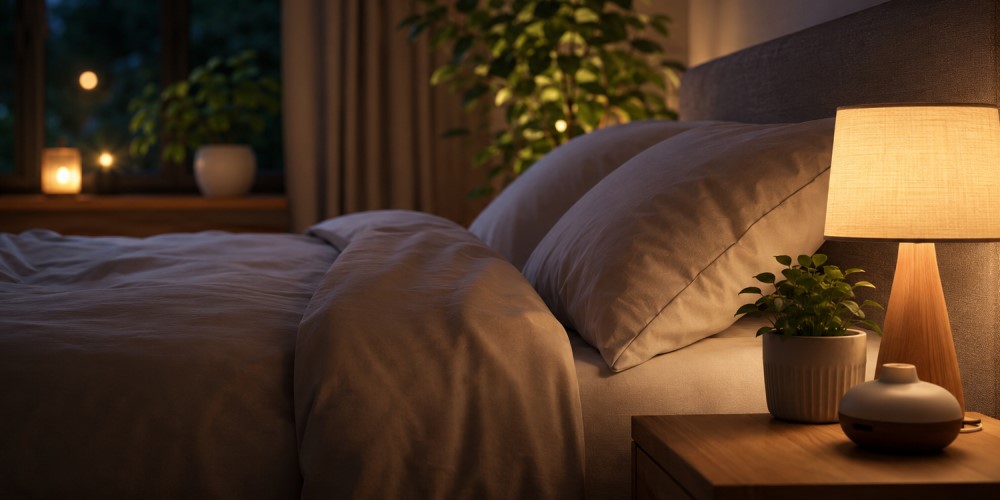
Optimize your sleep environment
Even the best sleep techniques become less effective if your bedroom encourages wakefulness.
a. Keep the room cool
Most experts recommend maintaining a bedroom temperature between 60°F and 67°F (15.5°C to 19.5°C). A cooler environment supports the body’s natural nighttime temperature drop.
b. Make the room dark
Light suppresses melatonin production. Reduce light by using:
- Blackout curtains.
- Eye masks.
- Dim bedside lamps.
Avoid bright overhead lighting before bed.
c. Reduce noise
If outside sounds disturb you, consider:
- White noise.
- Nature sounds.
- Earplugs.
- Soft fans.
Consistent background noise often masks disruptive sounds.
d. Choose a comfortable mattress and pillow
Poor support causes discomfort that repeatedly interrupts the relaxation process. Select bedding appropriate for your preferred sleeping position.
Limit screen time before bed
Electronic devices emit blue light that interferes with melatonin production. In addition, social media, emails, and news articles stimulate the brain when it should be winding down. Ideally:
- Stop using phones 30-60 minutes before bed.
- Dim screens if use is unavoidable.
- Enable blue-light filters during the evening.
Replacing scrolling with reading or meditation is often far more conducive to sleep.
Watch what you consume before bedtime
Diet significantly influences sleep quality.
a. Avoid caffeine late in the day
Caffeine remains in the body for several hours. Sources include:
- Coffee
- Tea
- Energy drinks
- Cola
- Chocolate
Many people benefit from avoiding caffeine after early afternoon.
b. Limit alcohol
Although alcohol may initially cause drowsiness, it fragments sleep later in the night and reduces restorative sleep stages.
c. Avoid heavy meals
Large meals close to bedtime can cause:
- Acid reflux
- Indigestion
- Stomach discomfort
Finish dinner at least two to three hours before sleeping whenever possible.
Establish a consistent bedtime routine
The brain thrives on consistency. Following the same sequence every evening conditions your body to recognize that sleep is approaching. An effective bedtime routine might include:
- Turning off electronics.
- Dimming lights.
- Taking a warm shower.
- Brushing your teeth.
- Reading a book.
- Performing breathing exercises.
- Practicing the two-minute sleep method.
Repeating this routine nightly strengthens the association between these activities and sleep.
Exercise during the day
Regular physical activity improves both sleep quality and sleep onset. Exercise helps:
- Reduce anxiety.
- Lower stress hormones.
- Increase deep sleep.
- Improve circadian rhythm.
However, vigorous workouts immediately before bedtime may temporarily increase alertness in some individuals. Morning or afternoon exercise is generally most beneficial.
Manage stress before bedtime
Stress remains one of the leading causes of insomnia. Helpful stress-management techniques include:
- Meditation.
- Journaling.
- Gentle stretching.
- Prayer.
- Listening to calming music.
- Gratitude exercises.
Reducing emotional tension makes rapid sleep significantly easier.
Common mistakes that prevent quick sleep
Many people unknowingly sabotage their own sleep efforts. Common mistakes include:
- Checking the clock repeatedly.
- Using the bed for work.
- Taking long daytime naps.
- Drinking caffeine late in the day.
- Exercising intensely before bed.
- Sleeping in on weekends.
- Watching stimulating television before bedtime.
Eliminating these habits often improves sleep more than adding new techniques.
What if the technique doesn’t work immediately?
The two-minute method requires patience. Many reports suggest that consistent practice over several weeks dramatically improves results. Think of it like learning meditation or playing a musical instrument. The first few attempts may feel awkward, but repetition trains both the body and mind to relax more efficiently. Avoid becoming frustrated if sleep doesn’t come instantly. Ironically, worrying about falling asleep often keeps people awake longer.
When difficulty sleeping becomes a medical issue
Occasional sleeplessness is normal. However, persistent problems may indicate an underlying sleep disorder. Consider consulting a healthcare professional if you:
- Regularly take longer than 30 minutes to fall asleep.
- Wake frequently during the night.
- Feel excessively tired during the day.
- Snore loudly or stop breathing during sleep.
- Experience symptoms several nights each week for months.
Conditions such as insomnia, sleep apnea, restless legs syndrome, anxiety disorders, or depression may require targeted treatment. Early intervention can significantly improve both sleep quality and overall health.
Additional habits that improve sleep over time
Rapid sleep is often the result of good daily habits rather than a single bedtime technique. Exposure to natural sunlight in the morning helps regulate your internal body clock, making it easier to feel sleepy at night. Staying hydrated throughout the day, while reducing fluid intake shortly before bed, can also minimize nighttime awakenings. Creating clear boundaries between work and personal time is equally important.
If you frequently answer emails or complete work tasks in bed, your brain may begin associating the bedroom with productivity instead of rest. Reserve your bed primarily for sleep, and your mind will gradually strengthen the connection between lying down and falling asleep. Consistency is another key factor. Going to bed and waking up at the same time every day – including weekends – reinforces your body’s natural sleep-wake cycle. Over time, you may find yourself becoming sleepy at the same hour each evening without conscious effort.
Conclusion
Learning how to fall asleep in just two minutes is less about discovering a magical shortcut and more about training your body and mind to enter a state of complete relaxation. The military sleep method, progressive muscle relaxation, controlled breathing, and calming visualization work together by reducing physical tension, quieting mental activity, and activating the body’s natural relaxation response.
Although achieving two-minute sleep may require practice, these techniques can substantially shorten the time it takes to fall asleep while improving the overall quality of your rest. Combined with healthy sleep habits – such as maintaining a consistent bedtime, limiting caffeine and screen exposure, optimizing your sleep environment, and managing daily stress – they create a powerful foundation for restorative sleep.
Rather than becoming discouraged if results are not immediate, approach the process with patience and consistency. Like any skill, falling asleep quickly becomes easier with regular practice. Over time, these habits can transform bedtime from a period of frustration into a reliable transition to restful, rejuvenating sleep.