





























































































































































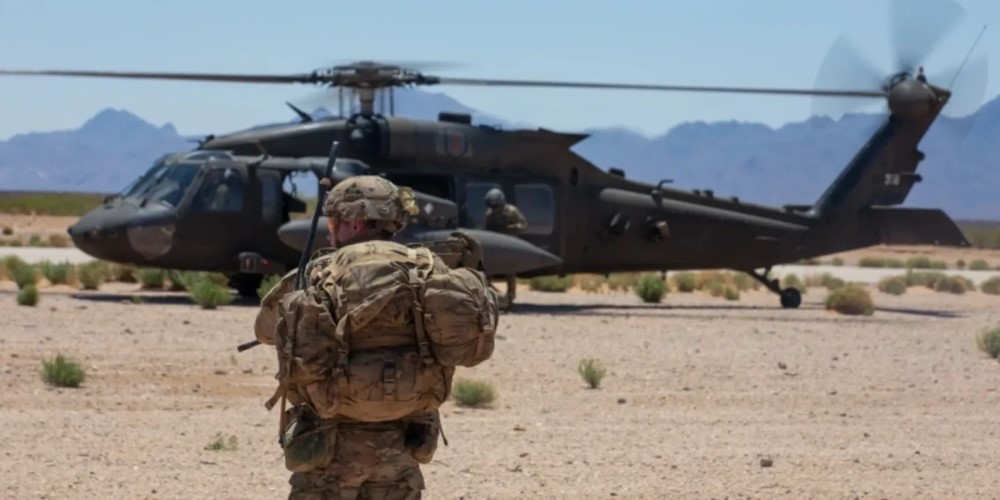
The United States military is more than a fighting force; it is a sprawling institution that has shaped global history, technological innovation, and international power dynamics for over two and a half centuries. From its unconventional beginnings during the colonial era to its modern dominance across land, sea, air, cyberspace, and even outer space, the U.S. military occupies a unique position in world affairs. It is simultaneously a deterrent, an employer, a technological incubator, and a geopolitical tool whose influence extends far beyond America’s borders.
Often portrayed through the lens of warfare and defense, the U.S. military’s story is far richer and more complex. It includes unexpected historical truths, little-known innovations, and striking contradictions – such as being both the world’s most technologically advanced force and one that increasingly struggles with recruitment. This article explores remarkable facts that illuminate the scale, history, and evolving nature of the U.S. military, revealing why it remains one of the most powerful and fascinating institutions on Earth.
1. The U.S. military is actually older than the U.S. itself
Hang on, how can that be true? Surely, a country needs to establish itself as a nation in order to get an army, right? Well, it turns out that the rich and erratic history of the early United States, before they could even be called as such, allowed for some crazy things to happen. The U.S. Armed Forces (the collective term for all branches of the U.S. military, headquartered in the Pentagon) traces its roots back to June 14, 1775.
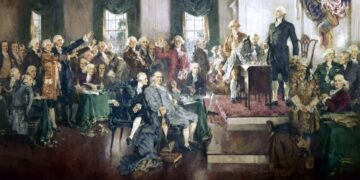
That’s just a bit before the year what we now call the U.S. declared independence from the British when the Second Continental Congress passed a resolution to create an army for the then-Thirteen Colonies. The army, called the Continental Army, was made up of soldiers from all the colonies and was led by George Washington. The army’s main goal was to defend the colonies against the British in the American Revolutionary War.
After the United States won its independence, the Continental Army (then joined by the Continental Marines and the Continental Navy) was demobilized in 1784. On June 3 of the same year, Congress created the United States Army (as they’re known today) by making them the effective successor of the Continental Army. The United States Navy and Marine Corps were created later but followed closely from their Continental Army origins. But not all aspects of the U.S. Army are as old as the country itself. Some are pretty much brand new.
2. The U.S. military has a space division
On December 20, 2019, then-President Donald Trump signed the 2020 National Defense Authorization Act, which led to the creation of the sixth and newest branch of the U.S. Armed Forces, called the U.S. Space Force. Based on the name, you might be thinking that this branch of the U.S. military is being prepared to fight off aliens or destroy asteroids before they can devastate the Earth.
The truth is somewhere in the middle but is relatively more mundane. The U.S. Space Force is primarily an intelligence-based branch of the U.S. military. Its goal is to protect the U.S. assets orbiting Earth, such as military satellites. A major part of maintaining these satellites is to provide more accurate information on what is happening on Earth rather than up in space.
The satellites gather intelligence on enemy military movements or military base locations and should ideally be among the first to detect missile launches. Of course, there’s no telling what the future might hold, so we might be seeing the U.S. military take a more active spacefaring approach as well. Until then, we’re firmly on Earth, and the U.S. military certainly has a significant presence there as well.
3. The U.S. military is present in roughly 40% of the countries on Earth
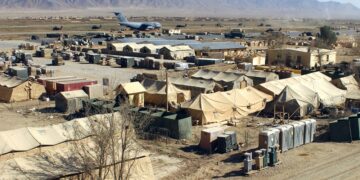
There’s a reason why the U.S. is called the world’s peacekeeping force. Out of roughly 200 countries in the world (depending on who you ask to define the term for you), U.S. military bases can be found in more than 80 of them. And the number of those bases is more than 750. But there’s more to that when it comes to outlining the sheer presence of the U.S. military in the world. While the U.S. is not currently involved in any wars (official or not), the U.S. still actively deploys soldiers for various missions. In some countries (primarily the Middle East), a bulk of that presence is to combat terrorism and defend governments against revolutionaries.
4. The U.S. military boosts local economies
Considering the sheer amount of troops stationed in a military base, most bases that are not in active warzones or don’t see heavy enemy fire end up being supported by the local community. Many soldiers bring their families with them when stationed overseas. Soon after, some of the military bases become towns in and of themselves. These towns are supported by both the U.S. government and the local industry. If the military bases are to be abandoned, it would cause an upheaval in the local economy.
5. The U.S. Armed Forces is the country’s biggest employer
There are only a few companies in the U.S. that can claim to have more than 1 million employees. While you might be thinking that some of the corporate giants would surely manage to get to that number, the reality is a bit different. The U.S. military has over 2 million employees. When put together, five federal Departments (Defense, Justice, Veterans Affairs, Homeland Security, and the Treasury) employ close to 3 million people. That’s close to 1% of the country’s total population.
6. The U.S. military doesn’t have the most soldiers in the world
Despite its power, the United States does not field the most soldiers. China and India both surpass the U.S. in active personnel. However, when measured relative to population, training, technological capability, and global reach, the U.S. military maintains a qualitative edge.
7. The U.S. military enlists close to 150,000 people each year
Considering just how many troops the U.S. military has in active and reserve duty at all times, it stands to reason that there’s a constant influx of fresh faces. However, only a portion of applicants get ultimately get recruited and end up serving. The discrepancy is based on two reasons:
- First, mandatory health screening means that some people simply can’t be accepted into the military in the first place.
- The second is the U.S. boot camp (or Basic Combat Training) or its equivalent, the One Station Unit Training (OSUT). Together, the boot camps test the physical and mental fortitude of all future troops. Between 11 and 14% of all people who enter the boot camp never make it to graduation.
8. You don’t have to be in peak physical condition to get into boot camp
The 10-week boot camp and the 22-week OSUT are grueling and designed to push the human body to the limit of its potential. However, that doesn’t mean that all applicants are in peak physical form with rippling muscles. The boot camps typically accept applicants who fulfill a few conditions on basic physical fitness. But, if the boot camps are strapped for applicants, the training is designed to transform any civilian off the street into a combat-ready soldier.
Also, just because the boot camp typically lasts 10 weeks, that doesn’t mean that you’re immediately out if you don’t graduate then. The drill sergeants can set some trainees aside to work with later groups and more customized training. The U.S. Navy even accepts applicants who don’t know how to swim, as that’s a relatively basic skill that is taught quickly.
9. The draft was abolished after the Vietnam War
Speaking of taking people off the street, the U.S. military used to have a compulsory draft in the 20th century. The last such draft was enacted between 1940 and 1973, as the U.S. military needed more men than the number who signed for voluntary duty. Arguably, the biggest draft happened during World War 2, when the U.S. military had 49 million men registered for the war, of whom 10 million were inducted into military service. At one point, roughly 900,000 men were in boot camps at once. In later decades, roughly 95% of the servicemen were there voluntarily, so the military typically has more than enough applicants.
10. Nearly all men are required to register with the U.S. military
Even though military service in the U.S. is voluntary today, men between the ages of 18 and 25 have to register with the U.S. military. This includes immigrants, foreign-born Americans, refugees, and even people with disabilities. This is because while the U.S. military stopped drafting men into the Army in 1970, U.S. federal law still permits compulsory conscription when needed. This is called selective service, allowing the U.S. military to snap up thousands of recruits in days should the situation demand it. However, this selective service doesn’t include women, despite women now being allowed in the Army and allowed to perform many of the same roles.
11. Women have posed as men to be in the Army
Women have had a rocky history with the U.S. military. While fighting in the Army was traditionally considered a man’s job, there were some women who wanted to defend the country by their side. The first women to join the Army did so by disguising themselves as men (it would appear that the physical tests were much laxer in the 19th century). B
y some estimates, between 400 and 750 women fought in the Civil War. The first women to officially join were doctors and nurses. The Army Nurse Corps became an official part of the U.S. Army in 1901. The first woman to receive a commission in the regular Army was Florence Blanchfield in 1947, and women became regular members of the Army in the following year.
12. Not all U.S. soldiers are humans
Weird as it may sound, not all service personnel in the Army are men or women. Some of the most loyal and reliable members of the U.S. military are dogs. The Army has thousands of canine officers in service. The dogs sniff out explosives, but they are also trained to bite and subdue enemies if needed. It’s estimated that each dog saves between 150 and 1,800 lives by warning the troops of mines and other dangers ahead. However, there are also service dogs that don’t get deployed onto the frontlines.
The military also uses service and therapy dogs, as well as mascots for various units and branches. Bulldogs named Chesty are mascots of the U.S. Marine Corps, for example. The U.S. military also uses robots or semi-autonomous machines. There are various designs of robots used in the Army, each with a different purpose. Flying drones have become synonymous with modern warfare, but there are also robots for disarming or triggering explosives and even evacuating victims.
13. The U.S. has been in wars for over 90% of its existence
Considering the U.S. military has been around for more than 250 years, what has it been up to all that time? Surprisingly much, actually. Troops have been deployed for 90% of its existence. More precisely, there have been less than 30 years when the U.S. military didn’t have a deployment. Not all of those deployments were active wars. The U.S. has only declared war on five occasions: the War of 1812, the Mexican-American War, the Spanish-American War, World War 1, and World War 2. Still, the U.S. military has been deployed to over 300 operations, with perhaps the most famous being the War on Terrorism, with troops being deployed to Iraq and Afghanistan.
14. 31 Presidents have been in the military
The President of the United States is automatically given the position of the Commander-in-Chief of the U.S. Armed Forces. This is regardless of the person’s existing military experience or training. However, out of all the people to take that title, 31 have served in the U.S. military in one way or another, starting with the first. In fact, after World War 1, there were 48 consecutive years where the President has been someone who has been in active military service.
15. George Washington is still the highest-ranking officer
But let’s go back to the first President, George Washington. His situation as the commander of the U.S. military (or the Continental Army as it was called at the time) and the first President didn’t come easy. In fact, he didn’t originally want to take the reins of the country. Despite extensive experience as a general and a military strategist, becoming a colonel in 1755, Washington’s plan after America’s declaration of independence was to retire and live away from politics.
To commemorate the first President’s successes, the U.S. government elected to retroactively give Washington the highest military ranking possible in 1976 and stated that no officer should outrank him. Effectively, this gave George Washington (who was dead for roughly 180 years at the time) the first and only six-star general rank, although the rank was never specified as such.
Number 16. One of the original creators of the Army was gay
To improve the status and the standing of the Continental Army, George Washington appointed Friedrich Wilhelm von Steuben to serve as the military’s inspector general in 1788. Von Steuben was given the monumental task of ensuring that the military stood strong in the darkest days of the revolution. Hailing from Prussia, von Steuben already had a solid military career as a captain in the Prussian Army.
However, it’s believed that at the time of his arrival in the colonies, he was fleeing the French clergy for being homosexual. Indeed, homosexuality (then typically termed sodomy) was considered a crime both in Europe and what would become the United States and would typically preclude a man from serving in the Army. Neither Benjamin Franklin, who introduced von Steuben to Washington, nor the future first President seemed to care about the rumors or dismissed them entirely.
17. The youngest U.S. soldier was 12 years old
Typically, only men over the age of 18 can serve in the military. However, that didn’t stop teenagers from trying their luck in serving their country, especially during World War 2, when the U.S. had one of the highest numbers of troops ever. But even then, the youngest World War 2 soldier was Calvin Graham, who enlisted at the age of 12 and served aboard the USS North Dakota. To get to the youngest ever soldier, we have to go further back into the American Civil War.
John Lincoln Clem ran away from home at the age of 9 attempting to become a part of the military. He was rejected by two different units for his small size (obviously due to age). However, he stuck by the 22nd Michigan Infantry, which eventually allowed him to serve as the drummer boy. Officers chipped in to give him the regular soldier pay, and he was enlisted at the age of 12. Clem eventually attained the rank of major general.
18. The military puts condoms in survival kits
While it might sound weird at first, condoms have proven to be remarkably useful for surviving in the wilderness and were issued in soldier kits from 1930 onward. Beyond the obvious use of protecting against sexually transmitted diseases, a latex condom is surprisingly sturdy for its size and malleability. Condoms can cover rifle barrels to prevent mud and other debris from clogging the rifle, which could have devastating consequences. They also made excellent waterproof containers for smaller items. One major use of condoms is to protect fuses from getting wet before they can be detonated. Finally, a condom can inflate to a volume of more than a liter and can hold water relatively easily, so it can be used as a makeshift canteen.
19. Ray-Bans were made for the U.S. Air Force
Apart from using relatively mundane items for military use, the U.S. military has also been responsible for a few remarkable inventions. The first of these is Ray-Bans, one of the most popular sunglasses brands in the world. The glasses came from the U.S. Air Force’s request to create aviation sunglasses that would prevent glare and distraction caused by intense light distortion higher up in the atmosphere. The U.S. Army Air Corps Colonel John Macready contacted the manufacturer Bausch & Lomb, which primarily worked in the medical equipment industry. The first viable prototype had anti-glare glass and a metal frame and was dubbed the Ray-Ban Aviator due to its ability to minimize both ultraviolet and infrared exposure.
20. The U.S. military made an improved version of Velcro
Another popular invention that we might not be able to live without is Velcro. However, for all the good it does, being able to stick and unstick with relative ease, Velcro has one huge flaw. It’s loud. Ordinarily, that might not be much of a downside. However, when you’re deep in the trenches or trying to get some sleep, pulling on a strip of Velcro can easily give away your position, or wake up battle-weary troops. That’s why the U.S. military has designed a Velcro alternative that looks and functions pretty much the same, yet is roughly 95% quieter than normal. If you’re interested in buying some military-grade Velcro for yourself, tough luck. The U.S. military hasn’t revealed the patent, making this invention one they’re willing to keep.
21. The U.S. used PlayStations instead of a supercomputer
While the U.S. military is a big spender, it has done its fair share of trying to cut back on some of the less necessary costs. Thus, when it came time to make a new supercomputer for the Air Force in 2010, the government tried a few out-of-the-box and off-the-shelf approaches. Enter the PlayStation 3. Costing roughly $400 per unit at the time, 1,760 of these gaming consoles were stripped bare and the central processing units put together to create a cohesive supercomputer, named the Condor Cluster. It was estimated that the entire computer cost $2 million. If that sounds like a bit much, just wait. According to some early estimates, the final price of the computer was only between 5 and 10% of what it would cost to make the supercomputer from scratch.
22. The Soviets weren’t impressed with Bikini Atoll testing
The nuclear bomb testing at Bikini Atoll was widely considered one of the pivotal moments in preparing the U.S. for the Cold War. Even today, Bikini Atoll remains uninhabitable due to the level of background radiation in the area. There were quite a few accidents during the 12 years of testing. The first tested bomb actually missed the target, while the first hydrogen bomb ended up being more than twice as powerful as predicted, which would revolutionize the world’s understanding of what nuclear warfare could do.
However, the U.S. Army was fully confident in its successes when testing the bomb, so much so that it invited the Soviets to watch. One of the observers, who was in charge of determining the uranium content for Soviet bombs, suggested that the entire testing process seemed pointless. Apparently, the Soviets believed that since they already had bombers that could reach the U.S., all the testing was pure posturing and a poor attempt at intimidation.
23. The military uses depleted uranium
Speaking of using nuclear forces, the U.S. military has been using leftovers from nuclear fuel as ammunition. Depleted uranium has largely been stripped from radioactive elements. However, it’s still incredibly dense and reactive. Bullets with a depleted uranium tip become sharper on impact and can also ignite after contact. Since they are not as radioactive, bullets and armor made from depleted uranium are considered perfectly legal for military use, and there are no treaties or countries that ban them. The main use of depleted uranium in the forces has been as anti-tank weaponry. Due to its incendiary properties, a bullet can ignite the fuel cells or detonate stored ammunition inside the tank.
24. There was only one fight between the U.S. and the USSR
Despite the constant terror of the Cold War, the U.S. never actually ended up going to war with the USSR. But the two countries did end up clashing in the air. The circumstances of said fight were made even stranger by the fact that it happened before the Cold War and while the two sides were still technically allies. The confrontation happened close to the Serbian city of Niš.
On November 7, 1944, the U.S. 82nd Operations Group was tasked to provide air support to the Red Army troop convoy on the ground. In what appeared to be a lapse of communication, the 82nd wasn’t aware that the Red Army convoy advanced 60 miles further than intended. When the Lockheed P-38s spotted a convoy of soldiers and vehicles, they mistook them for German forces and opened fire.
The Soviet convoy flagged friendly planes to the rescue, escalating the confrontation to both air-to-surface firing and a dogfight. The Soviet planes realized that the attackers were Americans 15 minutes in, then backed off and showed their own red stars on the planes to clear the confusion. The U.S. military officially apologized for the mistake that ultimately caused at least 31 dead, 37 wounded, 20 trucks burned, and six total airplanes lost between the two armies.
Number 25: The military is shrinking, but possibly for the better
We’ve spent a lot of time discussing the rich history of the U.S. military, but what about its future? Well, some experts paint a grim picture of the look of the U.S. military a few years or decades from now. According to an estimate made by the U.S. Department of Defense, 77% of all men eligible to enter military service (i.e., between 17 and 24) would be disqualified from joining.
The most common reasons for the disqualification are drug use, obesity, medical conditions, or a significant criminal record. Roughly 44% of them are disqualified for two or more reasons. Of course, the U.S. military is volunteer-only, so the prospect of all men being available isn’t exactly relevant. But even then, roughly 87% of young people who were surveyed stated that they had no interest in being in the Army.
The U.S. Army has been consistently failing to reach its recruitment goals for years, falling short by as many as 25% of its quota. Furthermore, allegations of racism and sexual misconduct, as well as mistrust in the extent and quality of veteran care, have made many young adults wary of serving in the military. This isn’t a particularly new trend, either. The U.S. military was at its most recent peak all the way back in 1987, but the number of active personnel has shrunk by roughly 40% since then.
Remember when we discussed 150,000 recruits each year? That number was 360,000 in 1980. The trend isn’t isolated to the U.S., either. Many European countries report facing similar issues. This has created an interesting juxtaposition in the U.S. military, where the primary source of recruits is families who already have one or more members in the military.
But it’s not all bad news. The U.S. military has been revamping several of its branches to be more efficient and rely on less manpower overall. The prominence of drone warfare (as evidenced in the Russo-Ukrainian war so far) makes it even more likely that the U.S. will double down on using robots instead of soldiers to reduce the potential of losing human lives to war.
Additionally, the U.S. unveiled a Future Soldier Preparatory Course, designed as a remedial program for people who wish to join the Army but are unable to meet the entry standards. The course is expected to take in thousands of recruits, allowing the U.S. military to claw back some of its recruitment losses. Finally, even if the U.S. military didn’t have the overwhelming advantage (which it still largely does), it could rely on its allies to project a unified force.