


























































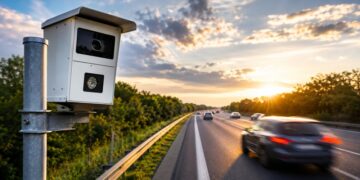
















































































































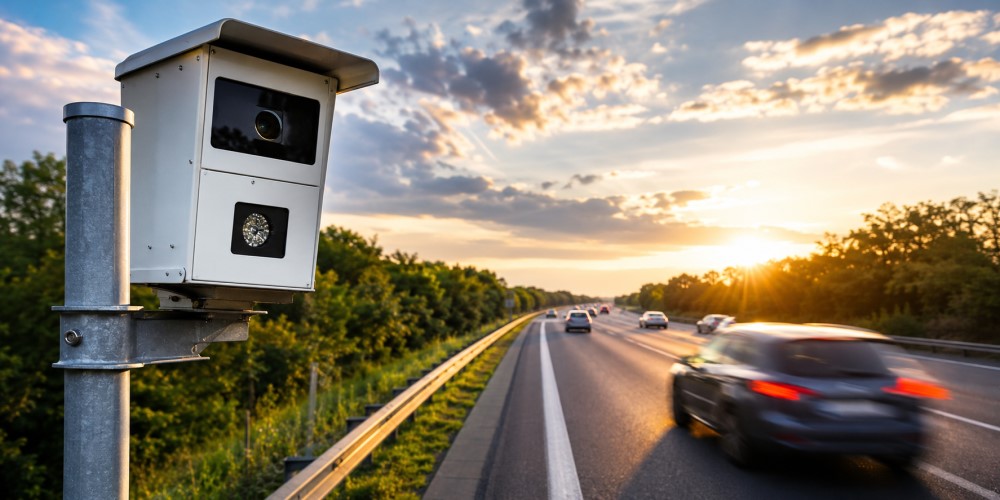
Road safety has become a global priority as governments, transportation authorities, and law enforcement agencies seek effective ways to reduce traffic accidents and save lives. Excessive speed remains one of the leading causes of road crashes, increasing both the likelihood of an accident and the severity of injuries when collisions occur. While traditional police patrols continue to play an important role in enforcing speed limits, modern technology has transformed traffic enforcement through the widespread use of speed cameras.
Speed cameras have become a familiar sight on highways, city streets, school zones, and construction areas around the world. These sophisticated devices are designed to detect vehicles traveling above the legal speed limit, capture photographic or video evidence, and assist authorities in enforcing traffic laws. Although many motorists associate speed cameras simply with receiving fines, the technology behind them is remarkably advanced, combining principles of physics, electronics, digital imaging, telecommunications, artificial intelligence, and data processing.
Contrary to popular belief, speed cameras are not all built the same. Different types of systems use different methods to measure a vehicle’s speed. Some rely on radar waves, others employ laser technology, while more advanced installations calculate average speed over long distances using automatic number plate recognition (ANPR). Mobile speed cameras, fixed roadside cameras, overhead gantries, and even portable handheld devices each serve specific purposes depending on the traffic environment.
Understanding how speed cameras work helps demystify their operation and highlights their role in improving road safety rather than merely generating revenue. By appreciating the technology involved, drivers can better understand how violations are detected, why evidence collected by these systems is considered reliable, and why speed limits are enforced with increasing precision.
What is a speed camera?
Before exploring the technical operation of speed cameras, it is important to understand exactly what they are and the role they play within modern traffic management systems. Speed cameras are far more than ordinary cameras mounted beside roads – they are sophisticated traffic enforcement devices that integrate multiple technologies to detect speeding vehicles accurately and automatically.
A speed camera is an electronic traffic enforcement system designed to monitor the speed of moving vehicles and record evidence when a driver exceeds the legally established speed limit. Unlike conventional surveillance cameras, which simply record video footage, speed cameras actively measure vehicle speed using specialized sensors before determining whether a traffic violation has occurred. Modern speed cameras consist of several integrated components working together simultaneously. These typically include:
- A speed detection system such as radar, laser, road sensors, or average-speed calculation technology.
- A high-resolution digital camera capable of capturing detailed images under varying lighting conditions.
- Infrared or flash illumination for nighttime photography.
- Automatic Number Plate Recognition (ANPR) software that reads vehicle registration plates.
- Embedded computers that analyze data in real time.
- Secure communication systems that transmit violation records to centralized processing centers.
When a vehicle passes through the monitored area, the detection system continuously measures its speed. If the measured speed exceeds a predefined enforcement threshold, the camera is automatically triggered to capture one or more photographs or video frames. These images typically include the vehicle, license plate, date, time, speed, location, lane number, and other supporting information required for legal enforcement. Unlike human officers, automated speed cameras operate continuously without fatigue, distraction, or subjective judgment. They are capable of monitoring thousands of vehicles every day while maintaining consistent enforcement standards.
Why speed cameras are used
Understanding why speed cameras exist provides important context for how they operate. Although they are sometimes viewed as tools primarily intended to issue fines, their primary objective is to improve road safety by encouraging drivers to obey speed limits and reduce risky driving behavior. Research conducted across numerous countries has consistently shown that excessive speed significantly increases both crash frequency and crash severity.
As vehicle speed rises, drivers have less time to react to unexpected hazards, stopping distances become much longer, and collision forces increase dramatically. Speed cameras help address these risks by creating a continuous enforcement presence, even in locations where police officers cannot be stationed permanently.
a. Reducing traffic accidents
One of the primary reasons speed cameras are installed is to reduce collisions in high-risk areas. Authorities often place cameras near:
- Schools.
- Hospitals.
- Residential neighborhoods.
- Dangerous intersections.
- Sharp curves.
- High-accident corridors.
- Construction zones.
Drivers who know that speed enforcement is active are generally more likely to obey posted speed limits, reducing the likelihood of crashes.
b. Improving road safety
Speed cameras encourage consistent compliance rather than temporary compliance. When drivers only slow down upon seeing a police vehicle, speeding often resumes immediately afterward. Automated cameras provide continuous monitoring that encourages motorists to maintain legal speeds throughout their journey rather than only at visible enforcement points. This contributes to smoother traffic flow, reduced accident rates, and safer roads for motorists, cyclists, and pedestrians alike.
c. Supporting law enforcement
Traffic officers cannot be present on every road at every hour. Automated speed cameras extend the capabilities of law enforcement by monitoring traffic around the clock regardless of weather conditions, holidays, or staffing limitations. This allows police resources to be allocated toward more serious offenses while routine speed enforcement continues automatically.
d. Collecting objective evidence
Human observations can sometimes be challenged in court. Speed cameras produce objective digital evidence that includes:
- Exact measured speed.
- Date and time.
- GPS location.
- Vehicle images.
- Lane identification.
- Camera identification.
- Calibration information.
Because this information is electronically recorded and securely stored, it provides reliable evidence that can withstand legal scrutiny.
The science behind speed measurement
Every speed camera relies on one fundamental principle: accurately determining how fast a vehicle is moving. Although different technologies achieve this in different ways, they all depend on well-established scientific principles rooted in physics, mathematics, and engineering. Speed itself is one of the most basic measurements in motion. It is calculated using the simple relationship:
Speed = Distance ÷ Time
If a system can accurately determine how far a vehicle travels and precisely measure how long it takes to cover that distance, it can calculate the vehicle’s speed with remarkable accuracy. Different speed camera technologies gather this information using different methods. Some measure changes in reflected radio waves.
Others calculate the time required for laser pulses to return. Some monitor vehicles between two fixed points over several kilometers. Others detect vehicles crossing sensors embedded within the road surface. Regardless of the approach, the goal remains identical: produce an accurate, legally defensible measurement of vehicle speed.
a. Measuring speed using the Doppler Effect
Many speed cameras rely on one of physics’ best-known principles: the Doppler Effect. The Doppler Effect describes how the frequency of a wave changes when the source or reflecting object moves relative to the observer. A common everyday example is the changing sound of an ambulance siren. As the ambulance approaches, the siren sounds higher in pitch because the sound waves are compressed.
As it moves away, the pitch becomes lower because the waves are stretched farther apart. Radar speed cameras use exactly the same concept – but instead of sound waves, they use radio waves. The radar unit continuously emits electromagnetic waves toward approaching or receding vehicles. These waves reflect off the vehicle and return to the camera. If the vehicle is moving:
- Toward the radar, the reflected frequency becomes slightly higher.
- Away from the radar, the reflected frequency becomes slightly lower.
The radar processor measures this tiny frequency shift and converts it into an extremely accurate speed reading within fractions of a second.
b. Measuring speed using time-of-flight calculations
Laser-based speed cameras use a completely different scientific principle known as time-of-flight measurement. Instead of broadcasting radio waves over a wide area, the camera emits thousands of extremely short laser pulses directly toward a specific vehicle. Each pulse travels to the vehicle, reflects off its surface, and returns to the sensor. Since the speed of light is constant, the camera can determine the exact distance between itself and the vehicle by measuring how long each pulse takes to complete the round trip.
By repeating this measurement hundreds or even thousands of times every second, the system calculates how quickly that distance changes. If the vehicle is getting closer rapidly, the computer determines its speed based on the rate of distance change. This method provides exceptionally high accuracy while allowing officers or automated systems to target individual vehicles within dense traffic.
c. Measuring average speed over distance
Not all speed cameras measure speed at a single point. Average speed camera systems instead determine how long it takes a vehicle to travel between two or more fixed locations. For example:
- Camera A records a vehicle entering a monitored section at 10:00:00.
- Camera B records the same vehicle exiting 5 kilometers later at 10:03:00.
Knowing both the travel distance and elapsed time, the computer calculates the vehicle’s average speed over the monitored route. This approach discourages drivers from slowing only when passing a visible camera before accelerating immediately afterward, promoting consistent compliance with speed limits across longer stretches of road.
Main types of speed cameras
While the objective of every speed camera is the same – to identify vehicles exceeding the speed limit – the technologies used to achieve this vary considerably. Over the years, traffic enforcement has evolved from relatively simple roadside radar units to highly sophisticated networks capable of monitoring multiple lanes of traffic simultaneously, identifying individual vehicles, and calculating average speeds over several kilometers.
Each type of speed camera is designed to perform best in particular traffic environments. Some are permanently installed at locations with a history of speeding or collisions, while others are portable and can be deployed wherever enforcement is needed. Understanding these different systems helps explain why speed cameras can operate so effectively under a wide range of road conditions. The most common types of speed cameras include:
- Radar speed cameras, which use radio waves to measure vehicle speed.
- Laser (LiDAR) speed cameras, which use focused laser pulses for highly precise measurements.
- Average speed cameras, which calculate speed over a measured distance using Automatic Number Plate Recognition (ANPR).
- Road sensor or induction loop speed cameras, which detect vehicles using sensors embedded in the road surface.
- Mobile speed cameras, which are mounted in vehicles or portable units that can be relocated.
- Fixed speed cameras, which remain permanently installed at designated enforcement locations.
Although the technology behind each system differs, all modern speed cameras share the same core objective: accurately measuring speed while collecting reliable evidence that meets legal standards for traffic enforcement.
How radar speed cameras work
Radar speed cameras are among the oldest and most widely used automated speed enforcement technologies. Despite decades of use, they remain highly effective due to continuous improvements in digital signal processing, image capture, and automated data analysis. The word RADAR stands for Radio Detection and Ranging. Originally developed for military applications, radar technology has since found widespread use in aviation, meteorology, maritime navigation, and traffic enforcement.
Emitting radio waves
A radar speed camera continuously transmits electromagnetic radio waves toward approaching or departing vehicles. These radio waves travel at the speed of light and spread outward in a controlled beam covering one or more traffic lanes. Unlike visible light, radio waves are unaffected by darkness, making radar cameras equally effective during the day and at night.
Reflection from moving vehicles
When the transmitted radio waves strike a moving vehicle, they bounce back toward the radar antenna. The returning signal carries valuable information about the vehicle’s movement. If the vehicle is stationary, the reflected frequency remains unchanged. If the vehicle is moving, the frequency shifts slightly due to the Doppler Effect. Even though this frequency change is extremely small, modern radar processors can detect and measure it with remarkable precision.
Calculating vehicle speed
The radar computer continuously compares the transmitted frequency with the reflected frequency. Using mathematical algorithms based on the Doppler principle, it calculates the vehicle’s speed almost instantly. This calculation typically takes only a fraction of a second and is repeated continuously as vehicles move through the detection zone. The measured speed is then compared against the enforcement threshold programmed into the camera system. If the vehicle exceeds the permitted limit, the evidence collection process begins automatically.
Triggering the camera
Once speeding is confirmed, the system activates the digital camera. Rather than taking a single photograph, many modern radar cameras capture multiple high-resolution images or a short video sequence. These images provide evidence showing:
- The vehicle.
- The registration plate.
- The lane being monitored.
- Road markings.
- Date and time.
- Measured speed.
- Camera identification.
- Direction of travel.
This information becomes part of the official enforcement record.
Strengths of radar speed cameras
Radar technology offers several significant advantages. It functions reliably in:
- Rain
- Fog
- Darkness
- Bright sunlight
- Moderate snowfall
Radar systems also monitor multiple lanes simultaneously and require relatively little maintenance. However, because radar beams spread outward as distance increases, they may detect multiple vehicles at once in heavy traffic. Modern cameras overcome this challenge using sophisticated tracking software that identifies which vehicle generated the measured speed.
How laser (LiDAR) speed cameras work
Laser-based speed cameras represent one of the most precise methods of measuring vehicle speed. Unlike radar, which broadcasts radio waves across a broad area, laser technology focuses on a single vehicle with exceptional accuracy. The term LiDAR stands for Light Detection and Ranging. Instead of radio waves, LiDAR uses pulses of invisible infrared laser light.
Sending laser pulses
A LiDAR speed camera emits thousands of extremely short laser pulses every second toward a selected vehicle. Each pulse travels to the vehicle, reflects from its surface, and returns to the receiver. Because light travels at a constant speed, the camera can determine the exact distance to the vehicle by measuring the pulse’s round-trip travel time.
Measuring changing distance
A single distance measurement is not enough to determine speed. Instead, the LiDAR system performs hundreds or thousands of distance measurements every second. As the vehicle moves, the measured distance changes continuously. The onboard computer calculates how rapidly the distance changes over time. The faster the vehicle approaches or moves away, the greater the rate of distance change. This allows the system to calculate speed with extraordinary precision.
Targeting individual vehicles
One of LiDAR’s greatest strengths is its narrow beam. Unlike radar, which may illuminate several vehicles simultaneously, a laser beam typically covers an area only a few tens of centimeters wide at long distances. This enables enforcement officers or automated systems to isolate a single vehicle even when surrounded by heavy traffic. Because of this precision, LiDAR is frequently used in congested urban environments and by police officers operating handheld speed detection devices.
Capturing photographic evidence
After confirming a speeding violation, the LiDAR system activates its integrated digital imaging equipment. High-resolution photographs record:
- Vehicle position.
- License plate.
- Speed measurement.
- Time and date.
- GPS coordinates.
- Lane information.
- Direction of travel.
Many systems also record continuous video, allowing investigators to review the complete sequence leading up to the violation.
Advantages of LiDAR technology
Laser speed cameras offer numerous advantages over traditional radar systems. These include:
- Exceptional measurement accuracy.
- Ability to target individual vehicles.
- Minimal interference from nearby traffic.
- Effective operation over long distances.
- Reduced likelihood of identifying the wrong vehicle.
However, LiDAR generally requires a clear line of sight and can be more affected by heavy rain, dense fog, or blowing snow than radar-based systems.
How average speed cameras work
Unlike conventional speed cameras, which measure a vehicle’s speed at a single location, average speed camera systems monitor how long it takes a vehicle to travel between two or more fixed points. This encourages drivers to maintain safe speeds throughout an entire stretch of road rather than slowing only when approaching a visible enforcement camera. Average speed enforcement has become increasingly common on highways, tunnels, bridges, and long-term road construction projects where consistent speed compliance is especially important.
Recording entry and exit times
An average speed system consists of multiple cameras installed along a monitored route. As a vehicle passes the first camera, the system records:
- Registration number.
- Time of passage.
- Lane.
- Camera location.
When the same vehicle passes the next camera farther along the road, the process is repeated. Using Automatic Number Plate Recognition technology, the system matches the vehicle between the two locations.
Calculating average speed
Once the vehicle has been identified at both points, the computer already knows two critical pieces of information:
- The exact distance between the cameras.
- The precise travel time.
Using the standard speed equation:
Speed = Distance ÷ Time
the computer calculates the vehicle’s average speed across the monitored section. If the calculated speed exceeds the enforcement threshold, a violation record is generated automatically.
Why average speed enforcement is effective
Average speed cameras influence driver behavior differently from point-speed cameras. Instead of encouraging brief reductions in speed near visible cameras, they promote continuous compliance over the entire monitored distance. Research has shown that this approach often leads to:
- Lower average traffic speeds.
- Reduced speed variation between vehicles.
- Fewer sudden braking incidents.
- Improved traffic flow.
- Fewer serious collisions.
Because every section of the monitored road contributes to the calculated speed, there is little advantage in accelerating after passing one camera.
Road sensor and induction loop speed cameras
Before radar and LiDAR became commonplace, many speed enforcement systems relied on sensors embedded directly into the road surface. Although newer technologies dominate many regions today, induction loop systems remain in use because of their reliability and ability to operate under challenging conditions.
How induction loops work
Induction loops are insulated wire coils installed beneath the pavement. When an electric current flows through the loop, it generates a magnetic field extending slightly above the road surface. As a vehicle passes over the loop, the large metal mass of the vehicle disturbs this magnetic field. The system detects this disturbance and records the exact moment the vehicle crosses the loop. Typically, two or more loops are installed a known distance apart. By measuring the time it takes for a vehicle to travel from one loop to the next, the system calculates its speed with high accuracy.
Triggering the camera
If the calculated speed exceeds the programmed enforcement threshold, the induction loop controller immediately signals the connected camera to capture evidence. Because the triggering point is tied directly to the vehicle’s position over the sensors, the resulting photographs are precisely timed, reducing the chance of capturing the wrong vehicle. Induction loop systems are particularly effective on roads where lane discipline is predictable, such as urban streets and intersections.
Advantages and limitations
Road sensor systems are highly accurate and are largely unaffected by poor visibility, darkness, or adverse weather. However, installing and maintaining them requires cutting into the road surface, which can be expensive and disruptive to traffic. As a result, many new installations favor radar or LiDAR systems, which can often be deployed without altering the roadway.
Mobile versus fixed speed cameras
Speed enforcement is not limited to permanently installed roadside cameras. Authorities also use mobile systems to provide flexible enforcement in areas where speeding is unpredictable or where permanent installations are impractical.
Fixed speed cameras
Fixed speed cameras are permanently mounted on poles, gantries, or roadside structures. They are commonly found at locations with a history of excessive speeding, frequent collisions, or heightened safety concerns, such as school zones and major intersections. Because they remain in the same location, many drivers become familiar with them. To counter this, authorities may combine fixed cameras with other enforcement methods or install additional cameras at strategic locations.
Mobile speed cameras
Mobile speed cameras are designed to be relocated easily. They may be installed in specially equipped enforcement vehicles, mounted on portable tripods, or operated as handheld devices by police officers. Their mobility offers several advantages:
- They can be deployed in response to community complaints about speeding.
- They discourage drivers from relying on memorized camera locations.
- They provide enforcement in temporary work zones or during special events.
- They allow authorities to focus on emerging traffic safety concerns without investing in permanent infrastructure.
Modern mobile systems often incorporate the same advanced radar or LiDAR technologies found in fixed installations, ensuring comparable levels of accuracy and reliability.
How speed cameras capture photographic and video evidence
Measuring a vehicle’s speed is only one part of the enforcement process. For a speeding violation to withstand legal scrutiny, authorities must also collect clear, reliable, and verifiable evidence linking the measured speed to a specific vehicle. Modern speed cameras are therefore equipped with advanced imaging systems capable of producing high-quality photographs or video recordings under a wide range of environmental conditions.
Today’s speed cameras do far more than simply take a picture when a vehicle exceeds the speed limit. They synchronize the speed measurement with digital imaging, automatically embed critical metadata, verify the vehicle’s position within the monitored lane, and securely store the resulting evidence for later review. This integrated process helps ensure that every recorded violation is supported by objective, timestamped documentation.
Triggering the camera
Once the speed detection system – whether radar, LiDAR, induction loops, or average-speed technology – determines that a vehicle has exceeded the enforcement threshold, it sends an electronic trigger signal to the camera. The trigger must occur at precisely the right moment to ensure the speeding vehicle is correctly positioned within the frame. Depending on the type of system, the camera may capture the image:
- As the vehicle approaches the camera.
- As it passes directly beneath it.
- As it moves away from the camera.
- At multiple points during its journey through the monitored area.
Many modern systems capture several images in rapid succession rather than relying on a single photograph. This sequence provides additional context, confirms the vehicle’s movement, and reduces the likelihood of disputes regarding vehicle identification.
High-resolution digital imaging
Modern speed cameras use high-resolution digital sensors similar in principle to those found in professional cameras, although they are optimized for law enforcement rather than artistic photography. These sensors are designed to produce clear images under challenging conditions, including:
- Bright sunlight.
- Heavy shadows.
- Rain.
- Fog.
- Nighttime darkness.
- Glare from headlights.
The camera automatically adjusts exposure, shutter speed, focus, and image processing settings to maximize image quality. Fast shutter speeds are particularly important because speeding vehicles may be traveling well over 100 km/h (62 mph). A slow shutter would produce motion blur, making license plates difficult to read. High-speed imaging freezes the vehicle’s motion, ensuring critical details remain sharp.
Recording multiple images
Many enforcement systems record at least two photographs. The first image typically captures the vehicle as the speed measurement is confirmed, while the second image records its position moments later. Comparing the two photographs allows investigators to verify that:
- The correct vehicle was photographed.
- The vehicle continued moving in the expected direction.
- The recorded speed corresponds to the photographed vehicle.
- Lane identification remains consistent.
Some jurisdictions require multiple photographs by law as an additional safeguard against erroneous enforcement.
Video-based speed cameras
Increasingly, speed cameras record continuous digital video instead of isolated photographs. Rather than relying solely on still images, these systems preserve an entire sequence of events before, during, and after the speeding violation. Video evidence offers several advantages:
- It shows the complete movement of the vehicle.
- It reduces ambiguity in heavy traffic.
- It provides additional evidence during legal proceedings.
- It helps investigators review unusual traffic situations.
High-definition video also supports more sophisticated computer vision systems capable of automatically identifying vehicles and tracking them across multiple frames.
Automatic Number Plate Recognition (ANPR)
Capturing a clear image is only part of the enforcement process. Authorities must also identify the vehicle involved so that the registered owner can be notified of the alleged offense. This task is performed using Automatic Number Plate Recognition (ANPR), a technology that combines digital imaging with optical character recognition and artificial intelligence. ANPR has become a cornerstone of modern traffic enforcement. Beyond speed cameras, it is also widely used for toll collection, parking management, border security, stolen vehicle detection, and law enforcement investigations.
Reading the license plate
After the camera captures an image, ANPR software analyzes it to locate the vehicle’s registration plate. The software performs several processing steps:
- Detects the vehicle within the image.
- Identifies the license plate region.
- Enhances image clarity by adjusting brightness and contrast.
- Separates individual characters.
- Converts the characters into digital text using optical character recognition (OCR).
Modern systems can recognize plates even when they are:
- Slightly dirty.
- Viewed at an angle.
- Partially shadowed.
- Captured at high speed.
Machine learning algorithms continue to improve recognition accuracy by learning from millions of plate images collected under different road and weather conditions.
Matching registration databases
Once the registration number has been extracted, it is compared with official vehicle registration databases maintained by the relevant licensing authority. This allows enforcement systems to identify:
- Registered owner.
- Vehicle make.
- Vehicle model.
- Vehicle color.
- Registration status.
- Outstanding alerts, where applicable.
This information helps confirm that the photographed vehicle matches official records before a notice of violation is issued.
Reducing identification errors
Modern ANPR systems incorporate multiple validation steps to minimize mistakes. These may include:
- Comparing plate characters against expected formatting rules.
- Verifying the vehicle’s make and color against registration records.
- Human review of uncertain readings.
- Cross-checking multiple captured images.
As a result, contemporary ANPR systems achieve extremely high recognition accuracy under normal operating conditions.
Flash systems and night operation
Speed enforcement cannot be limited to daylight hours. Since speeding frequently occurs at night, modern speed cameras are engineered to operate continuously, regardless of lighting conditions. Nighttime enforcement presents unique challenges. Images must remain sharp without distracting or temporarily blinding drivers. To address this, manufacturers have developed sophisticated illumination systems that balance image quality with road safety.
Infrared illumination
Many modern speed cameras use infrared (IR) illumination instead of traditional visible flashes. Infrared light is invisible to the human eye but easily detected by specially designed camera sensors. When a speeding vehicle enters the detection zone, infrared LEDs briefly illuminate the vehicle, allowing the camera to capture a clear image without producing a bright flash that could distract motorists. Infrared systems offer several benefits:
- Minimal driver distraction.
- Consistent image quality.
- Effective operation in complete darkness.
- Reduced complaints about flashing lights.
Because the illumination is invisible, many drivers are unaware that their vehicle has been photographed.
Xenon flash systems
Some older speed camera installations still use powerful xenon flash units. These flashes produce a bright burst of visible white light synchronized precisely with the camera shutter. Although effective, visible flashes have become less common because infrared technology generally provides superior performance while reducing driver distraction. Nevertheless, xenon systems remain in use in some jurisdictions, particularly where legacy infrastructure continues to operate reliably.
Image enhancement software
Modern imaging systems employ sophisticated software to improve image quality automatically. Algorithms can compensate for:
- Low light.
- Rain.
- Lens glare.
- Motion blur.
- High contrast.
- Reflections from wet roads.
These enhancements help ensure that photographs remain suitable for evidentiary purposes even under adverse environmental conditions.
How speeding violations are processed
Capturing speed measurements and photographic evidence is only the beginning of the enforcement process. Before a speeding citation is issued, the collected information typically undergoes a series of automated and manual verification steps designed to ensure accuracy, fairness, and compliance with applicable laws. Although specific procedures vary between countries and jurisdictions, the overall workflow is remarkably similar.
Secure data transmission
After a violation is recorded, the camera encrypts the evidence package and transmits it to a secure processing center. The transmitted data may include:
- Vehicle photographs.
- Speed measurement.
- Date and time.
- Camera location.
- Lane information.
- Equipment identification.
- Calibration records.
- Environmental conditions.
Encryption protects the evidence from unauthorized access or alteration during transmission.
Automated verification
Upon arrival at the processing center, specialized software performs an initial review. The system checks for:
- Valid speed readings.
- Image quality.
- Successful license plate recognition.
- Equipment status.
- Internal consistency of recorded data.
Records that fail automated quality checks may be flagged for additional investigation or discarded.
Human review
Despite advances in automation, many jurisdictions still require a trained operator to examine each potential violation before a citation is issued. The reviewer confirms:
- The correct vehicle has been identified.
- The registration plate is clearly readable.
- The measured speed exceeds the legal enforcement threshold.
- No obvious technical problems are present.
- All legal requirements have been satisfied.
Human oversight provides an additional safeguard against erroneous enforcement.
Issuing the notice
Once verification is complete, the registered vehicle owner is typically sent a notice of violation. Depending on local laws, the notice may include:
- Date and time of the offense.
- Location.
- Measured speed.
- Applicable speed limit.
- Photographic evidence.
- Fine amount.
- Payment instructions.
- Appeal procedures.
Some jurisdictions also provide secure online portals where motorists can view additional images or video evidence associated with the violation.
Accuracy, calibration, and legal standards
Public confidence in automated enforcement depends heavily on the accuracy of speed camera systems. A speeding citation can result in financial penalties, license points, increased insurance costs, or even criminal proceedings in some jurisdictions. Consequently, authorities must ensure that speed cameras produce measurements that are both technically reliable and legally defensible. Manufacturers, testing laboratories, and government agencies all play a role in maintaining this accuracy through rigorous design, certification, calibration, and ongoing maintenance.
Why calibration matters
Calibration is the process of verifying that a speed camera measures vehicle speeds within an approved margin of error. Even highly sophisticated electronic equipment can experience gradual changes in performance over time due to environmental conditions, component aging, vibration, or accidental damage. Regular calibration helps ensure that any deviations are identified and corrected before they affect enforcement.
Routine testing and maintenance
Most jurisdictions require speed cameras to undergo scheduled inspections at regular intervals. During these inspections, technicians examine both the speed detection equipment and the imaging system. Typical maintenance activities include:
- Verifying radar or LiDAR accuracy against certified reference equipment.
- Inspecting camera alignment.
- Cleaning lenses and protective housings.
- Testing flash or infrared illumination.
- Confirming accurate timestamps and GPS synchronization.
- Updating firmware or software where necessary.
Detailed maintenance records are often retained as part of the evidentiary trail, allowing authorities to demonstrate that the equipment was functioning correctly at the time of an alleged violation.
Legal certification
Before a speed camera can be used for enforcement, it generally must meet technical standards established by national or regional authorities. Independent testing organizations evaluate these systems under a variety of operating conditions to confirm that they perform within acceptable tolerances. In many jurisdictions, calibration certificates and maintenance logs may be presented in court if a driver challenges the accuracy of a recorded speed. This documentation helps establish the reliability of the evidence and reinforces the integrity of the enforcement process.
Common myths and misconceptions about speed cameras
Despite being used around the world for decades, speed cameras remain the subject of numerous myths and misconceptions. Much of the misunderstanding stems from outdated information, anecdotal stories, or assumptions about how the technology operates. In reality, modern speed cameras are highly regulated systems designed to collect objective evidence using scientifically validated methods. Understanding the facts behind these misconceptions helps drivers better appreciate the purpose and capabilities of automated speed enforcement.
Myth 1: Speed cameras are only installed to generate revenue
One of the most persistent claims is that speed cameras exist primarily to raise money through fines. While speeding penalties do generate revenue, the primary objective of automated enforcement is to improve road safety. Authorities typically install speed cameras after analyzing factors such as:
- High collision rates.
- Frequent speeding violations.
- Pedestrian activity.
- School zones.
- Construction areas.
- Dangerous intersections.
Numerous road safety studies have shown that visible speed enforcement often leads to lower average vehicle speeds, fewer serious crashes, and reduced fatalities. In many jurisdictions, revenue generated from fines is directed toward road safety initiatives, transportation infrastructure, or broader government budgets rather than serving as the sole motivation for camera deployment.
Myth 2: Speed cameras are inaccurate
Modern speed cameras undergo extensive laboratory testing, certification, and routine calibration. Radar, LiDAR, induction loop, and average-speed systems all rely on well-established scientific principles and are engineered to operate within strict accuracy tolerances. Although no measurement system is entirely immune to malfunction, contemporary speed cameras incorporate multiple safeguards, including:
- Internal diagnostic systems.
- Automated error detection.
- Regular maintenance.
- Calibration verification.
- Human review of potential violations.
As a result, properly maintained speed cameras consistently achieve a high level of measurement accuracy.
Myth 3: You can avoid detection by changing lanes
Some drivers believe they can confuse a speed camera by changing lanes immediately before reaching it. Modern enforcement systems are specifically designed to overcome this challenge. Many cameras monitor multiple lanes simultaneously and use sophisticated vehicle-tracking software to associate each speed measurement with the correct vehicle. Average-speed systems additionally rely on Automatic Number Plate Recognition (ANPR), which identifies the vehicle regardless of lane changes between cameras. Consequently, changing lanes rarely affects the camera’s ability to identify the speeding vehicle correctly.
Myth 4: Speed cameras only work during daylight
Another common misconception is that speed cameras become ineffective after dark. In reality, modern cameras operate around the clock using infrared illumination, advanced digital sensors, and image enhancement software. Nighttime images are often just as clear as those captured during daylight, enabling continuous enforcement regardless of lighting conditions.
Myth 5: Speed cameras can always identify the driver
Most speed cameras are designed to identify the vehicle rather than the individual behind the wheel. Their primary purpose is to capture:
- The vehicle.
- The registration plate.
- Supporting evidence of the violation.
Whether authorities must identify the driver depends on the legal framework of the jurisdiction. In some countries, responsibility initially rests with the registered owner, who may then be required to identify the person driving at the time of the offense. In others, the enforcement process may differ based on local legislation.
Advantages of speed cameras
The widespread adoption of speed cameras reflects the significant benefits they offer for road safety, law enforcement, and traffic management. While they are not a complete solution to speeding, they have become an important component of comprehensive road safety strategies.
a. Improving road safety
Perhaps the greatest advantage of speed cameras is their ability to encourage compliance with posted speed limits. Drivers who know that automated enforcement is active are generally more likely to maintain safe speeds, reducing both the frequency and severity of collisions. Lower speeds provide drivers with:
- More time to react.
- Shorter stopping distances.
- Better vehicle control.
- Reduced impact forces during crashes.
These benefits extend to pedestrians, cyclists, motorcyclists, and other vulnerable road users.
b. Consistent enforcement
Unlike human officers, speed cameras operate continuously without fatigue or distraction. They apply the same enforcement criteria to every vehicle, helping reduce perceptions of inconsistent or selective enforcement. This consistency contributes to greater fairness while allowing police officers to focus on offenses requiring direct intervention, such as impaired driving, reckless driving, or dangerous behavior.
c. Efficient monitoring
Modern speed cameras can monitor thousands of vehicles every day with minimal human involvement. Automation enables authorities to:
- Monitor multiple lanes simultaneously.
- Operate continuously.
- Collect evidence automatically.
- Process violations efficiently.
- Allocate enforcement resources more effectively.
This scalability would be difficult to achieve through traditional patrols alone.
d. Data collection for traffic management
Beyond enforcement, speed camera systems generate valuable traffic data. Anonymous information about vehicle speeds, traffic volumes, and travel patterns can assist transportation agencies in evaluating road performance and planning future improvements. Insights gained from this data may support decisions such as:
- Adjusting speed limits.
- Improving road design.
- Optimizing signal timing.
- Enhancing pedestrian crossings.
- Identifying locations requiring additional safety measures.
Limitations of speed cameras
Although speed cameras offer substantial benefits, they also have limitations. Understanding these constraints provides a more balanced perspective on their role within broader traffic enforcement efforts.
a. Limited scope
Speed cameras primarily enforce speed limits. They generally cannot detect many other dangerous driving behaviors, including:
- Aggressive lane changes.
- Tailgating.
- Distracted driving.
- Failure to yield.
- Impaired driving.
- Unsafe overtaking.
These behaviors still require observation and intervention by law enforcement officers or other specialized technologies.
b. Potential behavioral adaptation
Some drivers respond to visible speed cameras by slowing only as they approach the enforcement location before accelerating immediately afterward. Average-speed camera systems help reduce this behavior by monitoring speeds over longer distances, but point-speed cameras may still encourage localized speed reductions rather than consistent compliance.
c. Installation and maintenance costs
Deploying a modern speed camera network involves significant investment. Costs may include:
- Equipment purchase.
- Installation.
- Communication infrastructure.
- Calibration.
- Maintenance.
- Software licensing.
- Data processing.
- Personnel training.
Authorities must carefully evaluate whether the expected safety benefits justify these expenditures.
d. Environmental and technical challenges
Although highly reliable, speed cameras can still encounter operational challenges. Examples include:
- Severe weather.
- Power outages.
- Damaged equipment.
- Obstructed camera views.
- Road construction affecting sensor alignment.
- Communication failures.
Routine inspections and maintenance help minimize these issues, but no technological system is entirely immune to occasional disruption.
Privacy and data protection considerations
Because speed cameras collect images of vehicles and, in some cases, their occupants, questions often arise about privacy and the handling of personal information. Responsible operation of these systems requires clear legal frameworks that balance road safety objectives with individual privacy rights. Most jurisdictions impose strict rules governing how enforcement data is collected, stored, accessed, and retained.
a. Data collection
Speed cameras generally record only the information necessary to support traffic enforcement. This typically includes:
- Vehicle registration number.
- Photographic or video evidence.
- Date and time.
- Location.
- Recorded speed.
- Direction of travel.
The systems are not intended to conduct continuous surveillance of motorists beyond their enforcement purpose.
b. Secure storage
Violation records are usually encrypted and stored in secure databases protected by multiple layers of cybersecurity. Access is typically restricted to authorized personnel involved in:
- Traffic enforcement.
- Evidence management.
- Judicial proceedings.
- System maintenance.
Comprehensive audit logs often record who accesses the data and when, helping maintain accountability.
c. Data retention
Most legal systems specify how long enforcement records may be retained. If no violation has occurred, data may be deleted almost immediately. When a violation is recorded, information is generally kept only for the period necessary to complete administrative or legal proceedings before being securely destroyed in accordance with applicable laws. These safeguards are intended to ensure that speed camera systems remain focused on road safety rather than becoming tools for unnecessary long-term surveillance.
The future of speed camera technology
Advances in artificial intelligence, computer vision, telecommunications, and connected transportation are transforming the next generation of speed enforcement systems. Future speed cameras will likely become more accurate, more efficient, and better integrated into broader intelligent transportation networks. Rather than operating as isolated devices, tomorrow’s systems are expected to function as components of comprehensive smart city infrastructure.
a. Artificial intelligence
Artificial intelligence is already enhancing many aspects of automated enforcement. Machine learning algorithms can improve:
- Vehicle detection.
- License plate recognition.
- Image quality.
- Lane tracking.
- Violation verification.
- Error detection.
As AI systems continue to evolve, they may further reduce false readings while streamlining evidence processing.
b. High-resolution imaging
Camera technology continues to improve rapidly. Future systems are expected to feature:
- Higher-resolution sensors.
- Faster image capture.
- Better low-light performance.
- Enhanced weather resistance.
- Improved zoom capabilities.
These developments will further strengthen the quality and reliability of photographic evidence.
c. Connected transportation systems
As vehicles become increasingly connected through vehicle-to-infrastructure (V2I) communication, speed enforcement may become more proactive than reactive. Instead of simply recording violations, future road infrastructure could warn drivers in real time when they exceed the speed limit, allowing corrective action before enforcement becomes necessary. Such integration may complement advanced driver assistance systems (ADAS) and, eventually, autonomous vehicle technologies.
d. Smart city integration
Modern cities are increasingly deploying interconnected transportation systems that combine traffic signals, road sensors, weather monitoring, and traffic cameras into unified management platforms. Within these networks, speed cameras may contribute valuable real-time data that supports:
- Dynamic speed limit adjustments.
- Congestion management.
- Incident detection.
- Emergency vehicle prioritization.
- Infrastructure planning.
This broader role underscores their value beyond issuing speeding citations.
Conclusion
Speed cameras have evolved from relatively simple roadside enforcement devices into highly sophisticated systems that combine physics, digital imaging, computer vision, telecommunications, and artificial intelligence to promote safer roads. Whether using radar to detect changes in radio wave frequency, LiDAR to calculate speed through laser pulses, induction loops embedded beneath the road surface, or ANPR technology to measure average speeds across long distances, each system is designed to produce accurate, objective, and legally defensible evidence of speeding violations.
Their effectiveness extends beyond issuing fines. By encouraging consistent compliance with speed limits, speed cameras help reduce collisions, minimize injury severity, improve traffic flow, and protect vulnerable road users such as pedestrians and cyclists. Continuous operation, standardized enforcement, and integration with advanced data processing systems enable authorities to monitor traffic efficiently while freeing police officers to focus on more complex public safety responsibilities.
At the same time, speed cameras are not without limitations. They cannot address every form of dangerous driving, require ongoing calibration and maintenance, and must operate within clear legal and privacy frameworks to maintain public trust. Modern enforcement programs therefore combine automated technologies with traditional policing, engineering improvements, public education, and evidence-based traffic management to achieve the greatest safety benefits.
As transportation systems become increasingly connected and intelligent, speed cameras will likely play an even broader role in smart mobility ecosystems. Advances in artificial intelligence, high-resolution imaging, vehicle-to-infrastructure communication, and real-time traffic analytics promise to make future enforcement systems more accurate, efficient, and responsive. Rather than simply detecting speeding after it occurs, next-generation technologies may help prevent unsafe driving altogether through proactive warnings and integrated traffic management.
Ultimately, understanding how a speed camera works reveals that these devices are far more than automated ticket machines. They are sophisticated engineering systems built upon proven scientific principles, designed to promote responsible driving, support fair enforcement of traffic laws, and contribute to the overarching goal of making roads safer for everyone who uses them.














interesting