










































































































































































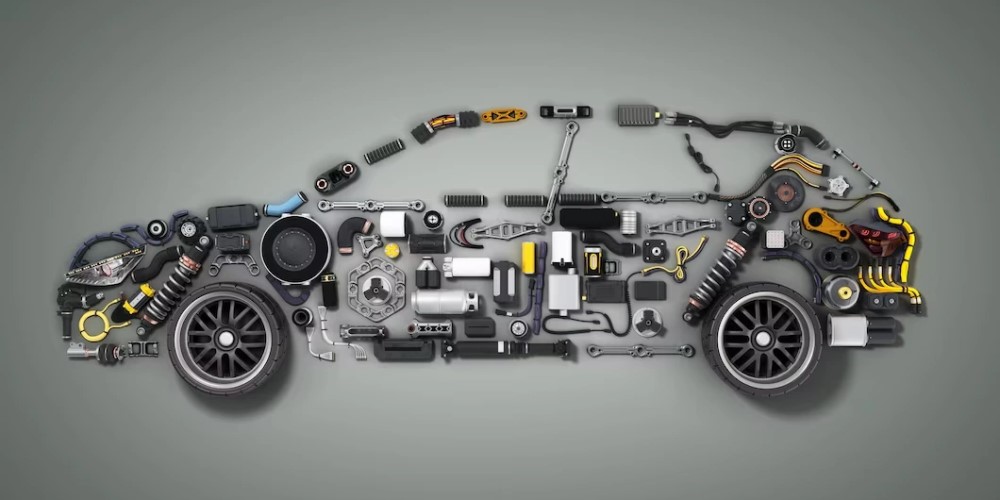
A car is far more than a simple means of transportation; it is a complex integration of mechanical systems, electrical networks, structural components, and digital technologies working in precise coordination. Modern automobiles embody over a century of engineering evolution, combining physics, materials science, electronics, and human-centered design to deliver mobility, safety, comfort, and efficiency. Understanding the anatomy of a car involves examining how its individual components are designed, how they interact, and how they collectively enable reliable operation under diverse conditions.
The structural framework of a car
The structural framework forms the backbone of any automobile, providing the strength, rigidity, and shape required to support all other components. This framework ensures that the car can withstand mechanical stresses, protect occupants, and maintain structural integrity during normal operation and collisions. Modern vehicles are typically built using either a unibody (monocoque) construction or a body-on-frame design. In unibody construction, the body and frame are integrated into a single structure, distributing loads throughout the entire shell.
This approach improves fuel efficiency, handling, and crash safety, making it the dominant design for passenger cars. Body-on-frame construction, on the other hand, involves mounting the vehicle body onto a separate rigid frame. This design is more common in trucks and SUVs due to its durability and load-bearing capacity. The structural framework incorporates crumple zones, which are engineered areas designed to deform in a controlled manner during a collision.
By absorbing and dissipating impact energy, these zones reduce the force transmitted to occupants. High-strength steel, aluminum alloys, and increasingly carbon fiber composites are used strategically to balance strength, weight, and cost. The framework is therefore not merely a skeleton but a carefully engineered safety system.
The chassis system
The chassis refers to the base frame upon which the car’s body, engine, suspension, and drivetrain are mounted. It plays a critical role in maintaining vehicle stability, handling, and ride quality. The chassis must be rigid enough to support mechanical components while flexible enough to absorb road irregularities without transmitting excessive vibration to the cabin. It houses mounting points for the suspension system, steering mechanism, and braking components, ensuring precise alignment and predictable handling behavior.
Advancements in chassis engineering have led to the development of modular platforms, where multiple vehicle models share a common chassis architecture. This approach reduces manufacturing costs while allowing customization through variations in suspension tuning, wheelbase length, and structural reinforcements. The chassis thus represents a balance between structural rigidity, adaptability, and performance optimization.
The body and exterior panels
The car body encloses the mechanical components and passenger compartment while also defining the vehicle’s aesthetic identity. Exterior panels include doors, hood, trunk lid, roof, fenders, and bumpers, each serving both functional and stylistic purposes. Beyond appearance, the body contributes to aerodynamics, fuel efficiency, and safety. Aerodynamically shaped panels reduce air resistance, improving fuel economy and stability at high speeds. Modern cars undergo extensive wind tunnel testing to optimize airflow around and beneath the vehicle.
Exterior panels are typically made from steel, aluminum, plastic composites, or fiberglass. Lightweight materials reduce overall vehicle mass, enhancing efficiency and performance. Bumpers, often constructed from energy-absorbing plastics and foam, are designed to minimize damage during low-speed impacts while protecting critical components. The car body, therefore, is a carefully engineered interface between the vehicle and its environment.
The engine: The heart of the car
The engine is the primary source of power in traditional internal combustion vehicles. It converts chemical energy stored in fuel into mechanical energy through controlled explosions within cylinders. Engines vary widely in configuration, including inline, V-shaped, and flat (boxer) layouts. Key components include the cylinder block, pistons, crankshaft, camshaft, valves, and fuel injection system. Together, these elements regulate air intake, fuel delivery, combustion, and exhaust expulsion.
Modern engines incorporate advanced technologies such as turbocharging, variable valve timing, and direct fuel injection to improve efficiency and reduce emissions. Sensors and electronic control units (ECUs) continuously monitor operating conditions, adjusting parameters in real time for optimal performance. The engine is thus both a mechanical powerhouse and a digitally managed system.
The transmission system
The transmission transfers power from the engine to the wheels, enabling the vehicle to operate efficiently across varying speeds and loads. Without a transmission, the engine would be unable to deliver usable torque under different driving conditions. There are several types of transmissions, including manual, automatic, continuously variable (CVT), and dual-clutch systems. Manual transmissions rely on driver-operated gear changes, while automatic systems use hydraulic or electronic controls to shift gears seamlessly.
CVTs provide an infinite range of gear ratios, optimizing efficiency, while dual-clutch transmissions combine rapid gear changes with high performance. The transmission works in conjunction with the clutch or torque converter to manage power delivery smoothly. Proper transmission design enhances acceleration, fuel economy, and driving comfort, making it a critical component of the vehicle’s powertrain.
The drivetrain and differential
The drivetrain includes all components responsible for delivering power from the transmission to the wheels. This system varies depending on whether the vehicle is front-wheel drive, rear-wheel drive, all-wheel drive, or four-wheel drive. Key drivetrain components include driveshafts, axles, and the differential. The differential allows wheels on the same axle to rotate at different speeds, which is essential when turning corners.
Without it, tires would experience excessive wear, and handling would be compromised. Advanced drivetrain systems incorporate electronic traction control and torque vectoring, which dynamically distribute power to improve stability and grip. The drivetrain is therefore central to how a car moves, handles, and responds to driver inputs.
The suspension system
The suspension system connects the car to its wheels and plays a vital role in ride comfort, handling, and safety. Its primary function is to absorb road shocks while maintaining tire contact with the road surface. Suspension components include springs, shock absorbers (dampers), struts, control arms, and stabilizer bars. Springs support the vehicle’s weight and absorb impacts, while dampers control oscillations to prevent excessive bouncing. Stabilizer bars reduce body roll during cornering.
Different suspension designs, such as MacPherson struts, double wishbone systems, and multi-link setups, offer varying balances between comfort and performance. Modern vehicles may also feature adaptive suspension systems that adjust damping characteristics in real time based on driving conditions. The suspension thus ensures a controlled and comfortable driving experience.
The steering system
The steering system allows the driver to control the direction of the vehicle with precision and ease. It translates rotational input from the steering wheel into lateral movement of the wheels. Traditional steering systems used mechanical linkages, but modern vehicles increasingly rely on power-assisted steering. Hydraulic power steering uses fluid pressure to reduce steering effort, while electric power steering employs electric motors and sensors for assistance. Electric systems are more efficient and integrate seamlessly with driver-assistance technologies. The steering system must balance responsiveness with stability, ensuring predictable handling while minimizing driver fatigue. Its design directly affects driving confidence and safety.
The braking system
The braking system is one of the most critical safety components of a car. It allows the vehicle to decelerate and stop reliably under various conditions. Most modern cars use disc brakes on the front wheels and either disc or drum brakes on the rear. Key components include brake pads, rotors, calipers, brake lines, and the master cylinder. When the driver presses the brake pedal, hydraulic pressure forces the pads against the rotors, creating friction that slows the vehicle.
Advanced braking technologies such as anti-lock braking systems (ABS), electronic brake-force distribution (EBD), and brake assist enhance control and reduce stopping distances. These systems prevent wheel lock-up and maintain steering control during emergency braking. The braking system is therefore a cornerstone of vehicular safety.
The fuel system
The fuel system stores and delivers fuel to the engine in the correct quantity and pressure. Its primary components include the fuel tank, fuel pump, fuel filter, fuel injectors, and fuel lines. Modern fuel systems are designed for efficiency, safety, and emissions control. Fuel injection systems precisely meter fuel delivery based on engine demand, improving combustion efficiency and reducing waste.
Evaporative emissions control systems capture fuel vapors to prevent their release into the atmosphere. In alternative vehicles, such as hybrids and hydrogen-powered cars, the fuel system is adapted to accommodate different energy sources. Regardless of design, the fuel system ensures consistent and reliable engine operation.
The Exhaust System
The exhaust system manages the flow of combustion gases from the engine to the atmosphere while reducing noise and harmful emissions. Key components include the exhaust manifold, catalytic converter, muffler, and exhaust pipes. The catalytic converter uses chemical reactions to convert toxic gases such as carbon monoxide and nitrogen oxides into less harmful substances. The muffler reduces engine noise, contributing to passenger comfort and regulatory compliance. Modern exhaust systems are engineered to balance performance, sound quality, and environmental responsibility. They play a crucial role in emissions control and overall vehicle efficiency.
The electrical and electronic systems
The electrical system powers the car’s electronic components and ensures reliable operation of both essential and comfort features. It includes the battery, alternator, wiring harnesses, fuses, and control units. Modern vehicles rely heavily on electronic control units (ECUs) to manage engine performance, transmission behavior, braking, and safety systems.
Advanced driver-assistance systems (ADAS), infotainment units, and digital instrument clusters further increase the complexity of automotive electronics. As cars evolve toward electrification and autonomy, electrical systems have become central to vehicle design. They represent the nervous system of the car, coordinating actions and processing information in real time.
The interior and cabin systems
The interior of a car is designed to provide comfort, ergonomics, and functionality for occupants. Key components include seats, dashboard, center console, climate control system, and infotainment interfaces. Seats are engineered for support and safety, often incorporating adjustable mechanisms, heating, ventilation, and integrated airbags.
Climate control systems regulate temperature and air quality, enhancing comfort in varying weather conditions. Infotainment systems integrate navigation, communication, and entertainment features, increasingly controlled through touchscreens and voice commands. The interior reflects a balance between human-centered design and technological sophistication.
Safety systems and restraints
Automotive safety systems are designed to prevent accidents and protect occupants when collisions occur. These systems are broadly categorized into active and passive safety features. Active safety systems, such as stability control, traction control, and collision avoidance technologies, work to prevent accidents by assisting the driver.
Passive safety systems, including airbags, seat belts, and reinforced cabins, mitigate injury during impacts. Modern vehicles incorporate multiple airbags positioned throughout the cabin, along with advanced sensors that determine deployment timing and force. Safety systems represent one of the most significant advancements in automotive engineering, significantly reducing fatalities and injuries.
Conclusion
The anatomy of a car reveals a remarkable synthesis of engineering disciplines, each contributing to the vehicle’s functionality, safety, and performance. From the structural framework that protects occupants to the intricate electronic systems that manage modern driving experiences, every component plays a vital role. Understanding how these systems interact fosters a deeper appreciation for automotive design and highlights the continuous innovation driving the industry forward. The car, in its entirety, stands as one of the most complex and impactful machines of modern society.