








































































































































































Water buffalo domestication is one of the most important developments in the history of livestock farming, particularly in Asia, where these powerful animals have supported agriculture, dairy production, meat supply and rural livelihoods for thousands of years. Known for their strength, adaptability and ability to thrive in hot environments when properly managed, water buffaloes remain valuable farm animals in many parts of the world.
Their importance extends beyond traditional agriculture, as farmers increasingly recognise their potential for commercial milk production, meat farming, draught power and the sustainable use of agricultural resources. Domesticating a water buffalo involves more than taming an individual animal. It is the process of developing and maintaining a population of animals suited to human needs through controlled breeding, selection, feeding, housing, veterinary care and generations of adaptation to farm conditions.
Although water buffaloes have been domesticated for millennia, successful modern buffalo farming still requires a clear understanding of their behaviour, nutritional requirements, reproductive biology, health needs and environmental preferences. For prospective livestock farmers, understanding how water buffaloes became domesticated, the differences between the main types, and the practical requirements for raising them is essential before investing in a herd.
Understanding water buffalo domestication
Water buffalo domestication refers to the gradual process through which wild buffalo populations were brought under human management and selectively bred to produce animals that could reliably provide food, labour and other agricultural resources. Unlike the simple taming of an individual animal, domestication involves inherited changes in behaviour, physical characteristics and productivity across successive generations.
The domestic Asian water buffalo, scientifically known as Bubalus bubalis, is a member of the Bovidae family, which also includes cattle, goats, sheep and other hoofed mammals. Its principal wild ancestor is the wild Asian water buffalo, Bubalus arnee, although the precise ancestry and relationships among some historical populations remain subjects of scientific investigation.
Domestication encouraged the development of animals that could live alongside humans, reproduce under managed conditions and perform useful tasks. Over time, farmers selected buffaloes for desirable characteristics, including strength, docility, body size, milk production, meat yield and adaptation to local climates.
Unlike cattle, which have been domesticated and developed extensively for a wide variety of production systems worldwide, water buffaloes have retained a particularly strong association with wetland agriculture, rice cultivation and tropical livestock farming. Nevertheless, modern buffalo enterprises can operate in a wide range of environments when the animals receive suitable nutrition, shelter, water and veterinary care.
It is important to distinguish between domestic water buffaloes and other animals commonly called buffaloes. African buffaloes (Syncerus caffer) and American bison (Bison bison) are different species and should not be treated as interchangeable with domestic Asian water buffaloes. The domestication practices described in this article concern Bubalus bubalis.
History and origins of water buffalo domestication
The domestication of water buffaloes began thousands of years ago as human communities developed settled agriculture and sought dependable sources of labour, food and other resources. Archaeological and genetic evidence suggests that river and swamp buffaloes were domesticated in different regions of Asia rather than descending from one single domestication event.
a. Domestication of river buffaloes
River buffaloes are believed to have been domesticated in the western part of the Indian subcontinent approximately 6,300 years ago. They subsequently spread across South Asia and westward into regions including the Middle East, Egypt, the Balkans and the Mediterranean. Their development was strongly associated with agricultural communities that needed productive dairy animals, meat and draught power. Selective breeding eventually produced specialised populations capable of generating substantial quantities of milk under suitable feeding and management conditions.
Modern river buffalo breeds include the Murrah, Nili-Ravi and Mediterranean buffalo. These populations differ in their physical characteristics, milk production potential, adaptation and breeding history. The Murrah, for example, is widely recognised as a dairy breed, while Mediterranean buffaloes are important in parts of Europe for milk used in traditional cheese production.
b. Domestication of swamp buffaloes
Swamp buffaloes were domesticated independently in mainland Southeast Asia, particularly around the China-Indochina border region. Research places their domestication broadly within a period of approximately 3,000 to 7,000 years ago, although the precise timing remains uncertain. Unlike many specialised river buffalo breeds, swamp buffaloes have traditionally been associated with agricultural labour, particularly ploughing and transporting materials in wet, muddy environments.
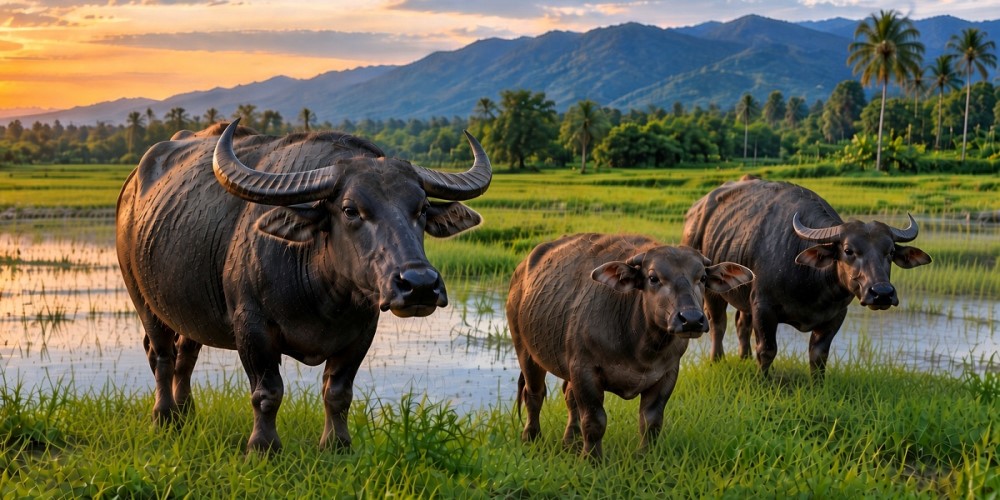
They are especially important in rice-growing regions, where their strength and ability to work in flooded fields have made them valuable to farming communities. Swamp buffaloes generally have a dark grey body, relatively straight horns and characteristic pale markings on the lower legs, tail tip and throat.
Their populations are found across parts of South and Southeast Asia, including countries such as China, Thailand, Vietnam, Cambodia and the Philippines. The independent domestication of river and swamp buffaloes illustrates how different communities developed livestock suited to their particular agricultural needs. It also explains why the two types differ genetically, physically and in their traditional uses.
Main types of domestic water buffaloes
Choosing the appropriate type of water buffalo is one of the most important decisions for anyone establishing a buffalo farming enterprise. River and swamp buffaloes are the two principal domestic types, and their differences influence breeding decisions, production goals and management practices.
a. River buffaloes
River buffaloes are generally black or dark-coloured animals with curved horns, although appearance varies between breeds. They are particularly important in dairy farming because selected breeds can produce substantial quantities of milk when supplied with adequate feed, water and appropriate reproductive and health management. Their milk commonly contains more fat and total solids than ordinary cow’s milk, making it suitable for products such as butter, yoghurt, cream and cheese.
The precise composition and yield vary according to breed, stage of lactation, nutrition, health and management. Farmers interested in commercial dairy production should investigate established river buffalo breeds and confirm that breeding stock, veterinary expertise, feed supplies and a viable milk market are available locally.
b. Swamp buffaloes
Swamp buffaloes are generally robust animals with a strong association with traditional agricultural work. They are commonly grey to dark grey, with relatively straight horns and pale markings that may be visible on the throat, lower legs and tail tip. Their physical strength makes them useful for pulling ploughs and carts, particularly where machinery is expensive, unavailable or unsuitable for small, waterlogged fields.
They are also raised for meat in some regions. Although swamp buffaloes can produce milk, they are not generally as specialised for dairy production as high-producing river buffalo breeds. Their suitability depends on the intended purpose of the farm, the availability of appropriate animals and local production conditions.
How to choose between the two types
The decision should be based on production objectives rather than appearance alone. A farmer planning to sell milk should prioritise dairy genetics, milk yield records, udder health and reproductive performance. Someone seeking draught animals should focus on strength, sound feet and legs, temperament, training potential and adaptation to local conditions.
The availability of breeding stock is equally important. Importing unfamiliar animals can introduce additional costs associated with transport, quarantine, disease testing and adaptation. Where buffalo farming is uncommon, a preliminary assessment by a livestock specialist is advisable before committing substantial resources.
Physical characteristics and behaviour of water buffaloes
Understanding the physical and behavioural characteristics of water buffaloes is essential for designing a safe and effective domestication programme. Although they resemble cattle in many respects, buffaloes have distinctive environmental preferences, social behaviours and responses to handling that influence how they should be raised.
Adult water buffaloes are large, powerful animals whose body weight varies considerably according to breed, sex, age and nutritional condition. Bulls are generally heavier and stronger than females, while calves require special attention during their early growth. Their broad bodies, muscular limbs and substantial horns can make adult animals difficult to control without suitable facilities and experienced handlers.
Water buffaloes are social animals that benefit from stable group structures. Young animals learn important behaviours from their mothers and other members of the herd. Isolation, abrupt changes in surroundings and rough handling can cause distress, making gradual adaptation an important part of successful husbandry.
a. Why water buffaloes need water and shade
Water buffaloes have relatively sparse hair and dark skin in many breeds. Their skin has fewer active sweat glands than cattle skin, which can limit their ability to dissipate heat through sweating. They therefore rely heavily on behavioural and environmental strategies, including seeking shade, reducing activity during the hottest hours and wallowing in water or mud when suitable facilities are available. Wallowing helps them cool down and can provide relief from biting insects. However, a large pond is not an absolute requirement for every farming system.
Clean drinking water, shade, adequate ventilation and suitable cooling arrangements are essential, while wallowing facilities should be provided where practical and environmentally appropriate. A well-managed farm can use shaded resting areas, sprinklers or other safe cooling methods where natural water bodies are unavailable. The objective is to prevent heat stress without compromising hygiene, drainage or the quality of the animals’ drinking water.
b. Temperament and handling behaviour
Domesticated water buffaloes can become accustomed to regular human contact, familiar routines and calm handling. However, domestication does not eliminate their strength, defensive behaviour or ability to injure people. An unfamiliar buffalo may react strongly when cornered, separated from its herd, startled or approached by an inexperienced person. Bulls, particularly during the breeding season, require special caution.
Even a seemingly calm animal can become dangerous if it feels threatened. Handlers should avoid shouting, beating animals or forcing them through narrow spaces. Movement should be controlled using secure gates, appropriate barriers and established livestock-handling methods. Children and visitors should never be allowed to approach large buffaloes without competent supervision.
How to domesticate and tame water buffaloes on a farm
For a farmer acquiring water buffaloes for the first time, domestication is best approached as a gradual process of familiarisation and training. The objective is to develop predictable, manageable behaviour while maintaining the animals’ welfare and the safety of the people responsible for them. An important distinction is that an already domesticated buffalo raised with little human contact may need taming and training, whereas a genuinely wild buffalo requires specialist wildlife management. Wild Asian water buffaloes are not suitable animals for inexperienced farmers to capture and domesticate.
a. Start with suitable animals
The safest starting point is to obtain healthy, farm-raised buffaloes from a reputable breeder. Animals that have been handled regularly from an early age are generally easier to manage than mature animals with little experience of people. Before purchasing, assess the animals’ health, body condition, temperament, age, breeding history and identification records. Examine their feet, legs, eyes, skin and general movement, and arrange a veterinary assessment when possible.
Breeding females should have reliable reproductive histories, while breeding males should be assessed for soundness and suitability. Where buffaloes are uncommon, purchasing an experienced, well-handled female or a compatible group of young animals may be more practical than acquiring an untrained adult bull.
b. Allow the animals to settle into their new environment
Newly acquired buffaloes should be introduced to a secure, quiet enclosure with suitable shelter, clean drinking water and familiar feed where possible. Their arrival should not be followed immediately by unnecessary handling, transport or demanding training sessions. A transition period allows the animals to recover from transport stress and become familiar with the sights, sounds, smells and routines of the farm.
Feed changes should be introduced gradually to reduce the risk of digestive disturbances. New arrivals should also be kept separate from the established herd for an appropriate quarantine period determined with veterinary advice. This helps reduce the possibility of introducing infectious diseases and allows the animals to be monitored before mixing.
c. Build trust through consistent, calm contact.
Once the animals have settled, handlers can begin familiarisation by spending short periods near the enclosure, moving calmly and speaking in a consistent voice. Feed can be offered in a suitable trough to create a positive association with the presence of people. The objective is not to force physical contact. Animals should be allowed to approach voluntarily, and handlers should always maintain a safe escape route.
Hand-feeding large buffaloes is not necessary and can encourage unsafe behaviour, particularly if animals begin pushing or competing for food. Over time, the buffaloes can become accustomed to routine activities such as approaching a feeding area, entering a handling pen and moving between enclosures. Progress should be guided by their responses rather than by a rigid timetable.
d. Introduce halter training and controlled movement
Halter training is useful for buffaloes that will need regular veterinary examinations, transport, milking or other supervised handling. It should be introduced gradually by someone experienced with buffaloes, using equipment of suitable size and strength. Initially, the animal should become comfortable with the equipment and the presence of the handler. Later training can involve short periods of leading within a secure enclosure, with rewards and calm repetition used to encourage cooperation.
Handlers should never wrap a lead rope around their hands or body, tie an animal in a way that could cause strangulation, or attempt to overpower a resisting buffalo. Horned animals can inflict serious injuries, and mature bulls should not be treated as ordinary pets. If a buffalo repeatedly charges, attempts to escape, becomes highly distressed or cannot be handled safely, training should stop and an experienced livestock handler or veterinarian should be consulted.
e. Establish predictable daily routines
Buffaloes respond well to consistent feeding, watering, resting and handling schedules. Familiar routines reduce unnecessary disturbance and make it easier to identify changes in behaviour that may indicate illness or stress. Daily interaction should remain calm and purposeful. Animals that cooperate during routine handling are generally easier to examine, vaccinate, move and manage during breeding or milking. However, familiarity should never be mistaken for complete predictability, especially when dealing with bulls, cows protecting calves or animals experiencing pain.
Housing and fencing requirements for water buffaloes
Appropriate housing protects water buffaloes from extreme weather, injury, theft and disease while providing a practical environment for feeding, resting and routine management. Housing should be designed around the size of the animals, the local climate, the herd size and the farm’s production objectives.
a. Designing a suitable buffalo shelter
A buffalo shelter should provide shade, rain protection, good ventilation and a dry resting area. The roof should be sufficiently high to allow comfortable movement, while the floor should be durable, non-slip and easy to clean. Concrete floors can be useful in feeding and handling areas, but they should not be excessively smooth or abrasive. Resting areas should provide comfortable bedding or another suitable surface, and drainage should prevent standing wastewater and the accumulation of manure.
The building should allow buffaloes to stand up, lie down, turn around and reach feeding and watering points without being forced into overcrowded spaces. Calves should have access to a safe area where they cannot be trampled by larger animals. Buffalo housing should prioritise comfort, safety, cleanliness, practical management and proper handling of manure, feed and water.
b. Fencing and handling facilities
Because water buffaloes are powerful animals, fencing must be strong enough to withstand pressure from their bodies. Suitable options include well-constructed livestock fencing, secure gates and appropriately designed electric fencing where permitted and installed correctly. Fences should be inspected regularly for loose wires, damaged posts, sharp edges and gaps through which calves could escape. Watercourses, roads and neighbouring farms may require additional barriers to prevent animals from wandering into dangerous areas.
A well-designed handling area should include secure gates, a race or passage that encourages forward movement, and a suitable restraining facility for veterinary work. Narrow passages should not contain sharp corners or obstructions that may cause panic. Farmers should plan handling facilities before expanding the herd. Attempting to restrain a large buffalo with ropes and improvised equipment can expose both animals and people to serious injury.
Feeding and nutritional requirements of water buffaloes
Nutrition directly affects buffalo growth, reproductive performance, immunity, milk production and working ability. Although buffaloes can make effective use of fibrous feeds, they still require balanced diets that provide sufficient energy, protein, minerals, vitamins and water.
a. Grazing and forage management
Good-quality pasture is a practical foundation for many buffalo farming systems. Suitable grasses and other locally adapted forage crops can provide much of the daily nutritional requirement of animals kept under grazing or cut-and-carry systems. The quality of forage matters as much as its quantity. Young, leafy grass generally provides better nutrition than mature, fibrous material, while poorly managed pasture can contain insufficient nutrients to support growth or lactation.
Farmers should rotate grazing areas where possible, avoid excessive grazing pressure and maintain enough forage for periods of drought or reduced growth. Where animals are fed cut grass, it should be harvested from areas that have not been contaminated with pesticides, toxic plants or animal waste. Buffaloes should not be expected to maintain high milk yields or rapid growth on poor-quality forage alone. Their diet must be adjusted to the requirements of their age, body condition, activity and production stage.
b. Supplementary feeds and concentrates
Concentrates can supplement forage when pasture alone does not meet nutritional requirements. Depending on local availability and veterinary or animal nutrition advice, these may include suitable cereal by-products, oilseed meals and other formulated livestock feeds. Dairy buffaloes generally require more energy and protein during lactation than non-lactating animals. Growing calves, pregnant females and working animals also have different nutritional needs.
Feed should be introduced gradually, and excessive quantities of grain or other rapidly fermentable carbohydrates should be avoided because they can cause digestive disorders, including ruminal acidosis. A qualified animal nutritionist can help formulate a balanced ration based on forage quality, milk yield and available ingredients.
c. Minerals, vitamins and clean drinking water
Buffaloes require appropriate mineral intake, including calcium, phosphorus, sodium and trace minerals. Deficiencies may affect growth, fertility, bone health and milk production. Mineral supplementation should be based on the animals’ diet, local deficiencies and professional advice rather than guesswork. Clean drinking water must be available throughout the day, with additional attention during hot weather and lactation.
Water consumption varies according to body size, feed moisture, temperature, activity and production level. Drinking troughs should be cleaned regularly and positioned to prevent excessive contamination by manure. If wallowing facilities are provided, drinking water should still be supplied separately in a clean and accessible location.
d. Feeding buffalo calves
Calves need prompt access to colostrum, the first milk produced after birth, because it supplies antibodies and nutrients that are critical for early immunity. The amount, timing and quality of colostrum should be managed carefully, particularly when calves are weak or their mothers have difficulty nursing. After the initial period, calves require appropriate milk feeding or access to their mothers, clean water, and gradually introduced calf feed and good-quality forage.
Weaning should be based on the calf’s development, health and ability to consume adequate solid feed rather than age alone. Feeders should be cleaned regularly, and calves should be monitored for diarrhoea, poor appetite, dehydration and slow growth. Early veterinary intervention can prevent common calf illnesses from becoming serious.
Breeding and reproduction in domestic water buffaloes
Breeding is central to long-term domestication because it allows farmers to improve desirable traits while maintaining healthy, productive animals. A well-planned breeding programme should consider fertility, milk production, growth rate, temperament, disease resistance, longevity and adaptation to local conditions.
a. Selecting suitable breeding animals
Breeding females should have sound feet and legs, good body condition, healthy reproductive organs and a history of successful pregnancies where records are available. For dairy herds, udder structure, teat placement, milk yield and resistance to udder infections are also important. Breeding bulls should be healthy, fertile, structurally sound and manageable. Their breeding history, temperament and relationship to the females in the herd should be assessed before use.
Farmers should avoid selecting animals solely because they are large or visually impressive. A smaller animal that reproduces reliably, thrives on available feed and remains healthy over many years may be more valuable than a larger animal with poor fertility or high maintenance requirements.
b. Understanding the reproductive cycle
Female water buffaloes generally reach puberty at an age influenced by breed, growth rate, nutrition and environmental conditions. Some may become reproductively mature earlier than others, but breeding should not begin simply because a female has shown her first signs of heat. The animal should have reached an appropriate body size and physical maturity, and a veterinarian or experienced breeding specialist should assess its readiness for pregnancy.
Buffaloes display signs of oestrus, or heat, that may include restlessness, mounting behaviour, increased attention to other animals, changes in vocalisation and willingness to stand for mounting. However, heat detection can be difficult because some buffaloes show relatively subtle signs. Accurate observation, record-keeping and veterinary assistance can improve the chances of successful conception. Artificial insemination may also be an option where trained technicians and suitable breeding services are available.
c. Pregnancy, calving and care of newborns
Buffalo pregnancy lasts approximately 10 months, although the exact duration varies among individuals and breeds. Farmers should record breeding dates, monitor pregnant females and provide adequate nutrition throughout gestation. As calving approaches, females should have access to a clean, quiet area where they can give birth without unnecessary disturbance. Difficult labour, prolonged straining without progress, abnormal presentation or a visibly weak newborn requires prompt veterinary assistance.
After birth, the calf should breathe normally, receive adequate colostrum and remain in a clean environment. The mother should be checked for retained placenta, excessive bleeding, udder problems and other postpartum complications. Keeping accurate breeding and calving records helps farmers plan future production, identify fertility problems and make informed decisions about which animals to retain.
e. Preventing inbreeding and improving the herd
Repeatedly breeding closely related animals can increase the likelihood of inherited disorders, reduced fertility and declining performance. Farmers should therefore maintain reliable pedigree or breeding records and avoid uncontrolled mating between related individuals. Where possible, unrelated breeding bulls or properly managed artificial insemination programmes can help maintain genetic diversity.
Crossbreeding may also be useful when there is a clear production objective, but it should be based on evidence rather than the assumption that crossing breeds will automatically improve performance. A sustainable breeding programme seeks steady, measurable improvement without sacrificing animal health, adaptation or genetic diversity.
Health management and disease prevention in water buffaloes
Healthy buffaloes are more productive, live longer and require fewer emergency veterinary interventions. Effective health management combines preventive care, sanitation, nutrition, vaccination where appropriate, parasite control and prompt treatment of illness.
a. Common health problems
Water buffaloes are susceptible to many of the infectious and parasitic diseases that affect cattle and other livestock. The diseases encountered on a particular farm depend on geography, climate, herd movements, vaccination status and local disease prevalence. Important conditions to discuss with a veterinarian include foot-and-mouth disease, haemorrhagic septicaemia, brucellosis, bovine tuberculosis, parasitic infections, tick-borne diseases, mastitis and calf diarrhoea.
Not every disease occurs in every location, and the appropriate control measures vary accordingly. Foot-and-mouth disease is highly contagious and can cause fever, excessive salivation, blisters and painful lesions around the mouth and feet. Haemorrhagic septicaemia, caused by particular strains of Pasteurella multocida, can progress rapidly and may be fatal. Brucellosis is important because it can cause reproductive losses and can also infect humans.
Mastitis is an inflammation of the udder that may reduce milk production and affect milk quality. Its signs can include swelling, heat, pain and changes in the appearance of milk. Subclinical cases may be harder to detect without testing. Farmers should not assume that every fever, swollen joint or loss of appetite has the same cause. Accurate diagnosis is essential for selecting effective treatment and preventing disease spread.
b. Vaccination and veterinary examinations
Vaccination programmes should be developed with a local veterinarian, taking account of the diseases present in the region, government requirements, animal age and previous vaccination history. A vaccination programme for buffaloes should not simply copy a cattle schedule without professional review.
Although many vaccines and disease-control measures are shared between the two species, suitability, licensing and administration requirements need to be confirmed locally. Routine veterinary examinations can help identify parasites, reproductive disorders, nutritional deficiencies and other conditions before they seriously affect the herd. New animals should be examined before introduction, and sick animals should be separated when appropriate.
c. Parasite control and tick management
Internal parasites can interfere with digestion, growth and productivity, while ticks and other external parasites can cause irritation, blood loss and disease transmission. Control measures may include pasture management, strategic parasite treatment, tick control and regular examination of the animals.
Treatment should be based on local veterinary advice, because unnecessary or repeated use of antiparasitic medicines can contribute to drug resistance. Where animals are treated for parasites or other illnesses, farmers producing milk or meat must follow the medicine’s withdrawal periods and all applicable food-safety requirements.
d. Hygiene, isolation and disease reporting
Clean housing, well-drained resting areas, safe drinking water and proper manure management help reduce exposure to infectious organisms. Milking equipment should be cleaned and sanitised, and people handling sick animals should follow appropriate hygiene procedures. Animals showing sudden deaths, severe breathing difficulties, unexplained abortions, unusual blistering or other signs of a potentially serious contagious disease should receive urgent veterinary attention. Suspected notifiable diseases must be reported to the relevant veterinary authorities. A written health plan, including treatment records, vaccination dates and breeding information, makes it easier to track the herd’s condition and assess the effectiveness of preventive measures.
Milking and dairy production from water buffaloes
Dairy production is one of the main economic reasons farmers raise river buffaloes. Buffalo milk is valued for its relatively high fat and total solids content, which can make it particularly useful for producing rich dairy products. Successful dairy buffalo farming depends on selecting appropriate animals and combining good nutrition with hygienic milking, reproductive management and reliable milk marketing.
a. Establishing a milking routine
Buffaloes should become accustomed to the milking environment through calm, consistent handling. The milking area should be clean, well ventilated and designed to minimise slipping, crowding and unnecessary stress. Before milking, the udder and teats should be examined and cleaned using appropriate procedures.
The first milk can be checked for visible abnormalities, and milk from animals suspected of mastitis should be handled according to veterinary and food-safety guidance. Milking equipment must be maintained and sanitised correctly. Where hand milking is used, clean hands, suitable containers and careful handling are essential. Milk should be cooled promptly and stored under appropriate conditions to reduce bacterial growth.
b. Milk yield and quality
Milk yield varies considerably with breed, age, parity, genetics, diet, season, health and management. Consequently, farmers should not rely on a single advertised production figure when estimating the likely output of a herd. Before investing in dairy buffaloes, prospective farmers should obtain actual production records from the breeder and compare them with the feed resources and management conditions available on their own farms. High-producing females require adequate energy, protein, minerals and water. Poor nutrition can reduce milk yield and body condition, delay reproductive recovery and increase the risk of metabolic or health problems.
c. Developing value-added dairy products
Depending on local regulations and market demand, buffalo milk may be processed into yoghurt, butter, cream, cheese and other dairy products. Buffalo milk is particularly associated with mozzarella di bufala, a traditional Italian cheese. Processing can increase the value obtained from each litre of milk, but it also introduces additional requirements for equipment, hygiene, refrigeration, product consistency, licensing and distribution. Farmers should evaluate the costs of processing against the prices they can realistically obtain. Producing high-quality milk consistently and establishing dependable buyers are often more important than investing immediately in expensive processing facilities.
Meat, draught power and other uses of water buffaloes
Although dairy production receives considerable attention, water buffaloes provide several other valuable products and services. The most appropriate production system depends on local markets, labour requirements, land availability and the characteristics of the animals being raised.
a. Buffalo meat production
Buffaloes are raised for meat in various countries, providing an additional source of income for farmers. Growth rate, feed conversion, carcass characteristics, health and the cost of reaching market weight influence profitability. A meat enterprise requires careful planning of feeding, breeding, animal welfare, transport and slaughter arrangements.
Farmers must also comply with applicable food-safety and livestock marketing regulations. Animals should receive adequate nutrition and humane handling throughout the production cycle. Meat production should never depend on prolonged underfeeding or the neglect of sick or injured animals.
b. Draught power and agricultural work
Water buffaloes have traditionally been used to pull ploughs, carts and other agricultural equipment. Their strength and ability to work in wet conditions make them useful in some smallholder farming systems. Training should begin gradually, with suitable harnesses and equipment that distribute pressure appropriately.
Workloads should match the animal’s age, physical condition, nutrition and fitness, with rest and access to water provided as needed. Buffaloes should not be forced to work in extreme heat or while injured, exhausted or ill. Mechanisation may be more economical in some settings, but draught buffaloes can remain valuable where equipment is unaffordable or difficult to use.
c. Manure and other by-products
Buffalo manure can be composted and used as an organic fertiliser, helping recycle nutrients within the farm. It may also be used in properly designed biogas systems, depending on the quantity available and the technology used. Manure must be managed to prevent contamination of drinking water, food crops and milk-handling areas.
Composting and appropriate storage can improve its usefulness while reducing sanitation risks. Hides may also have commercial value, although their quality depends on animal condition, handling and processing. These secondary products can supplement farm income, but they should be treated as part of a broader business plan rather than guaranteed sources of profit.
Economic benefits and profitability of water buffalo farming
Water buffalo farming can provide several income streams, but profitability depends on local production conditions, market access and the farmer’s ability to control costs. A successful enterprise begins with a realistic assessment of the available resources and the products customers are willing to purchase.
a. Income opportunities
Farmers may earn income from milk, breeding animals, meat, draught services and manure. The relative importance of each source depends on the type of buffalo raised and the production system. A dairy enterprise may generate regular income from milk sales, while a breeding operation may earn revenue from selling healthy calves and proven breeding animals.
In areas where buffaloes are used for agricultural work, trained animals may provide seasonal income through ploughing or transport services. Diversification can reduce dependence on a single market. However, it is important to avoid expanding into several activities simultaneously before the core operation becomes financially sustainable.
b. The major costs of establishing a buffalo farm
Initial expenses may include purchasing animals, building housing and fencing, installing water facilities, acquiring handling equipment and arranging veterinary examinations. Additional costs include feed, labour, breeding services, medicines, transport and routine maintenance. Feed can be a particularly important operating expense, especially where pasture is insufficient or high-producing dairy animals require supplementary concentrates.
The cost of acquiring breeding stock can also be substantial when specialised dairy breeds are scarce. A farmer should prepare a budget covering both initial investment and ongoing expenses. The calculation should include a contingency for disease outbreaks, reproductive failures, drought, unexpected feed shortages and changes in market prices.
c. How to assess profitability
The most useful measure is not simply the amount of milk produced or the number of calves born, but the income remaining after all relevant costs have been deducted. For a dairy herd, a basic annual calculation is: (Net profit = Total annual revenue – Total annual operating costs). Revenue should include only income the farmer reasonably expects to receive. Costs should account for feed, labour, veterinary services, breeding, utilities, transport, repairs and other expenses.
For a more complete assessment, the farmer should also account for depreciation, financing costs and the opportunity cost of land and labour. Before purchasing animals, it is advisable to compare conservative, expected and optimistic financial scenarios. This helps determine whether the business could survive lower milk prices, higher feed costs or a temporary decline in production.
Challenges of domesticating and raising water buffaloes
Despite their many advantages, water buffaloes are not automatically easy or inexpensive to raise. Their successful management requires appropriate facilities, knowledgeable handlers and a reliable supply of feed and veterinary services.
a. Heat stress and environmental limitations
Buffaloes are adapted to warm environments but can suffer from heat stress when temperatures and humidity rise, particularly if shade, ventilation and cooling facilities are inadequate. Heat stress may reduce feed intake, fertility, milk production and general welfare. Farmers should plan for the hottest periods of the year rather than assuming that animals will manage because they are tropical livestock.
Shade, reliable water supplies, suitable resting areas and adjustments to handling schedules are important preventive measures. Water availability must also be considered during drought. Wallowing ponds should not be created or maintained at the expense of safe drinking water, and poorly managed water bodies can become breeding grounds for insects or sources of contamination.
b. Limited access to breeding stock and expertise
In countries where buffalo farming is uncommon, suitable animals may be difficult to obtain. Farmers may also face shortages of experienced buffalo handlers, veterinarians familiar with the species, breeding services and reliable feed suppliers. These limitations can increase costs and make it harder to maintain productivity.
Before investing, prospective farmers should identify sources of healthy animals, veterinary support, breeding assistance and potential buyers. Importing buffaloes may be possible under applicable regulations, but it involves biosecurity, animal health certification, transport and quarantine requirements. Importation should never be treated as a simple substitute for developing local expertise.
c. Disease outbreaks and market uncertainty
Disease outbreaks can cause production losses, mortality, movement restrictions and higher veterinary expenses. Prevention is therefore an important part of financial management as well as animal welfare. Market uncertainty creates another challenge. A farmer may produce good-quality milk but still struggle to earn a profit if transport is expensive, buyers are unreliable or processing facilities are unavailable. Cooperative marketing, supply agreements and careful cost management may help address these problems. However, prospective farmers should verify local market conditions before making major investments.
Environmental sustainability and responsible buffalo farming
Responsible water buffalo farming can support sustainable agriculture when livestock numbers, grazing pressure, manure and water use are managed appropriately. Buffaloes can make use of certain forage resources and provide manure for crop production, helping integrate livestock and crop farming. Nevertheless, the environmental benefits depend on how the enterprise is managed.
Excessive stocking can degrade pasture, compact soil and increase erosion. Poorly managed manure can pollute rivers, streams and groundwater, while uncontrolled access to wetlands may damage sensitive habitats. Farmers should establish appropriate stocking rates, protect natural water bodies and provide designated access points where necessary.
Manure can be composted or processed for biogas when suitable facilities are available. Buffalo farming should also be distinguished from the conservation of wild Asian water buffaloes. Domestic animals are livestock, whereas wild populations have their own ecological requirements and conservation needs.
Capturing wild buffaloes for farming is not an appropriate substitute for acquiring legally sourced domestic animals. A sustainable operation should consider animal welfare, land productivity, water quality, biodiversity and the long-term availability of feed resources. These factors protect both the farm’s productive capacity and the surrounding environment.
Domestication of water buffaloes in other regions
Although water buffaloes originated in Asia, they have spread to other parts of the world and are now raised in different agricultural environments. Their suitability outside their traditional range depends on climate, feed resources, disease risks, breeding stock availability and the economics of local livestock production.
In parts of Europe, river buffaloes are important for dairy production, particularly in Italy, where buffalo milk supports the production of specialised cheeses. In South America, buffaloes have also become established in some livestock systems, including areas where their ability to utilise particular grazing environments offers practical advantages.
Opportunities for water buffalo farming in Africa
For farmers in Africa, water buffalo farming may present an interesting livestock diversification opportunity, particularly for those exploring dairy production, breeding stock or alternative meat enterprises. However, it should be approached as a specialised livestock investment rather than an automatic replacement for cattle, goats or sheep.
A farmer considering buffaloes should first establish whether legally sourced animals are available, whether local veterinary services can support them and whether a viable market exists for their milk, meat or breeding stock. The availability of suitable land, forage and water must also be evaluated.
Climate suitability varies across Africa. Hotter areas require particular attention to shade, cooling and water supply, while farms in wetter regions must consider drainage, parasite control and the risks associated with prolonged wet conditions. Importing buffaloes into any African country would require confirmation of current livestock import rules, veterinary certification, disease-control requirements and any applicable wildlife or conservation restrictions.
The relevant authorities should be consulted before animals are purchased or transported across borders. A small pilot operation, supported by a livestock veterinarian and a realistic financial plan, would be more prudent than establishing a large herd before local production performance and market demand have been demonstrated.
Best practices for successful water buffalo domestication
Successful water buffalo farming depends on combining appropriate animal selection with consistent management. While the details vary according to the production system, several principles apply to nearly every operation.
- Farmers should obtain healthy animals from reputable sources and choose a type suited to their objectives. Dairy production requires different selection criteria from draught work or meat production, and breed suitability should be assessed alongside local environmental conditions.
- Animals should be introduced to the farm gradually and handled calmly. Secure fencing, well-designed handling facilities, adequate shelter and predictable routines make daily management safer and less stressful.
- Nutrition must be planned around the needs of each animal. Good-quality forage, appropriate supplementation, sufficient minerals and reliable drinking water are fundamental to growth, reproduction and production. Feed supplies should be assessed throughout the year, particularly where drought or seasonal shortages are common.
- Preventive veterinary care should be built into the farm’s operating plan. Vaccination, parasite control, quarantine, hygiene, reproductive monitoring and accurate health records help protect productivity and reduce avoidable losses.
- Farmers should maintain detailed records of breeding, calving, milk yield, feed expenditure, veterinary treatment and sales. These records make it possible to identify productive animals, detect recurring problems and determine whether the enterprise is generating an acceptable return.
Conclusion
Water buffalo domestication has shaped agricultural systems for thousands of years, providing communities with milk, meat, draught power and other valuable resources. The development of river and swamp buffaloes demonstrates how selective breeding and human management have produced animals suited to different agricultural environments and production objectives.
Today, water buffaloes remain important livestock in many parts of the world. River buffaloes offer opportunities for specialised dairy production, while swamp buffaloes have traditionally been valued for agricultural labour and meat. Both types can contribute to productive farming systems when their nutritional, behavioural, reproductive and environmental requirements are properly understood.
For prospective farmers, successful domestication begins with acquiring suitable, legally sourced animals and providing a safe environment in which they can adapt to human management. Careful feeding, calm handling, appropriate breeding, preventive veterinary care and responsible environmental management are essential throughout the animals’ lives.
Ultimately, water buffalo farming should be approached as a long-term livestock enterprise rather than a simple exercise in taming large animals. With sound planning, adequate expertise and a realistic understanding of local conditions, domesticated water buffaloes can provide valuable agricultural and commercial benefits while maintaining high standards of animal welfare.