

















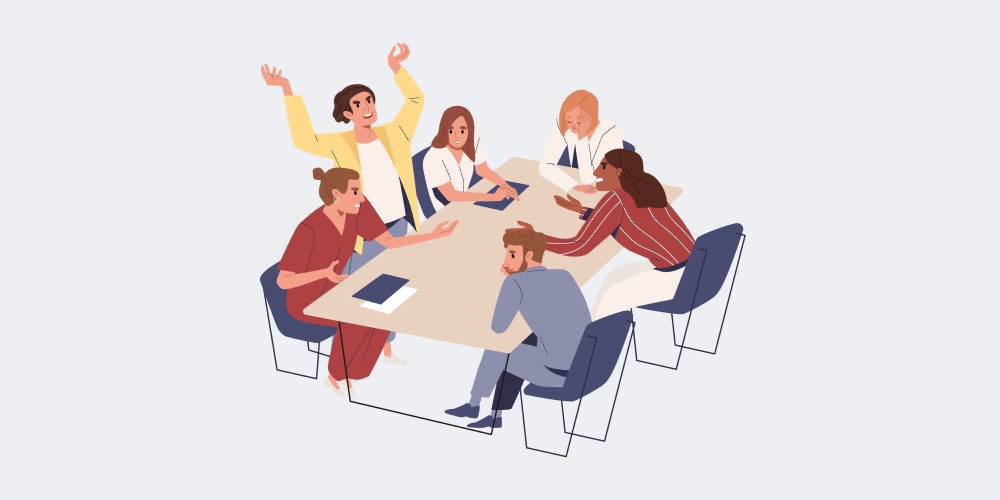

























































































































































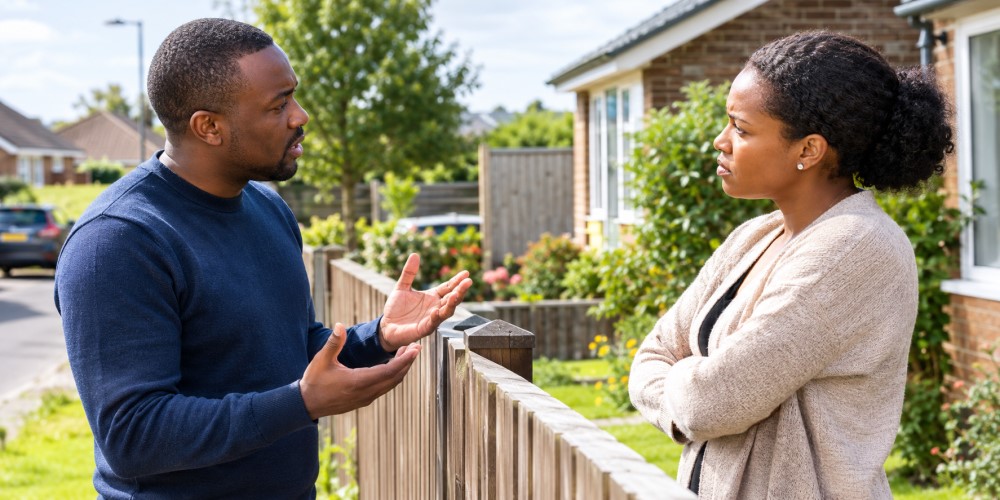
Living next to other people can be one of the most rewarding aspects of having a home, but it can also become a source of considerable stress when a neighbor behaves inconsiderately, aggressively, or irresponsibly. Loud music, uncontrolled pets, blocked access, boundary disputes, overflowing rubbish, parking conflicts, harassment, and constant interference can turn an otherwise peaceful home into an uncomfortable place to live.
The challenge is that you cannot always choose your neighbors, and moving house is rarely a practical solution to every disagreement. The better approach is to understand the nature of the problem, communicate appropriately, establish boundaries, document serious incidents, and escalate the matter through reasonable channels when necessary.
Handling a bad neighbor is ultimately about finding the right balance between assertiveness and restraint. You have a legitimate interest in enjoying your home peacefully, but responding emotionally, aggressively, or unlawfully can make an already difficult situation significantly worse. A thoughtful strategy can protect your peace while giving the neighbor an opportunity to change their behavior.
What makes someone a bad neighbor?
A bad neighbor is generally someone whose behavior repeatedly interferes with other residents’ reasonable enjoyment, safety, privacy, property, or peaceful coexistence. Not every irritating behavior makes someone a bad neighbor, however. People have different lifestyles, schedules, personalities, and expectations, so distinguishing between ordinary differences and genuine misconduct is important.
A neighbor might become problematic through excessive noise, frequent parties, offensive behavior, property damage, intimidation, persistent disputes, neglect of shared spaces, or disregard for clearly established community rules. In some cases, the problem is deliberate; in others, the neighbor may not realize how disruptive their conduct has become.
Common types of bad neighbors
Different neighborhood problems require different responses because a noisy neighbor, a threatening neighbor, and a neighbor involved in a property dispute present very different risks.
- The excessively noisy neighbor may regularly play loud music, hold late-night parties, shout, use machinery at inappropriate hours, or allow televisions and other equipment to disturb nearby households.
- The inconsiderate neighbor may repeatedly leave rubbish in shared areas, block driveways, occupy other people’s parking spaces, allow vegetation to grow onto neighboring property, or misuse common facilities.
- The intrusive neighbor may constantly ask personal questions, monitor visitors, interfere with household activities, gossip about residents, or attempt to involve themselves in private matters.
- The aggressive neighbor may respond to ordinary complaints with insults, threats, intimidation, confrontation, or property damage. Such situations should be treated more cautiously because direct confrontation can create safety risks.
- The boundary-dispute neighbor may claim ownership of part of your property, move fences, construct structures across boundaries, or otherwise interfere with your property rights.
- The antisocial or unlawful neighbor may engage in conduct that goes beyond ordinary neighborhood disagreements, such as vandalism, serious threats, violence, theft, or other criminal activity. Such circumstances require a different response from a simple disagreement about noise or parking.
Understanding which category you are dealing with helps determine whether the appropriate response is a friendly conversation, written complaint, mediation, property-management intervention, or involvement of the authorities.
First determine whether the problem is actually serious
Before confronting a neighbor, take a step back and objectively evaluate the situation. This prevents temporary irritation from turning into a long-term feud over something that could have been resolved easily. A neighbor may occasionally make noise, have visitors, park incorrectly, or behave in a way you dislike. That does not necessarily mean you are dealing with a bad neighbor. People sometimes have different expectations about what constitutes acceptable behavior.
The more important question is whether the behavior is repeated, unreasonable, disruptive, threatening, or harmful. For example, a neighbor playing loud music once during a celebration is different from someone playing extremely loud music several nights every week until the early hours of the morning. A car temporarily blocking your driveway is different from someone repeatedly parking there after being asked not to. Distinguishing between an isolated incident and a pattern allows you to respond proportionately.
Do not react while you are angry
One of the most important rules for dealing with a difficult neighbor is to avoid confrontation when emotions are running high. Anger can make people say things they later regret and can transform a manageable dispute into a personal conflict. If your neighbor has just disturbed you, give yourself time to calm down before approaching them. Consider what outcome you actually want rather than focusing on how angry you feel.
Instead of thinking, “I need to teach this person a lesson”, think, “I need this behavior to stop”. That change in mindset is important because the objective is resolution, not revenge. Avoid shouting, insulting, threatening, humiliating, or provoking the neighbor. Do not damage their property or retaliate by deliberately creating another nuisance. Retaliation can make you part of the problem and may expose you to complaints or legal consequences.
Talk to your neighbor directly when it is safe
When the problem is relatively minor and there is no indication that the neighbor is dangerous, a calm conversation is often the most effective first step. Many neighborhood disputes persist simply because people make assumptions about one another instead of communicating directly. Your neighbor may not know that their dog barks throughout the night, that water is flowing onto your property, or that their music is clearly audible inside your bedroom. Choose an appropriate time to speak rather than confronting the person during the incident itself.
Use a calm and respectful tone. Explain what is happening, how it affects you, and what you would like changed. For example, instead of saying: “You are an inconsiderate person who always makes noise.” You could say: “The music has been quite loud late at night, and it has been difficult for us to sleep. Would you mind keeping the volume down after a certain time?” The second approach focuses on the behavior rather than attacking the person’s character.
Use specific examples
Vague accusations rarely produce useful results. Specific examples make it easier for your neighbor to understand the problem and address it. Instead of saying that they “always” make noise, explain when the disturbance occurs. Instead of accusing them of “blocking your property”, identify the particular access point or area affected. Specificity also becomes valuable later if the matter needs to be documented.
Establish clear and reasonable boundaries
Good neighbor relationships depend heavily on boundaries. Being friendly does not mean allowing another person to interfere with your privacy, property, or peace. Boundaries should be communicated clearly and respectfully. If someone repeatedly enters your property without permission, for example, you can tell them directly that you do not consent to unauthorized entry.
Similarly, if a neighbor continually borrows equipment, demands favors, or becomes excessively involved in your personal affairs, you can politely but firmly establish limits. Being assertive does not require hostility. You can be respectful while making it clear what behavior you will and will not accept.
Put important complaints in writing
If a verbal conversation does not resolve the problem, consider communicating in writing. A written message can provide clarity and create a record of what was discussed. Keep the communication factual rather than emotional. Explain the issue, identify the relevant dates or circumstances, and state what you are asking the neighbor to do.
For example, if noise is the problem, explain that repeated late-night disturbances are affecting your ability to sleep and request that the volume be reduced during reasonable nighttime hours. Avoid writing long emotional messages filled with accusations. The goal is to establish a clear record, not to win an argument.
Keep a record of repeated problems
Documentation becomes increasingly important when a neighbor refuses to cooperate or when the dispute involves potentially serious misconduct. Keep a simple record containing the date, time, nature of the incident, duration, witnesses, and action taken. Where appropriate and lawful, preserve relevant photographs, correspondence, repair invoices, or other evidence. For example:
| Date | Time | Problem | Duration | Action taken |
| September 3 | 11:45 p.m. | Excessive music | 1 hour | Neighbor contacted |
| September 6 | 12:20 a.m. | Loud shouting | 40 minutes | Written complaint |
| September 8 | 10:30 p.m. | Loud music | 90 minutes | Incident documented |
A record helps you distinguish between isolated events and persistent behavior. It can also be useful if you eventually need to approach a landlord, homeowners’ association, property manager, mediator, local authority, or law-enforcement agency.
Do not exaggerate or manufacture evidence
Documentation should be accurate. Never invent incidents, manipulate evidence, deliberately provoke a neighbor into behaving badly, or make false allegations. If you use photographs, recordings, security-camera footage, or other forms of evidence, make sure you understand the applicable privacy and recording laws in your jurisdiction. The strongest evidence is usually simple, contemporaneous, and factual.
Consider whether you are contributing to the conflict
It is uncomfortable but worthwhile to consider whether anything you are doing might be contributing to the dispute. Perhaps your dog occasionally barks, your children make considerable noise, your vehicle sometimes blocks part of a shared entrance, or your construction work is disturbing others. A disagreement does not automatically mean that one person is completely right and the other completely wrong. If you are contributing to the problem, acknowledge it and make reasonable changes. Taking responsibility for your own behavior does not weaken your position. In fact, it can strengthen it because you can legitimately ask your neighbor to show the same consideration.
Avoid neighborhood gossip
When dealing with a difficult neighbor, it can be tempting to discuss the situation with everyone else on the street. This usually makes matters worse. Gossip can damage reputations, create factions, and encourage other people to take sides before they understand the facts. It can also provoke the neighbor and make future resolution more difficult. If you need support, speak privately with someone you trust rather than turning the dispute into neighborhood entertainment.
Involve a landlord or property manager
If you rent your home, the landlord or property manager may have an important role in resolving persistent disputes, particularly when the problem violates tenancy agreements or property rules. Provide a concise written description of the problem and relevant documentation. Explain what you have already done to resolve the matter and what outcome you are seeking.
If the neighbor is also a tenant in the same building or property complex, management may have procedures for handling noise, harassment, damage, shared facilities, parking, or other disputes. Do not assume that the landlord can solve every problem, however. Their responsibilities depend on the tenancy arrangement, applicable law, and circumstances of the dispute.
Use a homeowners’ association or residents’ association
Where a neighborhood is governed by a homeowners’ association, residents’ association, estate management company, or similar organization, its rules may provide a formal mechanism for resolving disputes. Such organizations commonly establish standards concerning noise, parking, pets, waste disposal, construction, shared facilities, security, and property maintenance. Before filing a complaint, review the relevant rules and procedures. A complaint supported by specific evidence is generally more effective than a generalized allegation that someone is “a bad neighbor”.
Try mediation before escalating the dispute
Mediation can be particularly useful when both parties are willing to find a practical solution but cannot communicate effectively on their own. A neutral mediator can allow each person to explain their concerns and help them reach an agreement. The mediator does not necessarily determine who is right; instead, the objective is to find a workable resolution.
For example, neighbors may agree on acceptable hours for music, arrangements for shared parking, responsibility for maintaining a boundary, or procedures for addressing future problems. Mediation can be less expensive, less stressful, and less destructive to long-term relationships than immediately pursuing formal legal action.
Know when the situation requires authorities
Not every neighbor dispute should remain a private matter. When behavior becomes threatening, violent, criminal, or seriously dangerous, appropriate authorities may need to become involved. Examples can include credible threats of violence, physical assault, serious property damage, stalking, burglary, deliberate arson, or other criminal conduct. If there is an immediate threat to life or safety, prioritize getting yourself and others to a safe location and contact the appropriate emergency services. Do not attempt to physically confront a violent or dangerous person simply because you believe you need to settle the dispute yourself.
Handle noise complaints strategically
Noise is among the most common causes of neighborhood conflict because people have different schedules and tolerance levels. The most effective response is usually to document the pattern and make a specific request. Explain when the noise occurs and how it affects you. If the neighbor continues after being approached, check applicable building rules, estate regulations, tenancy agreements, or local noise regulations.
Depending on the jurisdiction and circumstances, a landlord, property manager, local authority, or law-enforcement agency may be able to intervene. Avoid retaliatory noise. Playing loud music because your neighbor plays loud music rarely solves anything; it simply creates two sources of disturbance.
Deal with parking problems calmly
Parking disputes can become surprisingly personal because vehicles occupy limited shared space. If a neighbor repeatedly uses your designated parking space, blocks your driveway, or obstructs access, start by communicating clearly. Make sure there is no misunderstanding about whether the space is privately assigned, shared, or public.
Where property rights are involved, retain documentation showing your entitlement to the space. Do not retaliate by blocking the neighbor’s vehicle, damaging it, deflating its tyres, or deliberately preventing them from leaving. Such actions can escalate a parking disagreement into a much more serious dispute.
Address property and boundary disputes carefully
Property boundaries require particular caution because they can involve legal rights, land records, surveys, easements, construction approvals, and other technical issues. If a neighbor claims part of your property, moves a fence, constructs across a boundary, or interferes with access rights, avoid relying solely on verbal arguments.
Gather relevant property documents and, where appropriate, seek professional advice from a qualified surveyor, property professional, advocate, or relevant land authority. Do not demolish, move, or damage a disputed structure yourself merely because you believe it is on your property. A seemingly obvious boundary dispute can become considerably more complicated once physical confrontation or property damage occurs.
Protect yourself from harassment and intimidation
Persistent harassment requires a more cautious approach than ordinary neighborhood friction. If someone repeatedly follows you, threatens you, watches your property, sends intimidating communications, damages property, or deliberately attempts to frighten you, take the behavior seriously.
Maintain records of incidents and preserve relevant communications. Inform people you trust about the situation so that you are not dealing with it entirely alone. If the behavior presents a genuine safety risk, contact the appropriate authorities rather than repeatedly confronting the person yourself. Your safety is more important than winning a neighborhood argument.
Do not let a bad neighbor consume your life
One of the hidden dangers of a prolonged neighborhood dispute is the amount of mental attention it can consume. You may start monitoring when the neighbor comes home, listening for every noise, checking what they are doing, and constantly anticipating the next confrontation. Eventually, the neighbor can occupy your thoughts even when they are doing nothing wrong. Set reasonable boundaries around the dispute. Deal with incidents that actually matter, document significant problems, and avoid obsessing over minor irritations. Your home should remain a place where you can relax.
Use security measures wisely
Reasonable security measures can provide reassurance when there are legitimate concerns about property damage, trespassing, or theft. Depending on your circumstances and local laws, this might include appropriate outdoor lighting, secure gates, locks, alarms, or properly positioned security cameras.
Security equipment should be used responsibly. Cameras should not be deliberately positioned to invade another person’s private spaces, and recordings should be handled in accordance with applicable laws. Security should reduce vulnerability, not become another tool in an escalating neighborhood feud.
Know when moving is the better option
Moving should not be the first response to every disagreement, but there are circumstances in which it may be reasonable to consider. If a neighbor is persistently dangerous, the conflict has become deeply entrenched, formal interventions have failed, and your quality of life is consistently deteriorating, relocation may ultimately be the most practical solution.
That does not mean the difficult neighbor “won”. It means you have decided that your peace, safety, time, and financial considerations are more important than continuing a conflict. Before making such a decision, however, consider whether mediation, property management, legal advice, or other appropriate interventions could reasonably resolve the situation.
Common mistakes to avoid when dealing with a bad neighbor
Some responses feel satisfying in the moment but can create significantly greater problems later. Avoid retaliatory behavior, threats, insults, property damage, public humiliation, social-media campaigns, and deliberately provocative conduct. Do not assume that recording everything is automatically legal. Do not publish private information about your neighbor online. Do not encourage other residents to harass them.
Another common mistake is escalating too quickly. Calling authorities over every minor inconvenience can unnecessarily damage relationships and may make you appear unreasonable. Conversely, waiting too long to respond to genuine threats can also be dangerous. The best approach is proportional escalation: communication first when safe, documentation when necessary, mediation or management intervention when appropriate, and formal authorities when the circumstances warrant it.
How to communicate with a difficult neighbor
Effective communication is less about having the perfect words and more about maintaining control over the conversation. Keep your message short, specific, and focused on behavior. Use phrases such as:
- “I would appreciate it if…”
- “The noise has been affecting our sleep.”
- “I understand that you need to use the shared space, but we need to keep this access clear.”
- “I would like us to find a solution that works for both of us.”
- “I am asking that you do not enter my property without permission.”
These statements establish your position without unnecessarily provoking the other person. Avoid statements such as “Everyone hates you”, “You are crazy” or “You will regret this”. Such language rarely produces cooperation and can escalate the dispute.
What if your neighbor refuses to cooperate?
A neighbor’s refusal to cooperate does not mean you have no options. It simply means that informal communication may have reached its limit. At this point, stop repeatedly arguing with the person. Continue documenting relevant incidents and move the matter to the appropriate level. Depending on the circumstances, this could mean contacting property management, a landlord, a residents’ association, a mediator, local authorities, or a qualified legal professional. The important thing is to make each escalation deliberate rather than emotional.
When legal advice may be appropriate
Legal advice may be appropriate where the dispute involves property rights, persistent harassment, threats, substantial property damage, trespass, contractual obligations, or other matters where your rights and responsibilities are unclear. A legal professional can help determine which options are available under the laws applicable to your location. Do not rely solely on advice from friends, social-media posts, or assumptions about what the law allows. Neighborhood disputes can involve highly specific rules, and the correct procedure varies between jurisdictions.
How to maintain your peace while the problem is being resolved
Even when you are taking appropriate action, resolution may take time. During that period, focus on maintaining your normal life. Keep communication limited to matters that genuinely need to be addressed. Avoid unnecessary encounters. Maintain relationships with other neighbors without turning them into allies in a conflict. If the neighbor attempts to provoke you, remember that you are not required to respond to every provocation. Sometimes the most powerful response is simply refusing to participate in an argument.
The best long-term strategy is firm but respectful
The most effective way to handle a bad neighbor is rarely through aggression. It is through calm communication, clear boundaries, accurate documentation, proportional escalation, and patience. Start by determining whether the conduct is genuinely unreasonable. If it is safe, talk to the neighbor directly. Explain the specific problem and the change you want.
If the behavior continues, put your concerns in writing and maintain a factual record. Where appropriate, involve landlords, property managers, residents’ associations, mediators, or other responsible institutions. For serious threats, violence, criminal conduct, or immediate danger, prioritize safety and contact the appropriate authorities.
Most importantly, do not allow another person’s behavior to dictate your own conduct. You can stand up for your rights without becoming hostile. You can establish boundaries without creating unnecessary enemies. You can insist on peaceful living without turning the neighborhood into a battlefield.
A home should be a place of security, privacy, and rest. When a difficult neighbor threatens that peace, the objective is not to defeat them but to restore your ability to live comfortably and safely. The combination of maturity, documentation, assertiveness, and appropriate escalation gives you the best chance of doing exactly that.