


























































































































































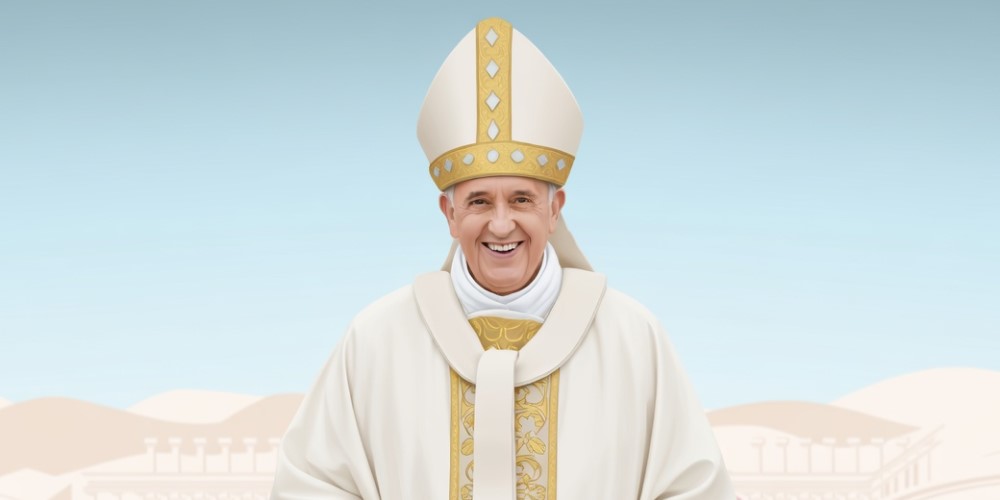
The papacy stands as one of the most enduring and symbolically rich institutions in human history. At the heart of this institution is the Pope – the Bishop of Rome and spiritual leader of over a billion Catholics worldwide. Yet, the Pope is not defined by a single title. Rather, he is known by a constellation of titles, each reflecting a distinct dimension of his authority, mission, and identity within the Catholic Church.
These titles are not merely ceremonial or honorary. They encapsulate centuries of theological development, ecclesiastical governance, and historical evolution. Each title carries doctrinal weight, administrative implications, and spiritual symbolism, offering insight into how the Catholic Church understands leadership, unity, and continuity.
The nature of Papal titles
The Pope’s titles are formally listed in the Annuario Pontificio, the official directory of the Holy See. These titles collectively define the Pope’s authority in spiritual, administrative, and even temporal domains. They include:
- Bishop of Rome
- Vicar of Jesus Christ
- Successor of the Prince of the Apostles
- Supreme Pontiff of the Universal Church
- Patriarch of the West
- Primate of Italy
- Metropolitan Archbishop of the Province of Rome
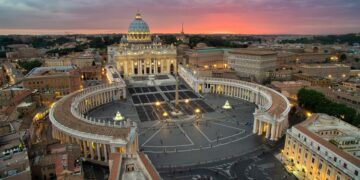
- Sovereign of the State of Vatican City
- Servant of the Servants of God
Each title reflects a specific role rather than a redundant label. Together, they present the Pope as pastor, teacher, administrator, and sovereign.
1.Bishop of Rome: The foundational title
“Bishop of Rome” is the most fundamental and historically grounded title of the Pope. It signifies that the Pope is first and foremost the bishop of the Diocese of Rome.
Significance
This title is crucial because the Pope’s universal authority in the Catholic Church is rooted in his role as the successor to Saint Peter, who is traditionally believed to have been the first Bishop of Rome. In Catholic theology, the authority of the Pope does not arise from political power or institutional hierarchy alone, but from apostolic succession – the unbroken line of leadership from Saint Peter to the present Pope.
Implications
- Establishes the Pope’s legitimacy as head of the Church.
- Grounds papal authority in early Christian history.
- Emphasizes pastoral responsibility over a specific local church.
This title reminds Catholics that the Pope is not an abstract global leader but a bishop with a concrete diocese.
2. Vicar of Jesus Christ: Theological authority
The term “Vicar of Jesus Christ” means that the Pope acts as the representative or deputy of Christ on earth.
Significance
This is one of the most theologically profound papal titles. It expresses the belief that the Pope exercises authority in the name of Christ, particularly in matters of faith and morals.
Doctrinal importance
The concept of the Pope as Christ’s vicar supports doctrines such as:
- Papal primacy (the Pope’s supreme authority over the Church).
- Papal infallibility (under specific conditions).
As the Church teaches, the Pope has “full and supreme power over the universal church” in doctrinal and disciplinary matters.
Implications
- Positions the Pope as a spiritual leader rather than merely an administrator.
- Reinforces unity in doctrine across the global Church.
- Highlights the sacred dimension of papal authority.
3. Successor of the Prince of the Apostles: Apostolic continuity
This title refers to the Pope as the successor of Saint Peter, who is known as the “Prince of the Apostles.”
Historical context
Saint Peter is regarded in Catholic tradition as the leader of the apostles and the first head of the Church. The Pope’s authority is thus understood as a continuation of Peter’s mission.
Significance
This title emphasizes continuity – linking the modern Church directly to its apostolic origins.
Implications
- Legitimizes papal authority through historical succession.
- Reinforces the unity and continuity of the Church.
- Connects doctrine and leadership to early Christianity.
4. Supreme Pontiff of the Universal Church: Universal jurisdiction
“Supreme Pontiff” derives from the Latin pontifex maximus, meaning “greatest bridge-builder”.
Significance
This title highlights the Pope’s role as the highest authority in the Catholic Church worldwide. It underscores his jurisdiction over all bishops and faithful.
Functional role
As Supreme Pontiff, the Pope:
- Defines doctrines.
- Appoints bishops.
- Oversees Church governance.
Implications
- Affirms the centralized authority of the papacy.
- Establishes the Pope as the final arbiter in Church matters.
- Emphasizes unity across diverse cultures and regions.
5. Patriarch of the West: Historical and ecumenical dimensions
“Patriarch of the West” traditionally distinguished the Pope’s authority in the Western (Latin) Church from Eastern patriarchs.
Historical evolution
This title was removed in 2006 and later reinstated in the Vatican’s official yearbook in 2024, reflecting ongoing theological and ecumenical considerations.
Significance
Acknowledges the Pope’s role within the broader Christian world.
Reflects efforts toward dialogue with Eastern Orthodox Churches.
Implications
This title has less administrative importance today but carries symbolic weight in ecumenical relations.
6. Primate of Italy: National ecclesiastical leadership
As “Primate of Italy”, the Pope holds honorary precedence among bishops in Italy.
Significance
This title reflects the Pope’s leadership within the Italian Church, though it is largely ceremonial.
Implications
- Reinforces the Pope’s local authority within Italy.
- Highlights the historical centrality of Rome in Christianity.
7. Metropolitan Archbishop of the Province of Rome: Administrative role
This title refers to the Pope’s role as the metropolitan archbishop overseeing the ecclesiastical province of Rome.
Significance
In Catholic hierarchy, metropolitan archbishops supervise a group of dioceses within a province.
Implications
- Emphasizes the Pope’s administrative responsibilities.
- Connects papal authority to ordinary ecclesiastical structures.
8. Sovereign of the State of Vatican City: Temporal authority
Beyond spiritual leadership, the Pope is also the sovereign of Vatican City, an independent city-state.
Historical background
This role emerged following the Lateran Treaty of 1929, which established Vatican City as a sovereign entity.
Significance
This title gives the Pope:
- Political independence.
- Diplomatic recognition.
- Legal authority as a head of state.
Implications
- Ensures the Church’s autonomy from secular governments.
- Enables the Pope to engage in international diplomacy.
- Blends spiritual and temporal leadership.
9. Servant of the Servants of God: Humility and pastoral identity
This title, Servus Servorum Dei, translates to “Servant of the Servants of God.”
Historical origin
It was popularized by Pope Gregory the Great in the 6th century as a response to titles emphasizing power.
Significance
This is perhaps the most spiritually profound papal title. It emphasizes humility, service, and pastoral care.
Implications
- Balances the authority expressed in other titles.
- Reflects Christ’s teaching on servant leadership.
- Reinforces the Pope’s role as a shepherd rather than a ruler.
The Informal Title “Pope” (Papa)
The word “Pope” comes from the Greek pappas, meaning “father”.
Historical development
Originally used for bishops and priests, it became reserved exclusively for the Bishop of Rome by the 9th century.
Significance
This is the most commonly used title in everyday language.
Implications
- Emphasizes the Pope’s pastoral and paternal role.
- Makes the office more accessible to the faithful.
- Serves as a unifying symbol for Catholics worldwide.
Honorifics: “His Holiness” and “Holy Father”
These are forms of address rather than official titles.
Significance
- “His Holiness” reflects respect for the Pope’s spiritual office.
- “Holy Father” underscores his role as a spiritual parent.
Implications
These honorifics reinforce reverence while highlighting the Pope’s pastoral relationship with believers.
Theological and institutional significance of papal pitles
The Pope’s array of titles encapsulates the Church’s understanding of leadership as a harmonious blend of spiritual authority, pastoral care, historical continuity, and global governance, reflecting both the theological depth and institutional structure of Catholicism.
a. Unity of the Church
The multiplicity of papal titles reflects the Pope’s role in maintaining unity across a global and diverse Church. His authority ensures consistency in doctrine and practice.
b. Continuity with apostolic tradition
Titles such as “Successor of the Prince of the Apostles” anchor the papacy in early Christianity, reinforcing the Church’s claim to historical continuity.
c. Balance between authority and service
The coexistence of titles like “Supreme Pontiff” and “Servant of the Servants of God” illustrates a fundamental tension – and harmony – between authority and humility.
d. Dual spiritual and temporal roles
The title “Sovereign of Vatican City” highlights the Pope’s unique position as both a religious leader and a political figure.
Evolution of papal titles over time
Papal titles have not remained static. They have evolved in response to:
- Theological developments.
- Political changes.
- Ecumenical dialogue.
For example:
- The adoption of pontifex maximus reflects Roman influence.
- The temporary removal of “Patriarch of the West” reflects modern ecumenical sensitivity.
- The continued use of “Servant of the Servants of God” reflects enduring spiritual values.
This evolution demonstrates the Church’s ability to adapt while preserving core principles.
Conclusion
The titles of the Pope are far more than ceremonial designations. They form a comprehensive framework that defines the papacy in theological, historical, and institutional terms. Each title contributes a distinct dimension:
- Bishop of Rome grounds the Pope in apostolic succession.
- Vicar of Christ establishes theological authority.
- Supreme Pontiff affirms universal jurisdiction.
- Sovereign of Vatican City ensures independence.
- Servant of the Servants of God expresses humility.
Together, these titles encapsulate the paradox at the heart of the papacy: supreme authority exercised through service. In understanding these titles, one gains not only insight into the role of the Pope but also a deeper appreciation of how the Catholic Church conceptualizes leadership – rooted in tradition, guided by doctrine, and ultimately oriented toward service to humanity.